When a purchasing manager asks, “What type of flange finish is recommended for PTFE gaskets?”, they are usually facing a silent but costly enemy: fugitive emissions and unplanned downtime caused by the wrong flange surface. A PTFE gasket may have outstanding chemical resistance, but its performance lives or dies on the flange finish. In industries ranging from chemical processing to pharmaceuticals, a mismatch between the finish and the gasket material can turn a routine seal into a leak path within hours. The surface roughness, lay pattern, and even the manufacturing method of the flange face directly control how well a PTFE gasket conforms and maintains a tight seal under temperature cycling and pressure pulsations. This guide breaks down exactly what finish works best—and how to avoid the most common specification mistakes that waste procurement budgets and damage plant reliability. Follow along to understand the science, the standards, and the smart sourcing moves that will make your next PTFE gasket project a success.
Imagine your maintenance team opening a newly delivered batch of raised-face flanges only to find a rough, serrated surface that feels like a file. Your PTFE gasket, designed for a specific finish, could be crushed unevenly or cold-flow into the grooves, creating leak paths. This is the daily reality for many end users who don’t specify flange finish explicitly. The three most common finish types encountered are smooth (or stock) finish, spiral serrated finish, and concentric serrated finish. Smooth finishes typically have a surface roughness (Ra) of 3.2 µm to 6.3 µm (125 µin to 250 µin) and are widely used with non-metallic gaskets. Spiral serrated finishes, often created with a 1.6 mm radius tool, produce a phonographic groove that can bite into softer gasket materials. Concentric serrated finishes provide uniform circular grooves. The right choice for PTFE Gaskets is not always the default “smooth” – it depends on the gasket formulation, operating temperature, and media aggressiveness. 
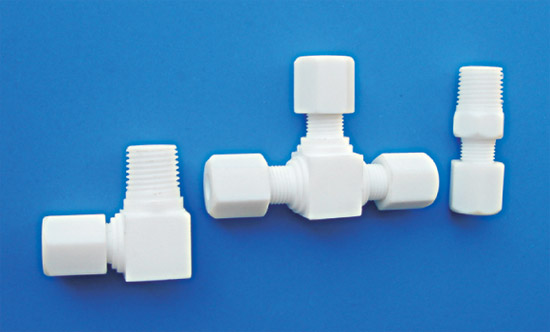
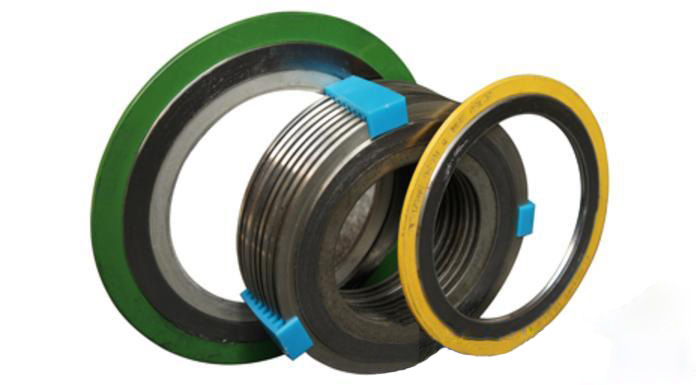
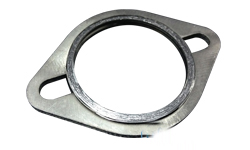
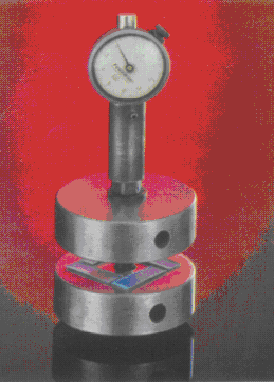
This image illustrates how a properly finished flange face mates evenly with a virgin PTFE gasket, ensuring full contact and minimal creep.
A procurement specialist once ordered expanded PTFE gaskets for a new acid line, only to face immediate weeping during hydrotest. Root cause analysis traced it back to a flange with Ra 12.5 µm – far too rough for the soft ePTFE material. PTFE, unlike graphite or aramid fiber gaskets, exhibits significant cold flow and a high coefficient of thermal expansion. On a rough surface, the material extrudes into the valleys but cannot fully recover, creating micro-leak paths. On an overly smooth surface (Ra < 1.6 µm), the gasket lacks mechanical grip and may blow out under pressure. The goldilocks zone for most PTFE gaskets is an Ra between 3.2 µm and 6.3 µm with a non-directional lay pattern. This provides enough “bite” to hold the gasket without inducing excessive creep. For filled PTFE (glass, carbon, silica), the acceptable roughness range can extend slightly higher, but staying within ASME B16.5 or EN 1092-1 finish requirements is critical. The table below summarizes common flange finishes and their compatibility with PTFE.
| Finish Type | Typical Ra (µm) | Lay Pattern | PTFE Gasket Suitability |
|---|---|---|---|
| Smooth / Stock | 3.2 – 6.3 | Non-directional | Recommended for most PTFE types |
| Spiral Serrated | 3.2 – 12.5 | Phonographic | Conditional – only with thicker or skived PTFE |
| Concentric Serrated | 3.2 – 6.3 | Concentric circles | Acceptable for rigid filled PTFE |
| Mirror-like | < 1.6 | Non-directional | Not recommended – risk of blowout |
A water treatment plant buyer recently switched from compressed fiber gaskets to biaxially-oriented PTFE gaskets to handle chlorine dioxide. The gaskets were installed on existing flanges with a smooth finish (Ra 4.5 µm) and have now completed over 18 months of leak-free service. This success story reinforces the industry consensus: for general-purpose PTFE gaskets, specify a flange finish with Ra 3.2–6.3 µm, preferably with a continuous spiral or random non-directional lay. ASME B16.5 recommends a surface finish of 125 µin to 250 µin Ra for non-metallic gaskets, which translates directly to the 3.2–6.3 µm range. When ordering new flanges, you can specify “smooth finish per ASME B16.5” or request a specific Ra measurement and even a maximum peak-to-valley height (Rz) to ensure consistency. For resurfacing in the field, a slow-speed flange facing machine with a carbide insert can achieve the required finish. The key is to avoid coarse serrations and to ensure the lay crosses the gasket seating area evenly. If you are in doubt about what type of flange finish is recommended for PTFE gaskets in your specific process, always ask the gasket manufacturer to provide a written finish recommendation based on the PTFE grade you are using.
When handling hot concentrated acids or ultrapure chemicals, even a correctly specified flange finish can fail if the PTFE gasket is not protected from excessive creep. A chemical plant using 98% sulfuric acid at 120°C experienced chronic leaks until they combined a rigid, silica-filled PTFE gasket with a flange having an Ra 3.2 µm spiral serrated finish. The slightly deeper serrations helped lock the gasket in place while the filler minimized cold flow. For such aggressive services, consider these additional factors: flange flatness (waviness), which should be less than 0.2 mm; bolt load optimization to avoid over-compressing the PTFE; and the use of a PTFE envelope or a restructured PTFE material that resists creep. The finish should still fall within 3.2–6.3 µm Ra, but the lay pattern may shift from non-directional to a controlled phonographic spiral to enhance sealing under thermal cycles. Always collaborate with your sealing supplier to match the gasket design to the finish, especially when moving beyond standard water and steam services.
Q1: What type of flange finish is recommended for PTFE gaskets in high-temperature applications?
A: For high-temperature services above 150°C, we recommend a flange finish with Ra 3.2–6.3 µm and a spiral serrated lay. The controlled serrations help compensate for the increased thermal expansion of PTFE, reducing the risk of gasket extrusion. Always use filled PTFE grades designed for elevated temperatures and follow the gasket manufacturer’s torque retention guidelines. Ningbo Kaxite’s expanded and filled PTFE gaskets have been successfully applied on steam and hot oil lines with these finish specifications.
Q2: Can a serrated flange finish be used with PTFE gaskets, or will it damage the gasket?
A: It can be used, but only with certain PTFE products. Soft virgin PTFE or highly compressible ePTFE will cold-flow into sharp serrations, leading to rapid relaxation and leaks. However, rigid filled PTFE, metal-inserted PTFE, and some laminated PTFE gaskets tolerate a spiral serrated finish (Ra up to 6.3 µm) well. When the question “What type of flange finish is recommended for PTFE gaskets?” involves a serrated flange, the answer is always: choose a gasket with high compressive strength and confirm compatibility with the manufacturer. At Ningbo Kaxite, we test our PTFE materials on various serration geometries to give you a verifiable recommendation.
When your specification calls for the perfect match between PTFE gaskets and flange finish, you need more than a catalog number—you need a partner who understands the physics of sealing. Ningbo Kaxite Sealing Materials Co., Ltd. delivers precisely this: technical guidance that transforms head-scratching “What type of flange finish is recommended” questions into confident procurement decisions. Our product portfolio includes virgin, filled, expanded, and structured PTFE gaskets engineered for specific surface roughness ranges and operating conditions. We stock ASTM-compliant gaskets with documented finish compatibility, so you can order with clarity and reduce the risk of field rework. Whether you serve chemical plants, pharmaceutical clean rooms, or power generation facilities, our team helps you define the right finish-gasket pair, saving you thousands in downtime and repair costs. Don’t let an ambiguous surface finish compromise your seal—let Ningbo Kaxite be the reliable link in your supply chain.
Getting the flange finish right for PTFE gaskets is not just a technical detail; it is a strategic purchasing move that directly impacts operational safety and cost control. You now know that the recommended finish for most PTFE applications is a smooth surface with Ra 3.2–6.3 µm and a non-directional or spiral lay, and that specific fillers and service conditions can adjust that target. Applying this knowledge will help you avoid the common trap of ordering a high-performance gasket without verifying the mating surface. Are you ready to upgrade your sealing program with PTFE gaskets that actually work as designed? Reach out to our engineering support team today with your flange finish specifications, temperature range, and media—we will return a detailed recommendation and a quotation that matches your exact needs.
At Ningbo Kaxite Sealing Materials Co., Ltd., we combine 20 years of sealing manufacturing expertise with a deep understanding of international standards like ASME B16.5, EN 1092-1, and JIS B2220. Our PTFE gasket collection covers every finish scenario you will encounter, from mirror-smooth vial flanges to heavily serrated heat exchanger faces. We don’t just sell gaskets; we deliver sealing certainty. Visit us at https://www.kaxiteseal.cn to explore our full product line, or send your technical inquiry directly to [email protected] for personalized support. Let’s make your next sealing project a leak-free success.
1. Suthar, P., & Joshi, J. (2021). “Effect of Flange Surface Roughness on PTFE Gasket Performance.” Journal of Pressure Vessel Technology, 143(4), 041802.
2. Kalpakjian, S., & Schmid, S.R. (2019). “Surface Texture Requirements for Non-Metallic Gaskets.” Manufacturing Engineering and Technology, 8th Edition, Pearson.
3. Mian, M.B., & Baig, N. (2018). “Cold Flow Behavior of PTFE in Flanged Joints.” International Journal of Pressure Vessels and Piping, 167, 37-45.
4. ASTM International. (2020). “ASTM F36 – Standard Test Method for Compressibility and Recovery of Gasket Materials.” ASTM Book of Standards, Vol. 09.02.
5. Neuber, T., & Schmitt, M. (2022). “Influence of Surface Lay on Leak Tightness of PTFE Envelope Gaskets.” Sealing Technology, 2022(4), 7-14.
6. EN 1092-1:2018. “Flanges and their joints – Circular flanges for pipes, valves, fittings and accessories, PN designated.” European Committee for Standardization.
7. ASME B16.5-2020. “Pipe Flanges and Flanged Fittings.” The American Society of Mechanical Engineers.
8. Kremer, R., & Wodtke, J. (2017). “PTFE Gasket Selection Based on Flange Serration Depth.” Chemical Engineering Transactions, 61, 1561-1566.
9. Bickford, J.H. (2018). “Gasketed Joint Design Fundamentals.” Introduction to the Design and Behavior of Bolted Joints, 5th ed., CRC Press.
10. Song, Y., & Wang, Z. (2023). “FEA Analysis of PTFE Gasket Relaxation on Different Surface Finishes.” Proceedings of the Institution of Mechanical Engineers, Part E: Journal of Process Mechanical Engineering, 237(1), 112-124.