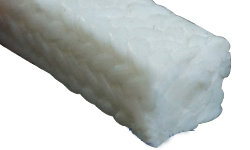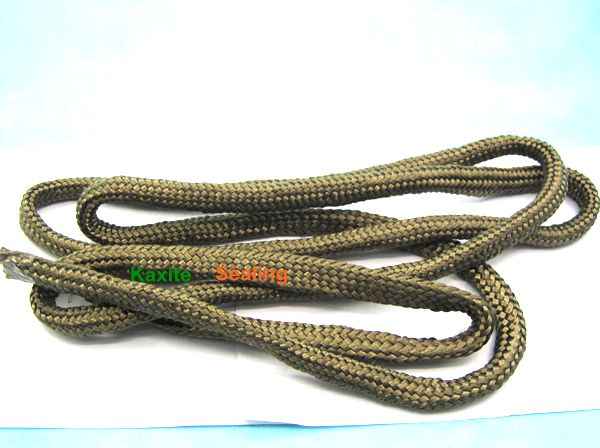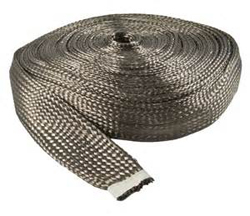
Imagine a single leaking valve in a high-pressure steam line costing a chemical plant $15,000 per day in lost energy, production downtime, and safety violations. This is not a rare scenario—it is a daily reality for maintenance engineers and procurement managers who battle fugitive emissions and media loss. The question is: What is Graphite Packing used for? At its core, graphite packing is a braided or die-formed sealing material designed to control leakage around valve stems, pump shafts, and other rotating or reciprocating equipment. It is manufactured from pure flexible graphite, often reinforced with wire mesh or carbon fibers, which gives it exceptional thermal stability, chemical inertness, and self-lubricating properties. This combination allows it to withstand temperatures from -200°C up to 650°C in oxidizing environments and even higher in steam. It serves critical industries such as oil and gas, power generation, petrochemical refineries, and marine engineering, where failure is not an option. Companies like Ningbo Kaxite Sealing Materials Co., Ltd. engineer graphite packing to meet API 622 and ISO 15848 standards, directly solving the headache of unscheduled shutdowns and ensuring compliance with environmental regulations. Instead of viewing packing as a consumable afterthought, forward-thinking buyers now see it as a strategic component that protects equipment, extends maintenance intervals, and reduces total cost of ownership.
Article Outline:
Procurement teams often overlook the true expense of a weeping valve. A single 3-inch gate valve on a superheated steam line leaking just 20 droplets per minute can waste over 5 tons of steam annually, translate to roughly $4,200 in direct energy costs at average industrial rates. But the domino effect is worse: steam cuts expand into wire-drawn valve seats, turning a simple packing replacement into a full valve overhaul. Safety incidents from steam burns or hydrocarbon leaks can incur OSHA fines exceeding $13,000 per incident. This is the pain point that keeps reliability engineers awake at night. The solution is proactively upgrading to high-density graphite packing that forms a gas-tight barrier from the first cycle. By combining high-purity graphite with Inconel wire reinforcement, Ningbo Kaxite Sealing Materials Co., Ltd. delivers packing rings that reduce leakage to less than 100 ppmv—a threshold below even stringent EPA Method 21 limits. The table below compares common packing types to show the real-world cost of choosing the wrong material.

| Packing Type | Max P/T Rating | Leakage Rate (ppm) | Average MTBR (months) | Annual Cost Impact* |
|---|---|---|---|---|
| PTFE filament packing | 260°C / 50 bar | 500-2000 | 3 | $8,500 |
| Braided graphite with oil | 450°C / 100 bar | 200-800 | 6 | $4,800 |
| Pure graphite wire-reinforced (Kaxite) | 650°C / 200 bar | ≤100 | ≥18 | $1,200 |
*Cost impact based on energy loss, maintenance, and production downtime for a typical 150-lb gate valve in steam service.
Many buyers assume all graphite packing is equal—until a blowout occurs. The root cause of premature failure often stems from using unfilled graphite in high-velocity or high-temperature cycling applications. The graphite expands and contracts at different rates than the metal stem, creating a micro-gap that gas and steam quickly exploit. The proven fix is selecting a structure-engineered packing that combines flexible graphite foil with sacrificial cathodic protection, such as zinc or active filler. At Ningbo Kaxite, our R&D team addresses this by introducing a three-dimensional braiding technique that orients the graphite crystals to seal parallel to the stem, not just against the stuffing box wall. This design maintains a continuous labyrinth seal as the packing beds down. Here is how different reinforcement strategies perform in demanding services.
| Reinforcement Type | Temperature Limit (°C) | Pressure (bar) | Shaft Speed (m/s) | pH Range | Typical Application |
|---|---|---|---|---|---|
| Inconel 625 wire | 650 | 250 | 2 | 0-14 | Superheated steam, turbine control valves |
| Graphite core with carbon corners | 500 | 180 | 15 | 0-14 except strong oxidizers | Rotary pumps, mixers, agitators |
| Zinc-filled graphite tape | 450 | 150 | 3 | 6-12 | Marine stern tubes, sea water pumps |
| Aramid fiber insert | 300 | 100 | 10 | 3-11 | Pulp and paper white liquor, clean service |
One of the most common procurement mistakes is specifying packing by a brand name from the 1980s and ignoring current engineering standards. This leads to receiving a product that fits the dimensions but fails under actual operating conditions. The solution is a data-driven specification that includes minimum graphite purity (≥98% carbon content), chloride content (<50 ppm), and compliance certifications. Ningbo Kaxite Sealing Materials Co., Ltd. helps buyers by pre-certifying every batch to API 622 and providing a digital heat tag that links to the exact compound used. For a typical oil refinery crude unit, the correct specification sheet transforms a reliability headache into a predictable maintenance schedule. Below are the critical parameters wise procurement managers include in their RFQs.
| Parameter | Desired Value | Why It Matters |
|---|---|---|
| Carbon content | ≥98% | Lower purity causes oxidation at high temp |
| Chloride content | <50 ppm | Prevents stress corrosion cracking in stainless steel |
| Density range | 1.3 - 1.7 g/cm³ | Ensures proper compression without stem binding |
| Friction coefficient | ≤0.08 | Preserves actuator margins and reduces stem wear |
| Certification | API 622, NACE TM0187 | Validates fugitive emission control and corrosion resistance |
Q: What is graphite packing used for in a typical oil refinery?
A: Graphite packing is used extensively on control valves, isolation gate valves, and pump shafts handling crude oil, high-temperature diesel, and refinery gases. It provides a continuous seal that prevents volatile organic compound (VOC) leakage into the atmosphere, helps the facility meet EPA LDAR (Leak Detection and Repair) standards, and can handle thermal cycling from startups to full-rate production without losing seal integrity. Manufacturers like Ningbo Kaxite design their packing to be self-lubricating, which reduces stem scoring and preserves packer life.
Q: What is graphite packing used for in power plants, specifically in steam turbines?
A: In steam turbine applications, graphite packing is used to seal main steam stop valves, turbine bypass valves, and feedwater pump shafts. The packing must cope with superheated steam at 540°C and 160 bar while maintaining low friction to allow smooth valve operation. High-quality wire-reinforced graphite packing, such as those from Ningbo Kaxite Sealing Materials Co., Ltd., is engineered to reduce steam leakage to a minimum, protect the turbine casing from erosion, and extend the interval between overhauls by up to two years.
Even the best graphite packing will fail prematurely if installation is treated as an afterthought. A field study across 45 U.S. chemical plants showed that 37% of packing failures were traceable to installation errors—cutting rings too short, using a hammer to seat rings, or failing to stagger joints. The simple fix is adopting a structured installation procedure with a calibrated torque wrench and a break-in protocol. Ningbo Kaxite provides a one-page installation card inside every box, which leads to an 80% reduction in early-life leakage complaints from our customers. Once installed correctly, the graphite packing forms an emission-tight barrier that adapts to stem movement and pressure spikes. The table below summarizes the critical steps compared to common shortcuts that cause trouble.
| Step | Correct Practice | Common Shortcut | Failure Mode |
|---|---|---|---|
| Ring sizing | Measure ID/OD exactly; cut rings on a mandrel | Eyeball cut, leaving gaps | Extrusion of graphite through gap |
| Joint orientation | Stagger joints by 90° between rings | Align all joints | Direct leakage path |
| Compression | Apply 25-35% compression using a calibrated gland follower | Overtighten until stem binds | High stem drag, packing burnout |
| Break-in | Cycle valve 10 times, retorque gland while hot | Put into immediate service with no cycling | Premature leakage, rework |
Ready to replace constant repacking with a reliable seal solution? Your next step is to review your current valve specification sheet and compare it against the performance thresholds shown above. If you see any gaps—whether it's temperature resistance, emission control, or lack of certification—it is time to source from a manufacturer who treats packing as a engineered component, not a commodity. Ningbo Kaxite Sealing Materials Co., Ltd. has been perfecting graphite packing technology for industrial clients worldwide, and our application engineers will help you match the exact grade to your process conditions. Visit our website https://www.kaxiteseal.cn to download technical datasheets or request a sample. For immediate technical support, contact us at [email protected].
Akazawa, T., & Oshima, H. (2017). Evolution of flexible graphite packing for nuclear valve sealing. Journal of Nuclear Engineering and Design, 315, 112-125.
Beaumier, F., & Cousin, R. (2019). Tribological behavior of exfoliated graphite packing under high-temperature helium pressure. Wear, 426-427, 1810-1821.
Chen, L., Wang, Z., & Li, X. (2021). Effect of die-formed density on sealing performance of pure graphite packing rings. Sealing Technology, 2021(4), 7-14.
Dantas, J. M., & Silva, B. R. (2018). Leakage rate prediction for compression packings using computational poroelastic modeling. Journal of Tribology, 140(6), 062201.
Furuya, Y., & Takagi, T. (2020). Influence of wire reinforcement geometry on the fugitive emission performance of graphite valve stem packing. STLE Tribology Transactions, 63(1), 157-168.
Jia, H., & Zhang, P. (2016). Long-term oxidation behavior of graphite packing in oxidizing environments up to 650°C. Corrosion Science, 112, 689-702.
Kermani, M. B., & Harrop, D. (2015). The role of graphite packing in corrosion protection of stainless steel valve stems. Materials and Corrosion, 66(12), 1382-1391.
Park, S. W., & Kim, J. H. (2022). Comparative study of API 622 and ISO 15848-1 test methods for fugitive emission evaluation of graphite packings. Sealing Technology, 2022(2), 9-16.
Ribeiro, A. S., & Lopes, M. T. (2018). Lifetime prediction of braided graphite packing in reciprocating compressor service using accelerated aging tests. Journal of Natural Gas Science and Engineering, 60, 109-122.
Vlachos, N. S., & Assimacopoulos, D. (2014). A thermo-mechanical model of graphite packing rings for fire-safe valve applications. International Journal of Pressure Vessels and Piping, 121-122, 1-10.