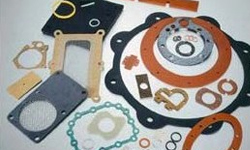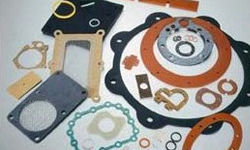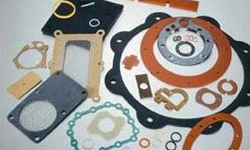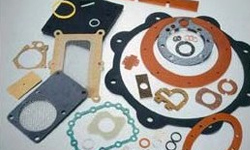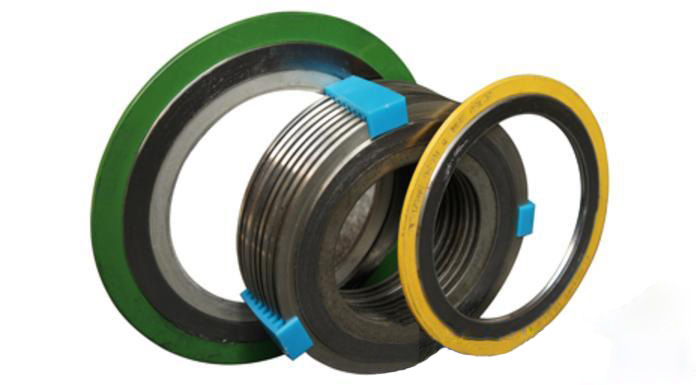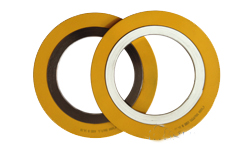
In the intricate world of industrial machinery, automotive systems, plumbing infrastructure, and countless other applications, there exists a small but mighty component whose failure can lead to catastrophic downtime, costly leaks, and significant safety hazards: the Rubber Gaskets. These precision-engineered components are the unsung heroes of sealing technology, creating reliable, impermeable barriers between mating surfaces. At Kaxite, with two decades of expertise in advanced polymer engineering, we understand that the right gasket is not just a part—it's a critical investment in the longevity and efficiency of your entire system. This guide delves deep into the technical specifications, material science, and selection criteria for industrial rubber gaskets, positioning Kaxite as your trusted partner for sealing excellence.
The performance of a rubber gasket is fundamentally dictated by its base material. Each elastomer compound offers a unique profile of resistance properties, temperature thresholds, and mechanical strengths. Kaxite's material scientists meticulously formulate compounds to meet precise operational demands.
Selecting a gasket requires careful analysis of its physical and performance parameters. Kaxite gaskets are manufactured to exacting standards, with each batch certified for consistency. Below are the key specifications engineers must evaluate.
| Parameter | Description | Typical Range (Varies by Material) | Kaxite Testing Standard |
|---|---|---|---|
| Hardness (Shore A) | Resistance to indentation; affects sealability and compression. | 40 - 90 Durometer | ASTM D2240 |
| Tensile Strength | Maximum stress the material can withstand while being stretched. | 10 - 25 MPa | ASTM D412 |
| Elongation at Break | The percentage stretch before material failure. | 100% - 600% | ASTM D412 |
| Compression Set | Measure of permanent deformation after compression; critical for long-term seal. | 10% - 40% (22 hrs @ 70°C) | ASTM D395 |
| Specific Gravity | Density relative to water; influences part weight and material cost. | 1.0 - 2.0 | ASTM D297 |
| Resistance Type | Key Materials (Best to Good) | Temperature Range (Continuous) | Kaxite Enhancement |
|---|---|---|---|
| Oil & Fuel | FKM, NBR, HNBR | -20°C to 200°C+ (FKM) | Proprietary polymer blending for swell resistance. |
| High Temperature | FKM, Silicone, EPDM | Up to 230°C (Silicone/FKM) | Thermal stabilizer additives. |
| Weather & Ozone | EPDM, Silicone, CR | -50°C to 150°C | UV and anti-ozonant packages. |
| Water & Steam | EPDM, NR, Silicone | Up to 150°C (EPDM Steam) | Optimized cure systems for hydrolysis resistance. |
| Chemical/Acid | FFKM (Perfluoro), FKM, EPDM | Varies by concentration | Custom compounding for specific media. |
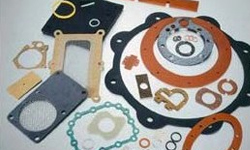
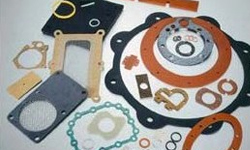
Kaxite manufactures a comprehensive range of gasket profiles to suit every application. From standard O-rings to complex custom-designed seals, our capabilities ensure a perfect fit.
Q: How do I choose the right rubber material for my gasket application?
A: Material selection is a three-step process. First, identify the primary media (fluid, gas, chemical) the gasket will contact and cross-reference it with chemical resistance charts. Second, determine the operational temperature range, both continuous and peak. Third, consider environmental factors like UV exposure, ozone, and pressure. Kaxite's engineering team provides complimentary selection support to navigate these variables.
Q: What is compression set and why is it important?
A: Compression set is the permanent deformation a rubber material undergoes after being subjected to a constant compressive load over time at a specific temperature. A low compression set percentage (e.g., 10-20%) is critical because it means the gasket will maintain its sealing force and not take a permanent "set," which would lead to leakage as the material relaxes. It is a key indicator of long-term sealing performance.
Q: Can Kaxite gaskets be used for food and pharmaceutical applications?
A: Yes. Kaxite offers a range of compounds compliant with FDA CFR 21.177.2600, EU Regulation 10/2011, and other global food contact standards. Our silicone and EPDM compounds are popular choices. We also provide USP Class VI certified materials for pharmaceutical and medical device applications, complete with full traceability documentation.
Q: What's the difference between a static seal and a dynamic seal?
A: A static seal is used between two surfaces that do not move relative to each other, such as a pipe flange or a cover plate. A dynamic seal is used between surfaces that have relative motion, like a rotating shaft or a reciprocating piston. Material requirements differ significantly: dynamic seals require excellent abrasion resistance and low friction, while static seals prioritize compression set and creep resistance.
Q: How should I store rubber gaskets to maximize their shelf life?
A: Proper storage is essential. Gaskets should be kept in a cool, dark, and dry environment, ideally between 10°C and 25°C (50°F and 77°F). They must be protected from direct sunlight, ozone sources (like electric motors), and high humidity. Avoid stretching, compressing, or hanging them. Store them flat in their original packaging away from chemicals. Under optimal conditions, most rubber gaskets have a shelf life of 5-10 years.
Q: Does Kaxite provide custom gasket design and prototyping services?
A> Absolutely. Kaxite's in-house engineering and tooling department specializes in transforming customer concepts into functional, reliable sealing solutions. We utilize advanced 3D CAD modeling and can produce prototype molds rapidly for design validation. Our process includes DFM (Design for Manufacturability) analysis to ensure your custom gasket is both high-performing and cost-effective to produce.
Q: What international standards do Kaxite gaskets comply with?
A> Kaxite quality systems and products are aligned with major international standards. Our production adheres to ISO 9001:2015 quality management systems. Materials are tested to ASTM (American), ISO (International), and DIN (German) standards as applicable. We regularly supply gaskets meeting requirements for SAE (Automotive), NSF (Potable Water), MIL-SPEC (Military), and ATEX (Explosive Atmospheres) directives.