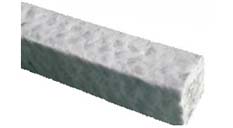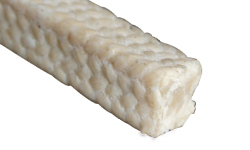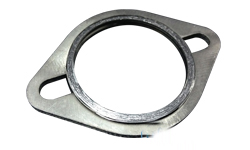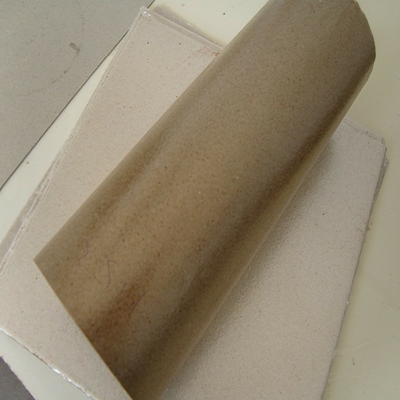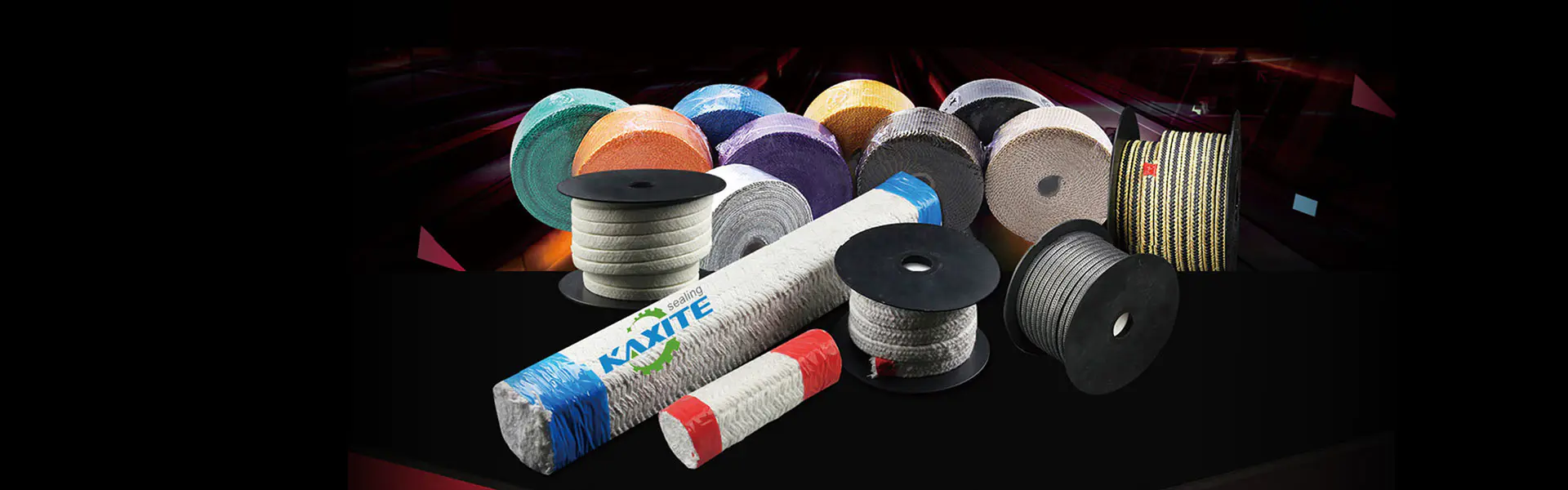
Mineral fiber packing is a high-performance sealing material engineered for demanding industrial applications. Composed primarily of inorganic mineral fibers, often combined with lubricants and binders, it is designed to withstand extreme temperatures, high pressures, and aggressive chemical environments where traditional packing materials like PTFE or aramid fibers may fail. This specialized packing forms a durable, resilient seal around rotating or reciprocating shafts in pumps, valves, and other equipment, preventing fluid leakage and ensuring operational safety and efficiency. Its inherent properties make it a cornerstone of reliability in industries ranging from chemical processing and power generation to metallurgy and refining.
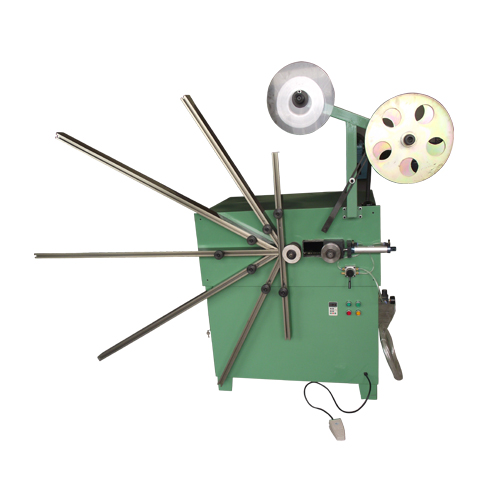
The manufacturing process involves carefully selected raw minerals, which are melted and spun into fine, flexible fibers. These fibers are then impregnated with purpose-specific lubricants—such as graphite or PTFE—to reduce friction and wear on the shaft. The result is a braided or twisted packing that offers exceptional dimensional stability, minimal shaft wear, and a long service life even under the most strenuous conditions. For operations prioritizing safety, durability, and minimal maintenance, mineral fiber packing from a trusted supplier like Kaxite is an indispensable solution.
Kaxite's mineral fiber packing stands out in the market due to our rigorous quality control and advanced material science. We understand that downtime is costly, which is why our products are built for maximum reliability.
Selecting the correct packing requires a thorough understanding of its technical specifications. Below are the detailed parameters for Kaxite's standard mineral fiber packing range. Custom formulations are available to meet specific application requirements.
| Parameter / Property | Standard Grade (KX-MF100) | High-Temp Grade (KX-MF600) | Corrosion-Resistant Grade (KX-MFCR) | Test Method |
|---|---|---|---|---|
| Temperature Range | -100°C to 450°C | -100°C to 600°C | -50°C to 500°C | ASTM E831 |
| pH Range | 1 - 14 | 0 - 14 | 0 - 14 (Exc. HF) | Immersion Test |
| Density | 1.8 - 2.0 g/cm³ | 1.9 - 2.1 g/cm³ | 1.7 - 1.9 g/cm³ | ASTM D3800 |
| Tensile Strength | > 15 MPa | > 18 MPa | > 14 MPa | ASTM D2256 |
| Thermal Conductivity | 0.8 - 1.0 W/m·K | 1.0 - 1.2 W/m·K | 0.7 - 0.9 W/m·K | ASTM D5470 |
| Primary Lubricant | Graphite | High-Temp Graphite | PTFE & Graphite | — |
| Available Sizes (Square) | 3mm - 25mm | 3mm - 25mm | 3mm - 25mm | — |
| Primary Applications | General service pumps, valves, hot water, mild chemicals | Boiler feed pumps, autoclaves, high-temp heat exchangers | Acid pumps, chemical mixers, aggressive solvent service | — |
Kaxite mineral fiber packing is trusted in critical sealing roles worldwide. Its versatility and robustness make it suitable for a vast array of applications.
Correct installation is paramount to achieving the full potential and service life of mineral fiber packing. Following Kaxite's recommended procedure will ensure a leak-free, long-lasting seal.
Q: How does mineral fiber packing compare to PTFE or aramid fiber packing?
A: Mineral fiber packing excels in high-temperature and chemically aggressive environments where PTFE may cold-flow or degrade and where aramids may lose strength. While PTFE is excellent for lower temperatures and food-grade applications, and aramids are great for abrasive services, mineral fiber offers a unique balance of heat resistance, chemical inertness, and thermal conductivity that is unmatched for severe-duty applications above 250°C.
Q: Is Kaxite mineral fiber packing safe to use? Is it asbestos-free?
A: Absolutely. All Kaxite mineral fiber packing products are 100% asbestos-free. They are manufactured from synthetic, inorganic mineral fibers that are chemically stable and safe to handle with standard industrial hygiene practices. Material Safety Data Sheets (MSDS/SDS) are available for all our products.
Q: What is the expected service life of this packing?
A: Service life varies significantly based on application conditions: fluid type, temperature, pressure, shaft speed, and installation quality. Under optimal conditions with proper installation and adjustment, Kaxite packing can last for 12 to 24 months or longer in continuous service. Regular monitoring and minor gland adjustments can greatly extend this lifespan.
Q: Can mineral fiber packing be used on mixers with high shaft run-out?
A: While mineral fiber packing is resilient, excessive shaft run-out (eccentric movement) will accelerate wear and lead to premature failure. It is always recommended to repair or replace equipment to minimize run-out before installing new packing. For applications with unavoidable movement, Kaxite can advise on specialized braiding or softer lubrication formulations to enhance performance.
Q: How do I select the correct grade for my specific application?
A: The three key factors are temperature, chemical media, and shaft speed/surface finish. Provide your equipment OEM details, the exact fluid (including concentration and temperature), pressure, and shaft speed to a Kaxite technical specialist. We will cross-reference this with our material compatibility charts and performance data to recommend the ideal grade, such as our KX-MF600 for ultra-high temperatures or KX-MFCR for concentrated acid service.
Q: Does the packing require a run-in or break-in period?
A: Yes, a proper run-in period is crucial. As per the installation guidelines, the initial gland adjustment should allow a slight weeping leakage. This allows the packing to settle, transfer lubricant to the shaft, and establish its seal through heat and pressure. The gradual tightening process over the first few hours of operation ensures the packing molds to the shaft without generating destructive frictional heat.
Q: Can I use this packing in food or potable water applications?
A: Our standard mineral fiber packing is designed for industrial use. For applications involving direct food contact or potable water, Kaxite offers specialty FDA-compliant packing materials. Please contact our sales team to discuss the specific requirements for your sanitary application.