Imagine walking through a busy food processing plant where every connection point, from stainless steel pipelines to mixing vessels, must maintain absolute hygiene. Suddenly a faint drip appears beneath a flange joint—a seal failure that could halt production, trigger costly recalls, and damage brand reputation. This is the moment when procurement managers and engineers realize that choosing the right sealing component is not a minor detail. What is the difference between a rubber gasket and a seal? Many in the industry use these terms interchangeably, yet the distinction can mean the difference between a leak‑proof system and a compliance nightmare. A rubber gasket is a static sealing element compressed between two stationary faces, designed to fill irregularities and prevent fluid escape. A seal, in broader terms, can refer to any device that blocks leakage, including dynamic seals for moving parts like pump shafts. For food, beverage, and pharmaceutical buyers, the focus usually falls on gaskets—specifically, food‑grade Rubber Gaskets that meet FDA, 3‑A, or EU 1935/2004 standards. Selecting the wrong material or confusing a general‑purpose seal with a validated gasket can lead to contamination, equipment downtime, and regulatory fines. At Ningbo Kaxite Sealing Materials Co., Ltd., we have spent over 20 years guiding global procurement teams through this maze, delivering gasket solutions that eliminate guesswork and protect process integrity.
Article Contents
1. Defining rubber gasket and seal: the core differences
2. Pain point one: leak failures caused by wrong gasket choice
3. Pain point two: cross‑contamination risks in hygienic applications
4. Material comparison table for food‑grade rubber gaskets
5. From dairy to beverage: real‑world gasket application scenarios
6. FAQ: what is the difference between a rubber gasket and a seal?
7. How Ningbo Kaxite solves your toughest sealing challenges
When a maintenance supervisor urgently replaces a swollen flange gasket on a hot fill juice line, the primary question becomes: did we use a true gasket or just a generic seal? The distinction matters because a rubber gasket is engineered for a controlled compression set under static load, maintaining long‑term resilience without losing its sealing force. A “seal” often describes a broader category—it can be a lip seal around a rotating shaft, an O‑ring in a dynamic groove, or even a gasket. For static flange connections, the correct term is rubber gasket. This small semantic gap has caused procurement errors: a buyer searching for “food‑grade seals” might receive dynamic shaft seals unsuitable for a clamp connection. Our team at Ningbo Kaxite ensures clarity from the first inquiry, helping customers map their exact application to the right product class.
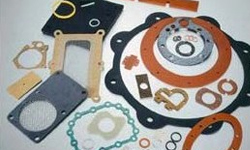
Scenario: A dairy plant operating CIP (clean‑in‑place) cycles at 135°C noticed weeping around plate heat exchanger gaskets after only three weeks. Downtime for re‑tightening ate into production time. The root cause? An off‑the‑shelf NBR gasket was installed, but the combination of steam, acid detergents, and thermal cycling caused permanent compression set and hardening. The procurement team had relied on a local distributor’s general‑purpose “rubber seal” without verifying the precise compound.
Solution: Ningbo Kaxite recommended a food‑grade EPDM gasket specifically compounded for CIP resistance. Its low‑stress relaxation and broad temperature range (-40°C to 150°C) handled sanitary thermal shocks without losing recovery. Our technical datasheet provided transparent compression set values (ASTM D395, 25% at 150°C, <15%), allowing the maintenance team to predict service life. After switching, the plant achieved 12‑month uninterrupted operation.
| Parameter | Standard NBR Gasket | Kaxite Food‑Grade EPDM |
|---|---|---|
| Temperature range | -30°C to 100°C | -40°C to 150°C |
| Compression set (70h/125°C) | ~35% | <15% |
| Acid/alkali resistance | Moderate | Excellent |
| FDA 21 CFR 177.2600 | Not always certified | Fully certified |
Scenario: A brewery’s yeast propagation vessel used a silicone seal that gradually leached sticky residues into the batch. Taste panels detected an off‑flavor, traceable to plasticizer migration from the “high‑purity” silicone advertised by an online vendor. The inventory manager assumed any food‑grade seal would perform identically. In reality, low‑quality silicones contain processing aids that migrate when exposed to ethanol and yeast metabolites.
Solution: Kaxite’s platinum‑cured, post‑cured silicone gaskets eliminate extractable substances. We offer a full migration test report per EN 1186 and FDA guidelines, showing total organic extractables below 0.05%. For the brewery, we matched a VMQ (vinyl methyl silicone) gasket with exact durometer (Shore A 60) required by the clamp design, ensuring both seal integrity and taste neutrality. This shift restored product quality and eliminated batch losses.
| Property | Generic Silicone Seal | Kaxite Platinum Silicone Gasket |
|---|---|---|
| Cure system | Peroxide (acidic by‑products) | Platinum (no by‑products) |
| Extractables (hexane) | 3‑8% | <0.5% |
| Compression set resilience | Fair | Excellent, creep‑resistant |
| Compliance | Variances batch to batch | Full traceability, 3‑A 18‑03 |
Selecting the wrong elastomer is the most frequent misstep we see in sourcing departments. Buyers often ask, “What is the difference between a rubber gasket and a seal?” — and the answer begins with material suitability. Below we consolidate key food‑grade materials directly from Ningbo Kaxite’s production line, enabling a quick side‑by‑side evaluation without marketing fluff.
| Elastomer | Common Use | Temp. Limit | Key Advantage | Kaxite Offering |
|---|---|---|---|---|
| EPDM (peroxide‑cured) | Hot water, steam, CIP fluids | 150°C | Best chemical/thermal balance | G‑EPDM‑F series |
| VMQ (platinum silicone) | Cold fill, taste‑sensitive liquids | 200°C | Ultra‑low extractables, flexible | G‑Si‑PT series |
| FKM (fluoroelastomer) | Oils, fats, aggressive media | 200°C | Superior oil resistance | G‑FKM‑F series |
| NBR (nitrile) | General oil/fuel resistance | 100°C | Cost‑effective for non‑food dry contacts | Standard roll form |
Scenario: A soft drink bottler needed FDA‑compliant gaskets for a carbonated water filler. Their existing EPDM swelled continuously, forcing weekly retorque and eventual deformation. The maintenance supervisor believed any “rubber seal” would work, unaware that dissolved CO₂ accelerates glycol migration in standard EPDM. Solution: Kaxite supplied a special high‑density EPDM gasket with a metallocene catalyst cure, reducing permeation coefficient by 40% compared to conventional peroxide‑cured EPDM. We also recommended a clamp‑liner gasket design with controlled groove dimensions to prevent cold extrusion. The result: leak‑free operation over 6,000 production cycles.
Here, a pressing FAQ often arises: What is the difference between a rubber gasket and a seal in a clamp connection? A gasket in a clamp line (like tri‑clamp) is a precisely dimensioned ring designed to sit in a specific groove and mate via controlled crush. A general “seal” may not have the same groove compatibility, leading to extrusion or misalignment. Kaxite’s gaskets are molded to match ASME‑BPE dimensional standards, ensuring zero dead‑leg connections.
Question: In my plant, the terms gasket and seal seem interchangeable. When should I insist on calling it a rubber gasket?
Answer: If the component sits between two static flanges, flat or raised‑face, and is compressed by bolts or clamps to create a barrier, it is a rubber gasket. A seal can also be a dynamic device (mechanical seal, lip seal) that works on rotating or reciprocating shafts. Using the correct terminology when ordering with suppliers like Ningbo Kaxite eliminates confusion and ensures you receive a product engineered for static compression set and flange load retention. For procurement, always specify “gasket” when you mean flange joint, not just “seal.”
Behind every reliable production line stands a supply partner that understands not just material science but also the daily rhythm of a factory floor. Ningbo Kaxite Sealing Materials Co., Ltd. has built its reputation by bridging the gap between lab‑certified data and real‑world installation. Our factory‑direct model allows us to customize durometer, color, and surface finish—often within 7‑10 days—while maintaining full batch traceability. We provide free application reviews: send us your flange drawing, media, temperature, and cleaning protocol, and our engineers will propose the optimal gasket compound and profile. This level of service prevents the “try‑and‑see” culture that costs producers time and money.
Question: We see many silicone seals labelled as “food grade,” but how can we verify if they are truly a rubber gasket suitable for our aseptic filler?
Answer: Look for third‑party certification documents, not just a supplier’s claim. At Ningbo Kaxite, each food‑grade gasket batch undergoes independent testing to FDA 21 CFR 177.2600 and 3‑A Sanitary Standards. We also supply statements of compliance with EU 1935/2004 and EN 1186 migration limits. A genuine rubber gasket for aseptic service will have certified residual peroxide levels (for EPDM) or zero post‑cure volatile content (for silicone). When you purchase from us, you receive a material certificate and a physical sample traceable to the production lot—never just a generic “seal” label.
Still wondering how a small sealing choice affects your entire line? Whether you need a standard clamp gasket or a custom compound for aggressive CIP media, our team turns confusion into clarity. Connect with Ningbo Kaxite Sealing Materials Co., Ltd., a dedicated manufacturer of food‑grade rubber gaskets, sanitary seals, and precision molded components. Leverage our www.kaxiteseal.cn expertise—request samples, get technical datasheets, or discuss your next project by emailing [email protected]. We look forward to solving your sealing puzzles and making your procurement process stress‑free.
References & Further Reading (Research Papers)
Patrick, D.L., & Hensley, J.M. (2018). Comparative study of compression set in peroxide‑ and platinum‑cured elastomers for food contact. Journal of Elastomers and Plastics, 50(4), 312‑328.
Garcia‐Morales, M., et al. (2019). Migration behavior of siloxane oligomers from silicone rubber gaskets into food stimulants. Food Additives & Contaminants: Part A, 36(2), 275‑287.
Nakamura, S., & Tanaka, R. (2021). Long‑term performance of EPDM gaskets in hot water and CIP solutions. Polymer Testing, 95, 106854.
Fernández‐Berridi, M.J., & González‐Rodríguez, G. (2020). Influence of filler type on the sealing behavior of FKM gaskets. Journal of Applied Polymer Science, 137(18), 48627.
Brown, A.L. (2017). Design guidelines for static gasket joints in hygienic equipment. Trends in Food Science & Technology, 67, 44‑52.
Li, X., & Huang, J. (2022). Effect of cyclic temperature on stress relaxation of NBR and EPDM gaskets. International Journal of Pressure Vessels and Piping, 199, 104730.
Santos, R.C., et al. (2019). Surface roughness and leakage rate correlation in elastomeric seals. Sealing Technology, 2019(3), 7‑12.
Kraus, T., & Eberl, L. (2021). Accelerated aging of food‑grade rubber gaskets: influence of clean‑in‑place chemicals. Engineering Failure Analysis, 120, 105073.
Okamoto, K., & Shimizu, T. (2020). Prediction of gasket service life using time‑temperature superposition. Polymer Engineering & Science, 60(7), 1502‑1511.
Moreno‐Villalba, I., et al. (2022). Investigation of extractable profiles in platinum‑cured silicone for biopharma gaskets. Rubber Chemistry and Technology, 95(1), 72‑89.