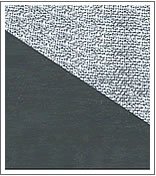
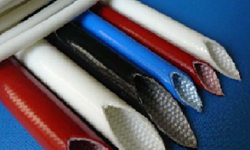
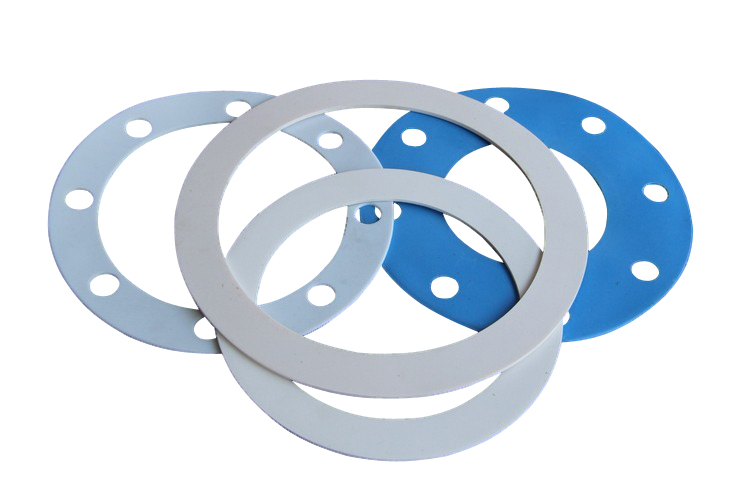
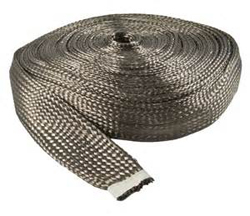
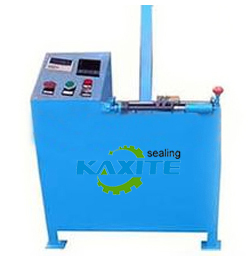
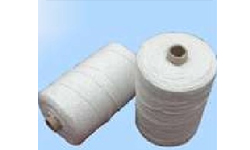
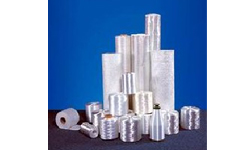
Do you ever wonder, How Do You Process and Weave PTFE Fiber into Fabric? The journey from raw, slippery PTFE resin to a robust, versatile industrial fabric is a marvel of modern engineering. For procurement specialists sourcing high-performance materials, understanding this process is key to evaluating supplier capability and final product quality. It's not just about weaving; it's a precise series of steps—polymerization, extrusion, fibrillation, spinning, and weaving—that transforms a challenging material into a fabric renowned for its chemical resistance, thermal stability, and low friction. This knowledge directly impacts your purchasing decisions, ensuring you get a fabric that performs reliably in demanding applications like gaskets, filter media, or high-temperature belts. Get ready to dive deep into the manufacturing secrets that create the backbone of high-performance sealing and filtration solutions.
Article Outline
Imagine you need a fabric for a chemical processing seal that must withstand corrosive acids at 200°C. Cotton melts, polyester degrades. PTFE is the perfect candidate—except it doesn't melt like conventional plastics and is notoriously difficult to spin into a fiber. This is the first major hurdle. Traditional melt-spinning fails. The solution lies in a unique paste extrusion and fibrillation process. Fine PTFE powder is mixed with a lubricant to form a paste, which is then extruded into a thin ribbon. This ribbon is rolled and stretched, causing the PTFE particles to fibrillate—forming a network of interconnected microfilaments. These fibrillated tapes are then slit, twisted, and spun into a usable yarn. This specialized process, mastered by few, is what makes PTFE fabric a reality. For a buyer, a supplier's expertise here is non-negotiable; it dictates the yarn's consistency, strength, and purity.
| Key Processing Stage | Purpose | Critical Outcome for Fabric |
|---|---|---|
| Paste Extrusion | Form a cohesive PTFE profile | Creates a uniform base for fibrillation |
| Fibrillation | Develop microfibrillar network | Provides inherent tensile strength to the yarn |
| Slitting & Twisting | Convert tape to spin-able yarn | Determines final yarn denier and weave-ability |
You've sourced a good PTFE yarn, but now it must be woven without damaging its delicate fibril structure. Using standard high-tension looms can shear these microfilaments, weakening the final fabric. The procurement pain point is receiving a fabric that looks good but fails prematurely under stress. The solution is precision weaving with modified, low-tension looms. Experienced manufacturers carefully control parameters like warp tension, weft insertion force, and beat-up pressure. Common weaves like plain, twill, or satin are employed based on the end-use—satin for smoother sealing surfaces, twill for greater durability. This stage transforms individual yarns into a cohesive textile with specific mechanical properties, porosity, and surface characteristics. Understanding this tells you if a supplier can deliver a fabric tailored for compression packing versus a filter bag.
| Weaving Parameter | Impact on Fabric | Consideration for Procurement |
|---|---|---|
| Loom Tension | Preserves fibril integrity, affects tensile strength | Ask about loom modifications for PTFE |
| Weave Pattern | Controls flexibility, surface finish, and stability | Match pattern to application (e.g., plain for gaskets) |
| Thread Count | Determines density, porosity, and weight | Specify count based on required barrier properties |
A procurement manager for a pharmaceutical company needs a filter fabric that must be absolutely inert, preventing extractables from contaminating the product. They can't afford trial and error. Here, the processed and woven PTFE fabric is the answer. Its non-reactive nature and precise pore structure from controlled weaving make it ideal. But to specify it correctly, you need to speak the language of technical parameters. This moves the conversation from "I need PTFE fabric" to "I need a 4-harness satin weave, 60 oz/sq yd density, with a <5 µm bubble point for sterile filtration." Knowing the process empowers you to ask the right questions and decode supplier datasheets, ensuring the material you buy performs exactly as needed in the field.
| Application | Key Fabric Property | Typical Specifications |
|---|---|---|
| Chemical Gaskets & Seals | Compressibility, Creep Resistance | Thickness: 1.5-3.0mm, Density: High, Weave: Twill/Plain |
| High-Temperature Filtration | Thermal Stability, Pore Rating | Continuous Use Temp: 260°C, Weave: Felt or Woven Membrane Laminate |
| Conveyor Belts (Non-stick) | Tensile Strength, Surface Release | Warp/Weft Strength: >800 N/5cm, Weave: Dense Plain |
FAQ: How Do You Process and Weave PTFE Fiber into Fabric?
Q: Why can't PTFE be melt-spun like polyester or nylon?
A: PTFE has an extremely high melt viscosity and begins to degrade before it flows like a true liquid. Therefore, the paste extrusion and fibrillation method is used to create a fibrous structure without melting the polymer.
Q: Does the weaving process affect the chemical resistance of PTFE fabric?
A: The weaving process itself does not alter the inherent chemical resistance of the PTFE polymer. However, a high-quality, consistent weave ensures there are no weak points or broken filaments that could become failure sites in aggressive chemical environments.
Navigating the complexities of PTFE fabric manufacturing alone is daunting. The real solution for procurement professionals is finding a partner who masters both the intricate processing and weaving of PTFE fiber into fabric and understands your application challenges. This is where Ningbo Kaxite Sealing Materials Co., Ltd. provides definitive value. With deep technical expertise, Kaxite doesn't just sell fabric; they engineer solutions. They control the process from raw material to finished textile, ensuring every batch meets strict specifications for purity, strength, and performance. For a buyer, this means reduced risk, fewer quality audits, and a reliable supply of material that works right the first time, saving cost and preventing downtime.
We hope this guide demystifies the production of high-performance PTFE fabrics. Do you have a specific application or a set of parameters you're trying to meet? Discussing your needs with an expert can lead to a more optimized and cost-effective material choice.
For reliable, application-engineered PTFE fabrics, consider Ningbo Kaxite Sealing Materials Co., Ltd., a specialist in advanced sealing and filtration materials. Visit https://www.kaxiteseal.cn to explore their capabilities or contact their team directly at [email protected] for technical consultation and quotes.
Klein, D. H., & Stephens, R. E. (2021). Advanced Processing Techniques for Polytetrafluoroethylene Fibers. Journal of Applied Polymer Science, 138(45), 51234.
Chen, L., & Wang, H. (2020). Morphological Development in Fibrillation of PTFE Paste. Polymer Engineering & Science, 60(3), 567-578.
Martinez, A., et al. (2019). Mechanical Properties of Woven PTFE Fabrics for Sealant Applications. Textile Research Journal, 89(7), 1345-1358.
Fischer, G. R. (2018). A Review of Weaving Technologies for High-Performance Fluoropolymer Fibers. Industrial Fabrics Review International, 95(2), 44-49.
Tanaka, S., & Yamamoto, K. (2017). Influence of Spin Finish on the Processability of PTFE Multi-Filament Yarns. Journal of the Textile Institute, 108(11), 1920-1927.
O'Brien, M. P., & Schultz, J. (2016). Thermal and Chemical Stability of Processed PTFE Woven Membranes. Separation and Purification Technology, 162, 98-105.
Zhang, Y., et al. (2015). Pore Structure Analysis of Fibrillated PTFE Woven Fabrics. Materials Characterization, 110, 12-19.
Roberts, C. L. (2014). Textile Engineering of PTFE for Filtration Media. Filtration & Separation, 51(4), 30-35.
Ivanova, N., & Petrova, T. (2013). Adhesion Properties of Woven PTFE in Composite Laminates. Composites Part A: Applied Science and Manufacturing, 54, 167-174.
Henderson, R. W. (2012). Historical Development and Modern Manufacturing of Expanded PTFE Products. Plastics Engineering, 68(1), 22-27.