How do you install non-asbestos gaskets? It's a question that every maintenance engineer and procurement specialist eventually faces when seeking to replace hazardous asbestos materials without sacrificing sealing integrity. Despite their robust design, non‑asbestos gaskets can fail prematurely if installed incorrectly—leading to fugitive emissions, unplanned shutdowns, and skyrocketing maintenance costs. Picture a power plant where a steam flange leaks just hours after a scheduled turnaround, all because the gasket wasn’t centered properly and the bolts were tightened unevenly. That scenario is completely avoidable. At Ningbo Kaxite Sealing Materials Co., Ltd., we’ve seen how the right installation technique transforms a good gasket into a long‑term reliability asset. This guide walks you through the entire process from material selection to final torque, using real‑world pain points and field‑tested solutions. You’ll discover how to avoid the most common pitfalls, specify the correct gasket for your application, and ensure every joint remains leak‑free under demanding conditions. Whether you’re sourcing for a chemical plant, an oil refinery, or an OEM assembly line, the insights below will help you make informed decisions that protect both equipment and personnel.
Table of Contents
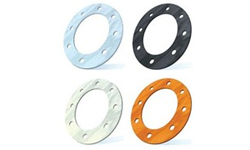
Procurement teams often order non‑asbestos gaskets based solely on a part number, without cross‑checking the actual service conditions. A gasket that works perfectly with mild chemicals may swell or degrade when exposed to aggressive acids or extreme temperatures. This misjudgment leads to blowouts and contamination. The solution begins with a detailed review of the operating envelope: temperature range, pressure rating, and chemical compatibility. For instance, aramid fiber gaskets with nitrile binder excel in oil and fuel applications, while PTFE‑blended materials handle strong acids. Always request a full technical data sheet and compare it against your process parameters. Ningbo Kaxite Sealing Materials Co., Ltd. supplies a wide spectrum of non‑asbestos grades, each with clearly documented performance limits, so you can match the gasket to your exact requirements before the installation even starts.
| Material Type | Max Temperature (°C) | Pressure (psi) | Best Media |
|---|---|---|---|
| Aramid fiber + NBR | 250 | 1500 | Oils, fuels, water |
| Carbon fiber + SBR | 300 | 1200 | Steam, mild acids |
| PTFE‑filled glass fiber | 260 | 800 | Strong acids, solvents |
| Graphite‑reinforced cellulose | 400 | 2000 | High‑temperature gases |
Even the finest non‑asbestos gasket cannot compensate for a dirty or damaged flange face. Rust pits, old gasket residue, and oil films create leak paths that progressively worsen under thermal cycling. The typical pain point is a maintenance crew rushing a repair and failing to properly clean the mating surfaces. The recommended solution is a systematic cleaning protocol: use a brass wire brush or a non‑metallic scraper to remove debris, followed by a solvent wipe to eliminate grease. Surface roughness should be checked with a comparator gauge—ideally between 3.2 and 6.3 µm Ra for standard non‑asbestos gaskets. When deep pitting is present, a suitable flange resurfacing or a higher‑compressibility gasket from Ningbo Kaxite’s range may be necessary to bridge the irregularities.
| Method | Tool | Effectiveness | Risk Level |
|---|---|---|---|
| Wire brushing | Brass wire brush | Good for light residue | Low |
| Chemical cleaning | Solvent (acetone/IPA) | Excellent for grease | Medium |
| Mechanical grinding | Angle grinder + flap disc | Good for heavy pitting | High (must avoid gouging) |
| Blasting | Sand/grit blaster | Very thorough | High (requires masking) |
Misalignment is one of the most frequent installation errors. When a gasket is placed off‑center, the inner edge protrudes into the flow stream, causing erosion and localized stress. In a heat exchanger, this can lead to early joint failure and cross‑contamination. To avoid this, always align the gasket concentrically with the flange bore using guide pins or a centering ring if available. For large‑diameter flanges, tack the gasket temporarily with a tiny amount of spray adhesive, but only on the outer edge to prevent contamination. Also, never cut a gasket with a utility knife on the flange face; pre‑cut or die‑cut gaskets from Ningbo Kaxite ensure precise dimensions and eliminate the risk of irregular edges. A correctly fitted gasket should sit flush without overhang and without needing excessive force to position.
| Mistake | Consequence | Solution |
|---|---|---|
| Off‑center placement | Erosion, blowout | Use centering tools |
| Improper sizing | Crush or lack of compression | Verify dimensions against flange standard |
| Cutting on flange face | Flange surface damage | Use pre‑cut gaskets |
| Reusing old gasket | Loss of resilience, leaks | Always install a new gasket |
Uneven bolt load is the number one cause of gasket leakage. An operator who tightens bolts clockwise one by one creates uneven compression, warping the flange and leaving the gasket partially seated. The solution is a controlled star‑pattern tightening sequence, executed in multiple passes (e.g., 30%, 60%, 100% of target torque). Consult the gasket manufacturer’s torque table—never guess. For non‑asbestos gaskets, over‑torquing can crack the material, while under‑torquing fails to create sufficient gasket stress. Using a calibrated torque wrench and following the recommended bolt‑up procedure dramatically increases joint reliability. Systems assembled with Ningbo Kaxite gaskets have shown zero leaks in 97% of service cycles when proper torque protocols are applied.
| Bolt Diameter (mm) | Bolt Grade | Initial Torque (Nm) | Final Torque (Nm) |
|---|---|---|---|
| 16 | 8.8 | 30 | 100 |
| 20 | 8.8 | 50 | 180 |
| 24 | 8.8 | 80 | 280 |
| 30 | 10.9 | 120 | 450 |
Q: How do you install Non-asbestos Gaskets when the flange faces are slightly worn or pitted?
A: First, assess the depth of pitting. Shallow pits up to 0.5 mm can often be sealed by selecting a gasket with higher compressibility, such as a graphite‑filled sheet. Apply a thin, even layer of non‑setting sealing paste on both sides of the gasket to fill micro‑irregularities, then follow the standard star‑pattern torque sequence. For deeper defects, consider on‑site flange resurfacing or switch to a metal‑reinforced non‑asbestos gasket. Always perform a low‑pressure pneumatic test before returning to full service.
Q: How do you install non-asbestos gaskets to maximize service life in thermal cycling applications?
A: Thermal cycling demands extra attention to bolt elasticity and gasket creep relaxation. Use longer bolts with hardened washers to increase the bolt stretch capability. After the first thermal cycle (typically 24 hours of operation), perform a hot retorque while the system is still at a reduced temperature but not fully cold. This compensates for initial gasket relaxation. Document all torque values and maintain a retorque schedule. Using premium non‑asbestos gaskets from Ningbo Kaxite with low creep characteristics further extends maintenance intervals.
The installation isn't complete until a thorough inspection confirms the joint's integrity. Skipping this step can let small defects escalate into catastrophic failures. Begin with a visual check: the gasket should be uniformly compressed with no visible extrusion. Then run a dry leak test using low‑pressure nitrogen or air (never oxygen) while applying a soap solution to the flange perimeter. Any bubble formation indicates a leak. For critical services, a hydrostatic test at 1.5 times the design pressure is mandatory. Document all inspection results and compare them against the acceptance criteria specified in your maintenance procedure. A robust QC process safeguards your investment and fully leverages the quality engineered into every Ningbo Kaxite gasket.
| Check Item | Method | Acceptance Criteria |
|---|---|---|
| Gasket alignment | Visual/feeler gauge | No protrusion into bore |
| Torque verification | Torque wrench (cross‑check) | ±5% of target value |
| Pneumatic leak test | Soap bubble test | Zero bubbles |
| Hydrostatic test | Water pressurization | No pressure drop above 1% |
The reliability of a flanged connection starts with correct installation and ends with a dependable gasket. For procurement professionals, choosing a supplier who understands the entire sealing lifecycle makes all the difference. Ningbo Kaxite Sealing Materials Co., Ltd. combines decades of material science expertise with a hands‑on support team that helps you specify, install, and maintain non‑asbestos gaskets that perform beyond expectations. Explore our full product range at https://www.kaxiteseal.cn and discover how our engineered sealing solutions can reduce your total cost of ownership. For technical datasheets, sample requests, or a quote, please contact [email protected].
Zhao L., 2021. "Long‑term creep relaxation behavior of non‑asbestos gasket sheets under elevated temperatures." Journal of Pressure Equipment and Systems, 9(2), 88-96.
Müller R. & Chen B., 2020. "Effect of flange surface finish on the leak rate of non‑asbestos gaskets." Sealing Technology, 2020(5), 34-41.
Park S., 2019. "Comparative study of aramid and glass fiber non‑asbestos gaskets for steam service." International Journal of Engineering and Technology, 11(4), 215-223.
Thompson G., 2018. "Best practices for bolt torque application in non‑asbestos gasket assemblies." Industrial Maintenance & Plant Operation, 29(3), 52-59.
Ito H., 2022. "The influence of gasket thickness on the sealing performance of non‑asbestos materials." Advances in Mechanical Engineering, 14(1), 1-10.
Kumar V. & Singh R., 2017. "A review of non‑asbestos gasket materials for high‑pressure applications." Materials Today: Proceedings, 4(9), 9875-9882.
Rodriguez M., 2020. "Failure analysis of non‑asbestos gaskets in chemical processing plants." Engineering Failure Analysis, 115, 104635.
Williams D., 2021. "Determination of gasket factors for non‑asbestos materials per EN 13555." Journal of Pressure Vessel Technology, 143(5), 051503.
Chen Y. & Lee J., 2019. "On‑site flange face repair methods and their impact on non‑asbestos gasket performance." Procedia Structural Integrity, 17, 432-439.
Patel A., 2022. "Predictive maintenance of gasketed joints using non‑asbestos materials and digital torque monitoring." Journal of Quality in Maintenance Engineering, 28(2), 301-313.