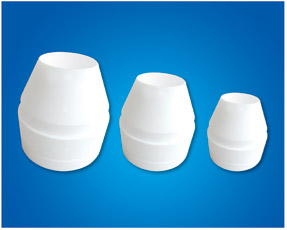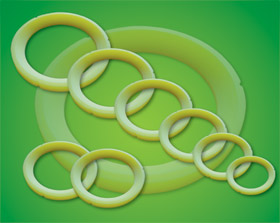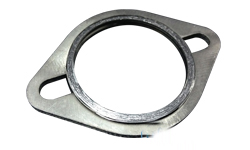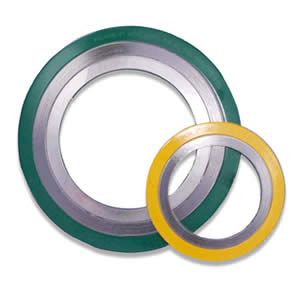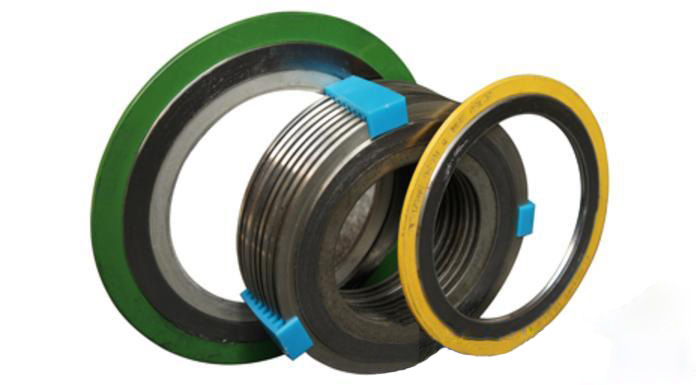
PTFE Parts, also known as Teflon™ parts, are precision-engineered components fabricated from polytetrafluoroethylene, a high-performance fluoropolymer renowned for its exceptional chemical resistance, thermal stability, and low friction properties. At Kaxite, we specialize in manufacturing and supplying a comprehensive range of custom and standard PTFE components that meet the rigorous demands of industries such as aerospace, semiconductor manufacturing, pharmaceuticals, food and beverage processing, and automotive. Our parts are machined and molded to exacting tolerances, ensuring reliable performance in even the most challenging environments where material failure is not an option.
Understanding the inherent properties of PTFE is crucial for selecting the right component for your application. Our Kaxite PTFE material exhibits the following superior characteristics:
Our manufacturing process utilizes both compression molding and CNC machining from stock shapes (rods, sheets, tubes) to produce parts with precision and consistency. Below are our standard specifications and capabilities.
| Parameter | Specification / Capability | Notes |
|---|---|---|
| Standard Grades | Virgin PTFE, Glass-Filled PTFE (5%, 15%, 25%), Carbon-Filled PTFE, Graphite-Filled PTFE, Bronze-Filled PTFE, Stainless Steel-Filled PTFE | Fillers enhance specific properties like wear resistance, creep resistance, and thermal conductivity. |
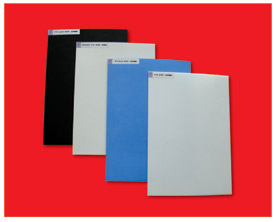
| Standard Color | White (Virgin), Black or Brown (Filled Grades) | Custom colors available upon request for specific applications. |
| Available Forms (Stock) | Rods, Sheets, Tubes, Films, Tapes | Various diameters, thicknesses, and lengths are stocked for rapid prototyping and production. |
| Machining Tolerance | ±0.001 inches (±0.025 mm) standard. Tighter tolerances achievable. | Precision CNC machining ensures dimensional accuracy for complex geometries. |
| Maximum Part Size (Molded) | Up to 1500mm in diameter, subject to design and mold feasibility. | For large-scale components like tank liners or large bearings. |
| Surface Finish | As-machined, or custom finishes as specified. | Typical surface roughness (Ra) from 1.6 to 6.3 μm. |
| Secondary Operations | Heat Treatment (Sintering), Skiving, Bonding, Laser Marking, Assembly | Complete in-house services for finished component preparation. |
| Quality Standards | ISO 9001:2015 Certified Manufacturing. Material traceability available. | Ensures consistent quality and process control. |
For engineers and procurement specialists, here are detailed tables outlining the properties of common Kaxite PTFE grades and a comparison of typical part types we manufacture.
| Material Grade | Density (g/cm³) | Tensile Strength (MPa) | Elongation at Break (%) | Coefficient of Friction (Dynamic) | Primary Application Benefit |
|---|---|---|---|---|---|
| Virgin PTFE | 2.15 - 2.20 | 25 - 35 | 300 - 500 | 0.04 - 0.10 | Ultimate chemical purity, best electrical properties. |
| 15% Glass-Filled PTFE | 2.20 - 2.30 | 17 - 21 | 250 - 350 | 0.10 - 0.13 | Improved wear resistance, reduced creep, higher stiffness. |
| 25% Carbon-Filled PTFE | 2.00 - 2.10 | 14 - 18 | 200 - 300 | 0.09 - 0.12 | Excellent wear resistance, good thermal conductivity, static dissipation. |
| 60% Bronze-Filled PTFE | 3.00 - 3.20 | 12 - 15 | 150 - 250 | 0.08 - 0.11 | Superior wear resistance, high thermal conductivity, low deformation under load. |
| Part Type | Typical Dimensions Range | Common Grades Used | Key Industries |
|---|---|---|---|
| PTFE Seals & Gaskets (O-rings, V-rings, Sheet gaskets) | ID: 1mm to 2000mm, Cross-section: 1mm to 20mm | Virgin, Glass-Filled, Carbon-Filled | Chemical Processing, Pharma, Food & Beverage, Valves & Pumps |
| PTFE Bushings & Bearings | ID: 3mm to 500mm, Wall Thickness: 1mm to 50mm | Glass-Filled, Carbon-Filled, Bronze-Filled | Material Handling, Automotive, Packaging Machinery, Aerospace |
| PTFE Bellows & Diaphragms | Diameter: 10mm to 300mm, Convolutions: Custom | Virgin PTFE (High Purity) | Semiconductor, Analytical Instruments, Medical Devices |
| PTFE Insulators & Standoffs | Custom geometries per drawing | Virgin PTFE | Electrical & Electronics, High-Voltage Applications, RF Components |
| PTFE Liners (for pipes, tanks, valves) | Length: up to 3000mm, Thickness: 2mm to 20mm | Virgin, Glass-Filled | Chemical Plant Construction, Plating, Pulp & Paper |
| PTFE Machined Components (Custom) | Per customer blueprint | All Grades Available | All Industries requiring custom high-performance plastic parts. |
What is the main difference between Virgin PTFE and filled PTFE grades?
Virgin PTFE offers the highest level of chemical resistance and electrical insulation but is softer and more susceptible to creep (cold flow) under sustained load. Filled PTFE grades incorporate materials like glass, carbon, or bronze to significantly improve mechanical properties such as wear resistance, hardness, and creep resistance, while slightly reducing chemical inertness and electrical properties. The choice depends on whether the priority is ultimate chemical purity or enhanced mechanical performance.
Can Kaxite PTFE parts be used for FDA-compliant food contact applications?
Yes, Kaxite supplies specific grades of Virgin PTFE that are compliant with U.S. Food and Drug Administration (FDA) regulations under 21 CFR 177.1550 for articles intended for repeated use in contact with food. We provide documentation to support compliance for these grades upon request. It is critical to specify this requirement when ordering.
How does temperature affect PTFE parts?
PTFE retains its remarkable properties across an extremely wide temperature range. It remains flexible and functional down to -200°C and stable up to 260°C continuously. However, its mechanical strength decreases as temperature increases. At very high temperatures (above 300°C), thermal degradation begins, releasing fumes. For high-temperature mechanical applications, filled grades often perform better due to reduced thermal expansion and higher load-bearing capacity.
Are PTFE parts suitable for dynamic sealing applications?
While PTFE has an extremely low coefficient of friction, Virgin PTFE has relatively poor wear resistance in dynamic (moving) seal applications. For rotary shafts or reciprocating rods, filled PTFE grades (especially carbon or bronze-filled) or PTFE composite seals with elastomeric energizers (like spring-energized seals from Kaxite) are recommended. These designs combine PTFE's chemical and temperature resistance with excellent wear properties for long service life.
What are the limitations of PTFE that designers should be aware of?
Key limitations include: 1) Creep (Cold Flow): PTFE can deform under continuous heavy load; proper design and support are essential. 2) Low Thermal Conductivity: It is a thermal insulator, which can be a drawback in applications requiring heat dissipation. 3) Poor Radiation Resistance: PTFE degrades under high levels of gamma or electron beam radiation. 4) Difficulty Bonding: Its non-stick nature makes adhesive bonding challenging; mechanical assembly or specialized surface treatments are often used.
How does Kaxite ensure the quality and precision of its machined PTFE parts?
Kaxite operates an ISO 9001:2015 certified quality management system. We use state-of-the-art CNC machining centers programmed with advanced CAM software to ensure dimensional accuracy from prototype to production run. Our process includes in-process inspections, final dimensional verification with calibrated instruments (CMMs, micrometers, gauges), and material certification traceability to guarantee every part meets the specified drawing requirements.
Can you fabricate PTFE parts from 3D models or legacy samples?
Absolutely. Kaxite specializes in converting customer-supplied 3D CAD models (STEP, IGES, SLDPRT, etc.) or 2D drawings into finished components. We also offer reverse engineering services based on a physical sample. Our engineering team can review your design for manufacturability and suggest optimizations for cost or performance specific to PTFE.
What industries most commonly use Kaxite PTFE components?
Our parts are critical in industries where failure is catastrophic. Major sectors include: Chemical Processing: for seals, gaskets, and liners resisting corrosive fluids. Semiconductor: for high-purity bellows, wafer carriers, and insulators. Pharmaceutical & Food: for sanitary seals and components meeting strict hygiene standards. Aerospace & Defense: for lightweight, reliable seals and insulators in fuel and hydraulic systems. Automotive: for transmission seals, fuel system components, and wear pads.