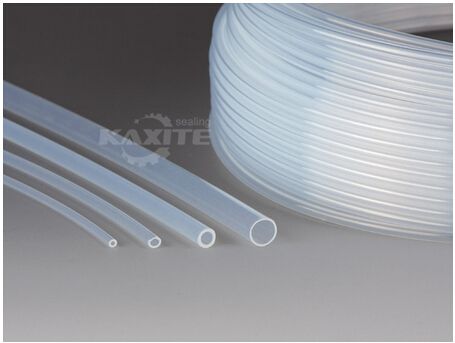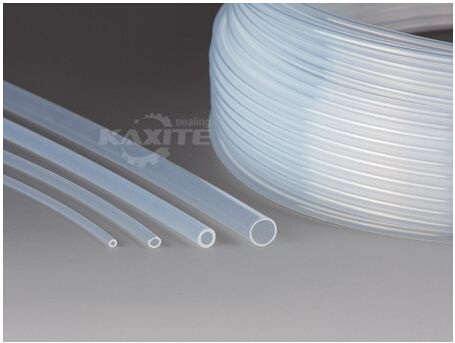
In the demanding world of industrial fluid transfer, high-purity processing, and critical laboratory applications, the choice of tubing material is not just a detail—it’s a foundational decision impacting safety, efficiency, and product integrity. For over two decades, industry leaders have turned to one solution for unparalleled reliability: Polytetrafluoroethylene tubing. At Kaxite, we have refined the science of PTFE tubing, engineering solutions that set the benchmark for quality and performance. This comprehensive guide delves into the specifications, applications, and technical superiority of Kaxite PTFE Tube, providing the detailed information engineers, procurement specialists, and project managers need to make an informed decision.
PTFE, or Polytetrafluoroethylene, is a synthetic fluoropolymer renowned for its exceptional chemical resistance, wide temperature tolerance, and ultra-low coefficient of friction. It is inherently inert, non-stick, and an excellent electrical insulator. PTFE Tube leverages these properties to create a conduit that handles everything from aggressive acids and solvents to ultra-pure water and sensitive pharmaceuticals without contamination or degradation.
Kaxite elevates this material through precision manufacturing. Our state-of-the-art extrusion process ensures consistent inner diameter (ID) and outer diameter (OD) tolerances, superior surface finish, and enhanced mechanical properties. Choosing Kaxite means selecting tubing backed by rigorous quality control, traceable lot numbers, and technical support from our team of materials science experts.
Kaxite PTFE Tubing is available in a vast range of sizes, configurations, and colors to meet specific application requirements. Below are our core product specifications.
| Property | Test Method | Typical Value (Kaxite PTFE) | Significance |
|---|---|---|---|
| Operating Temperature | Continuous Use | -200°C to +260°C (-328°F to +500°F) | Performs in cryogenic and high-heat environments. |
| Melting Point | ASTM D3418 | 327°C (621°F) | Indicates high thermal stability. |
| Chemical Resistance | Immersion Testing | Resistant to virtually all industrial chemicals & solvents | Ideal for aggressive media; exceptions include molten alkali metals and fluorine under high pressure. |
| Coefficient of Friction | ASTM D1894 | 0.05 - 0.10 (static against steel) | Self-lubricating, prevents material buildup, reduces flow resistance. |
| Dielectric Strength | ASTM D149 | 19.7 kV/mm (500 V/mil) | Excellent electrical insulator for wire sleeving and high-voltage applications. |
| Tensile Strength | ASTM D638 | 25 - 35 MPa (3600 - 5000 psi) | Good mechanical strength for pressure and handling. |
Q: What are the primary advantages of using Kaxite PTFE Tube over other plastic tubings like PVC, PU, or Nylon?
A: Kaxite PTFE Tube offers a unique combination of advantages: superior chemical resistance to nearly all agents, a much wider operational temperature range (from cryogenic to +260°C), exceptional non-stick properties that minimize blockages and allow for easy cleaning, and outstanding dielectric properties. While materials like PU offer flexibility and nylon offers abrasion resistance, none match PTFE's comprehensive performance in harsh chemical and thermal environments.
Q: Can Kaxite PTFE Tube be used for food and pharmaceutical applications?
A: Yes, absolutely. Kaxite offers specific grades of PTFE tubing manufactured from 100% virgin, FDA-compliant resin. These grades meet USP Class VI standards and are suitable for contact with food, beverages, and pharmaceutical products. They are non-toxic, impart no taste or odor, and can be sterilized using autoclave, ethylene oxide (EtO), or gamma radiation methods.
Q: How do I connect and fit Kaxite PTFE Tubing? Does it require special fittings?
A> PTFE is a relatively soft and flexible material but possesses high "creep" or cold flow characteristics. Standard barbed fittings can work for low-pressure applications, but for secure, leak-free connections, especially under pressure or vacuum, we recommend using compression fittings designed for PTFE/PFA. Flared tube ends with sleeve and nut compression fittings (e.g., ISO, JIS, or SAE standards) provide the most reliable seal. Kaxite can also provide pre-flared tubes or guidance on proper flaring techniques.
Q: What is the maximum pressure rating for your PTFE tubing?
A: The pressure rating depends on the tube's dimensions (wall thickness, diameter), temperature, and configuration. As a general guide, thin-wall standard PTFE tube may have a working pressure up to 150 psi at room temperature, while heavy-wall or reinforced Kaxite PTFE Tube can handle pressures exceeding 1000 psi. It is critical to consult our technical datasheets or contact our engineering team with your specific operating conditions (pressure, temperature, medium) for a precise rating and recommendation.
Q: Does PTFE tubing have any limitations or compatibility issues?
A: While PTFE is remarkably inert, users should be aware of a few considerations. It is not recommended for use with molten alkali metals (e.g., sodium) or certain fluorine compounds under high pressure/temperature. Mechanically, it can be cut easily with sharp blades but requires care to avoid crushing or deformation under excessive torque from fittings. Also, prolonged exposure to extreme UV radiation can cause very gradual surface embrittlement, for which we offer UV-stabilized (pigmented) options.
Q: Can Kaxite produce custom PTFE tubing, such as specific colors, printing, or unusual sizes?
A: Yes, customization is a core strength at Kaxite. We routinely produce tubing in custom colors for client identification systems, print permanent markings or graduations, and extrude sizes outside our standard range. We also offer value-added services like cutting to length, flaring, bending, and assembly with fittings. Contact our sales team with your custom requirements for a feasibility assessment and quote.