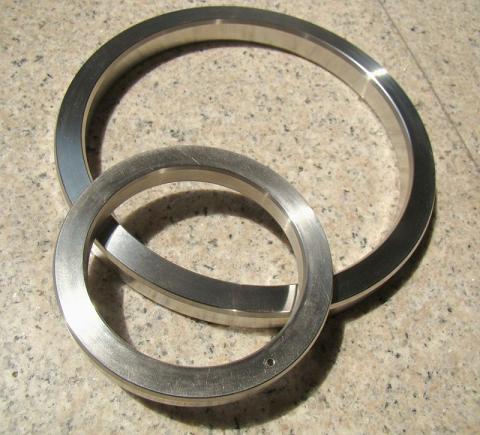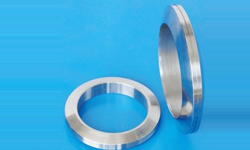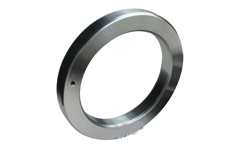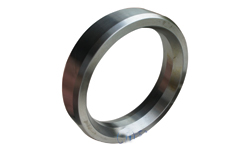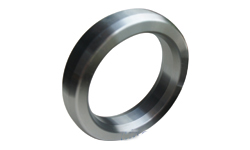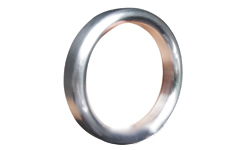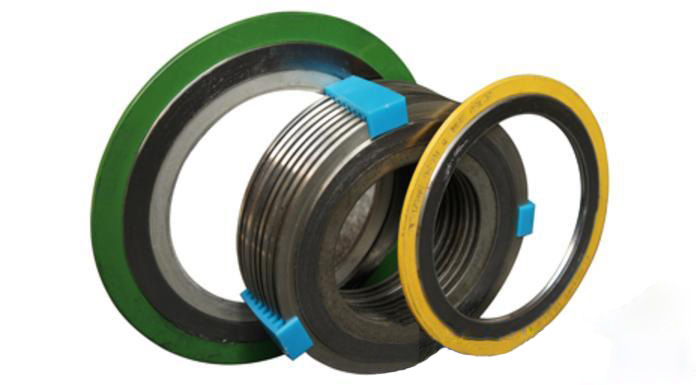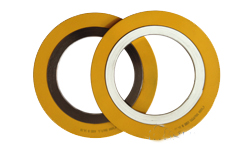
In the demanding world of high-pressure and high-temperature sealing for critical applications like oil and gas, petrochemical, and refining industries, the integrity of every connection is paramount. Among the most reliable sealing solutions engineered for such extreme conditions is the Ring Joint Gasket (RJG). This specialized, metallic sealing ring is designed to create a tight, leak-proof seal in the annular groove of corresponding ring joint flanges, making it the preferred choice for ASME B16.5, B16.47, and API 6A flange connections. At Kaxite, we leverage decades of metallurgical expertise to manufacture premium ring joint gaskets that meet and exceed the stringent requirements of global standards, ensuring safety, reliability, and longevity in your most critical operations.
The fundamental principle behind a Ring Joint Gasket's effectiveness is its geometry and material. When the flange bolts are tightened, the gasket is compressed into the machined grooves of the flange faces. This creates a highly localized, high-stress seal where the soft, ductile metal of the gasket flows into the minute imperfections of the harder flange material, effectively creating a metal-to-metal seal that is exceptionally resistant to pressure, thermal cycling, and corrosive media. Unlike gaskets that rely on surface friction or compression across a broad area, the RJG's sealing action is concentrated and immensely powerful.
Selecting the correct Ring Joint Gasket requires careful attention to a detailed set of parameters. An incorrect selection can lead to catastrophic failure. The primary specifications are defined by the gasket's style, size, and material grade, which must perfectly match the flange specifications.
Ring Joint Gaskets are categorized into several standard styles, each denoted by a letter. The most common are:
Ring joint gaskets are sized according to the nominal pipe size (NPS) and pressure class of the flange (e.g., 150, 300, 600, 900, 1500, 2500). Each combination has a specific ring number (e.g., R21, R45, RX-72, BX-153). The dimensions are strictly governed by ASME B16.20 (for R and RX) and API 6A (for BX).
| Ring Number (Example) | Nominal Pipe Size (NPS) | Pressure Class | Approx. Outside Diameter (in) | Approx. Cross-Section Width (in) |
|---|---|---|---|---|
| R23 | 2 | 900 | 4.25 | 0.344 |
| R45 | 6 | 1500 | 10.00 | 0.656 |
| RX-68 | 12 | 600 | 18.50 | 0.656 |
| BX-155 | 4 1/16" (API) | 10,000 psi | 6.75 | 0.245 |
Note: The above are example dimensions. Always consult the relevant standard or Kaxite's technical datasheet for exact dimensions for a specific ring number.
The choice of material is critical for performance and corrosion resistance. Standard material grades are defined by ASTM/ASME and API specifications. Kaxite offers a full range of materials to suit various service conditions.
Every Kaxite Ring Joint Gasket is the product of a rigorous, controlled manufacturing process. We begin with certified raw material from approved mills, ensuring full traceability. Our precision machining, using CNC lathes and specialized tooling, guarantees that every dimension—from the outside diameter and inside diameter to the critical cross-sectional profile—is held within the tight tolerances specified by ASME B16.20 and API 6A.
Our commitment to quality is unwavering. Each batch undergoes stringent inspection protocols, including dimensional verification with calibrated instruments, visual inspection for surface defects, and material chemistry verification via PMI (Positive Material Identification) guns. For critical applications, we can provide additional testing such as hardness testing and surface finish analysis. Every Kaxite gasket is marked with the material grade, ring number, and our brand for complete traceability, giving you the confidence that you are installing a component built for maximum reliability.
Q: Can an R-style gasket be used in an RX groove, or vice versa?
A: Generally, no. While RX gaskets are designed to be interchangeable with R grooves in many standard sizes (as per ASME B16.20), the reverse is not true. An R-style gasket should not be used in an RX groove. The RX gasket has a pressure-energized design that functions optimally in its specific groove. Using the wrong style can lead to improper seating, inadequate sealing, and potential joint failure. Always match the gasket style (R, RX, BX) exactly to the flange groove designation.
Q: How many times can a Ring Joint Gasket be reused?
A: It is strongly recommended NOT to reuse Ring Joint Gaskets. These are considered one-time-use sealing elements. During initial bolt-up, the soft metal deforms and flows into the flange groove imperfections, creating a custom seal. Upon disassembly, this deformed geometry is compromised, and the gasket will have work-hardened. Reusing it cannot guarantee the same level of seal integrity, significantly increasing the risk of leakage, especially in cyclical service. Kaxite always advises installing a new, certified gasket for every flange connection.
Q: What is the proper procedure for installing a Ring Joint Gasket?
A: Correct installation is critical. First, ensure the flange grooves and the gasket itself are perfectly clean, dry, and free of old sealant, debris, or damage. Lightly lubricate the gasket and the flange grooves with a suitable anti-seize compound (e.g., nickel-based) to prevent galling and facilitate even seating. Carefully place the gasket into the groove of one flange, ensuring it sits evenly. Bring the flanges together, ensuring the gasket is not pinched or displaced. Follow a controlled, cross-pattern bolt tightening procedure (torquing) in multiple incremental steps to the specified torque value to ensure uniform compression and avoid distorting the flanges.
Q: How do I select the right material grade for my application?
A: Material selection is based on the service conditions: fluid chemistry, concentration, temperature, pressure, and the presence of sour gas (H2S). Start by consulting the piping specification or process design documents. For corrosive services, the gasket material should generally match or be more corrosion-resistant than the flange material. For sour service, materials must comply with NACE MR0175/ISO 15156 standards. Common choices are soft iron for non-corrosive, high-temperature hydrocarbon service; 316 stainless for many chemical services; and Inconel 625 for severe sour and high-temperature conditions. Kaxite's technical team can provide expert guidance based on your specific operating parameters.
Q: What causes a Ring Joint Gasket to leak, and how can it be prevented?
A: Leaks can stem from several root causes: 1) Incorrect gasket style/size/material mismatch with the flange. 2) Damaged or corroded flange sealing surfaces (nicks, scratches, pitting). 3) Improper installation, including inadequate cleaning, lack of lubrication causing galling, or incorrect bolt torque (under-torque or over-torque). 4) Using a reused gasket. 5) Excessive pipeline vibration or thermal cycling beyond design limits. Prevention involves meticulous specification review, using high-quality components from trusted suppliers like Kaxite, thorough inspection of all parts before assembly, strict adherence to proven installation procedures, and never reusing gaskets.
Q: Are Kaxite Ring Joint Gaskets compliant with international standards?
A: Yes, absolutely. Kaxite manufactures Ring Joint Gaskets in full compliance with all relevant international standards, including ASME B16.20 (Metallic Gaskets for Pipe Flanges), API 6A (Wellhead and Christmas Tree Equipment), and ISO 15592-1. Our materials are certified to ASTM/ASME specifications (e.g., ASTM A182, A240). We can also provide gaskets certified for NACE MR0175 sour service applications. Our quality management system ensures consistent adherence to these specifications, providing global compatibility and reliability.