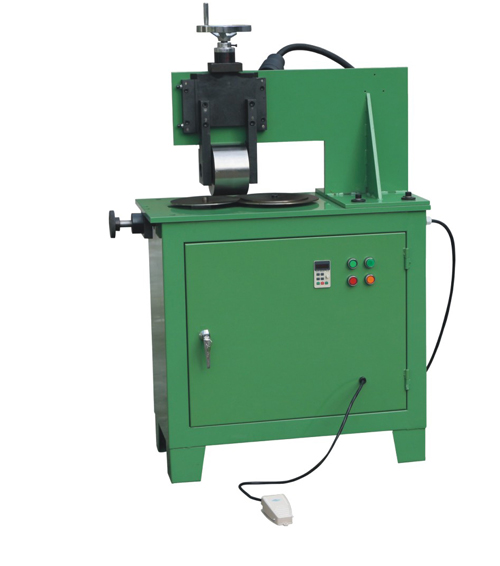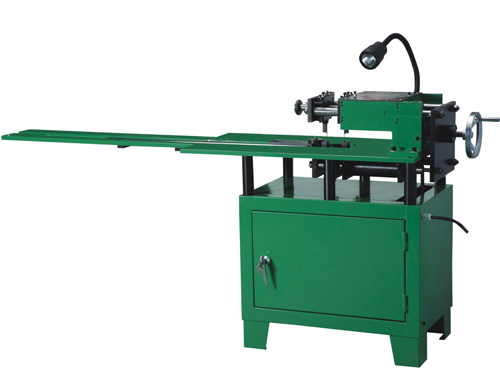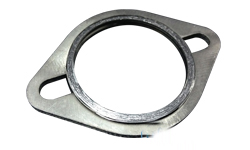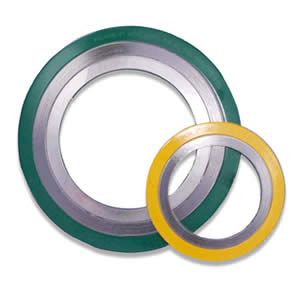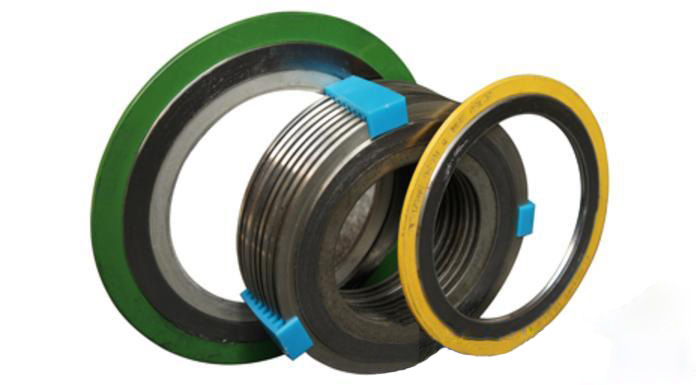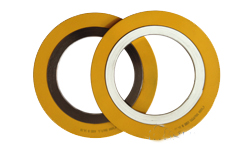
The manufacturing of high-performance graphite reinforced gaskets demands precision, consistency, and efficiency. These critical sealing components are essential in industries ranging from oil and gas and chemical processing to power generation and automotive systems. Achieving the stringent quality standards required for these applications hinges on the capabilities of the production equipment. State-of-the-art Machines for Graphite Reinforced Gaskets are engineered to transform raw materials—such as flexible graphite foil and metal reinforcements—into reliable, durable seals with exacting specifications. Investing in the right machinery is not merely an operational upgrade; it's a strategic decision that impacts product integrity, production throughput, and overall competitiveness.
At Kaxite, we specialize in designing and manufacturing heavy-duty industrial machinery tailored for the gasket and sealing industry. Our expertise, built on decades of engineering innovation, is focused on delivering robust, user-friendly, and highly automated solutions. Kaxite machines are built to handle the unique challenges of working with graphite, ensuring clean cuts, consistent lamination, and precise forming without compromising the material's inherent sealing properties. We understand that your machinery is the core of your production line, and our goal is to provide the reliability and precision you need to excel in a demanding market.
Kaxite's machinery lineup for graphite reinforced gaskets is categorized based on function within the production workflow. Each machine is constructed with high-grade components for longevity and calibrated for precision. Below are the detailed specifications of our key systems.
This series prepares the raw graphite foil and metal insert materials to exact widths and lengths, a crucial first step for quality lamination.
The heart of the production line, this press bonds graphite layers with metal mesh or perforated plate inserts under controlled heat and pressure.
This machine cuts the laminated sheet into final gasket shapes with complex geometries, including bolt holes and inner/outer contours.
| Machine Model | Primary Process | Key Advantage | Typical Output Capacity* | Automation Level |
|---|---|---|---|---|
| KX-Cut Pro 2500 | Material Slitting & Shearing | Unmatched width tolerance and dust-free operation. | Up to 5,000 linear meters/hour | Semi-Automatic |
| KX-Laminate HP 1200 | Heat & Pressure Lamination | Uniform pressure and temperature distribution for bubble-free bonding. | 200 - 400 sheets/shift (based on cycle time) | Fully Automatic |
| KX-CNC Stamp 1500 | Precision Cutting & Stamping | Combines flexibility of CNC cutting with speed of punching for complex shapes. | 30-70 sq. meters/hour (varies with complexity) | Fully Automatic |
*Capacity is indicative and depends on material type, thickness, and part complexity.
Q: What are the main advantages of using specialized machinery over manual methods for producing graphite gaskets?
A: Specialized machinery from Kaxite delivers critical advantages: Consistency & Quality: Automated processes eliminate human error, ensuring every gasket has uniform density, thickness, and bonding integrity, which is vital for leak-proof performance. Material Efficiency: Advanced nesting software and precision cutting minimize graphite and metal scrap, significantly reducing material costs. Productivity & Speed: Machines operate continuously at high speeds, dramatically increasing output compared to manual lay-up and cutting. Worker Safety & Environment: Enclosed systems with integrated dust extraction contain graphite particles, creating a cleaner and safer workshop, protecting operator health and meeting environmental regulations.
Q: How does the lamination process in these machines ensure a strong bond between graphite and metal?
A: The Kaxite lamination press applies a precise combination of heat, pressure, and time. The heated platens soften the graphite layers, allowing them to flow and mechanically interlock with the apertures of the metal mesh or perforated plate. The high, evenly distributed pressure ensures intimate contact throughout the entire sheet area, creating a cohesive, void-free composite. The process parameters are programmable and repeatable for different material grades and thicknesses, guaranteeing a consistent and reliable bond that won't delaminate under compression in service.
Q: Can Kaxite machines handle different types of metal inserts, like stainless steel, carbon steel, or expanded metal?
A: Absolutely. Kaxite machines are designed with versatility in mind. The slitters can process various metal coil gauges and types. The lamination press's temperature and pressure profiles can be adjusted to suit the specific thermal expansion characteristics of different metals. The CNC cutting/stamping machine's tooling can be configured to handle the increased hardness of materials like 316 stainless steel. We work with clients to understand their standard material specs and ensure our machines are optimally configured for their production needs.
Q: What kind of training and technical support does Kaxite provide after machine installation?
A: Kaxite provides comprehensive support to ensure a smooth ramp-up and long-term operation. This includes: On-site Installation & Commissioning: Our engineers install the machine, calibrate it with your materials, and verify it meets all performance specs. Hands-on Operator Training: We train your team on machine operation, routine maintenance, basic troubleshooting, and safety protocols. Detailed Documentation: You receive full operation manuals, maintenance schedules, and electrical/ hydraulic diagrams. Ongoing Technical Support: We offer remote support via phone and video, a readily available stock of wear-and-tear parts (like blades and seals), and optional annual service contracts for preventive maintenance.
Q: Is it possible to integrate Kaxite machines into an existing semi-automated production line?
A: Yes, integration is a key strength of Kaxite's design philosophy. Our machines are built with standard industrial communication interfaces (e.g., Ethernet/IP, Modbus) and feature customizable in-feed and out-feed conveyor options. We can design and supply linking systems, such as robotic arms or conveyor belts, to connect our cutter, laminator, and CNC machine with your existing material handling or packaging stations. This creates a seamless, continuous flow production line that maximizes efficiency and minimizes manual intervention.