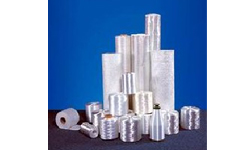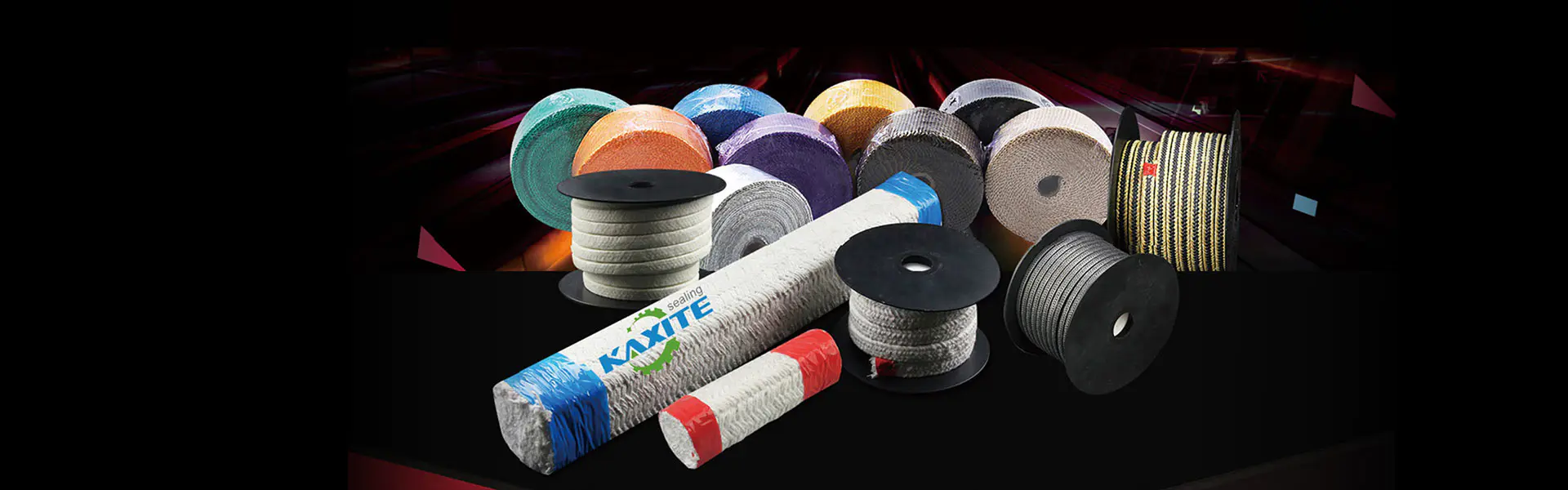
What is Basalt Fiber and how is it produced? If you're a procurement professional sourcing advanced industrial materials, you've likely encountered this question. Basalt fiber is a remarkable material spun from molten volcanic rock, offering a compelling alternative to traditional glass or carbon fibers. Its production involves crushing natural basalt stone, melting it at extreme temperatures, and then extruding it through specialized bushings to create continuous filaments. The result is a fiber boasting exceptional strength, thermal stability, and corrosion resistance. For buyers navigating complex projects requiring durability and performance under stress, understanding this material is key. Companies like Ningbo Kaxite Sealing Materials Co., Ltd. leverage this advanced production to create solutions that directly address demanding industrial sealing and insulation challenges.
Article Outline:
Imagine you're responsible for sourcing sealing materials for a high-temperature pipeline or fire protection system. Traditional materials like fiberglass might degrade, while aramid fibers could blow your budget. You need a material that won't fail under thermal shock, resists chemical corrosion from harsh environments, and provides long-term value. This is a common pain point for procurement specialists seeking reliable, cost-effective performance.
The solution lies in advanced composite materials. Basalt fiber, with its innate volcanic rock properties, is engineered to meet these extreme demands. Sourced from a trusted manufacturer like Ningbo Kaxite Sealing Materials Co., Ltd., it ensures consistent quality and performance. Their expertise transforms raw basalt into high-performance sleeving and textiles that solve these precise engineering challenges.
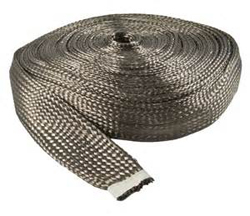
Key Parameters for Procurement Evaluation:
| Parameter | Typical Basalt Fiber Value | Benefit for Procurement |
|---|---|---|
| Operating Temperature | -260°C to +700°C | Eliminates need for multiple specialized materials. |
| Tensile Strength | 3000-4800 MPa | Superior durability, reducing replacement frequency. |
| Chemical Resistance | Excellent in alkaline environments | Longer service life in corrosive industrial settings. |
| Cost Efficiency | Lower than carbon fiber, competitive with fiberglass | Optimal balance of performance and project budget. |
The production process is where basalt fiber's advantages are locked in. Sourcing consistent, high-purity basalt rock is the first critical step. This rock is then crushed, washed, and fed into a furnace where it is melted at approximately 1500°C. The molten lava-like material is then extruded through platinum-rhodium alloy bushings to form continuous filaments, which are immediately cooled and coated with a sizing agent to enhance handling and compatibility with resins.
This precise and controlled production is what companies like Ningbo Kaxite Sealing Materials Co., Ltd. master. Their manufacturing control ensures every batch of basalt fiber sleeving or fabric delivers the promised thermal insulation, mechanical strength, and fire resistance. For a procurement manager, this translates to fewer quality audits, reliable supply chain performance, and confidence in the end product's capabilities.
Performance Advantages at a Glance:
| Advantage | Impact on Project/Application |
|---|---|
| High Thermal Stability | Protects critical components in automotive, aerospace, and energy sectors. |
| Excellent Sound Insulation | Ideal for acoustic management in construction and transportation. |
| Non-Combustible Nature | Provides inherent fire safety for cables, structural elements, and protective clothing. |
| Eco-Friendly Production | Aligns with corporate sustainability goals; made from abundant natural stone. |
For a procurement professional, understanding application suitability is crucial. Basalt fiber is not a niche product; it's a versatile solution across industries. In the automotive sector, it's used for heat shields and composite parts, reducing weight while withstanding engine heat. In construction, basalt rebar and mesh offer a non-corrosive alternative to steel for concrete reinforcement. For industrial sealing and insulation—the core focus of Ningbo Kaxite Sealing Materials Co., Ltd.—basalt fiber sleeving protects cables and hoses in furnaces, power plants, and chemical processing units where temperatures soar and chemicals are present.
The pain point here is sourcing a single material that can perform across such diverse applications, simplifying your vendor management and inventory. The solution is a material partner that provides tailored forms—whether it's yarn, fabric, sleeving, or chopped strand. Kaxite's product range is designed to offer this versatility, ensuring you have the right basalt-based solution for specific project specifications.
Application-Specific Product Forms:
| Industry | Typical Use Case | Recommended Basalt Product Form |
|---|---|---|
| Fire Protection | Fire curtains, protective textiles | Basalt fabric / woven roving |
| Electronics & Cabling | High-temperature wire insulation | Basalt fiber sleeving / braided sleeve |
| Composite Manufacturing | Reinforcement for plastics & polymers | Basalt chopped strand / roving |
| Infrastructure | Concrete reinforcement, road mesh | Basalt rebar / geogrid |
Your final decision often comes down to a side-by-side comparison. How does basalt fiber stack up against E-glass or S-glass? The data tells a compelling story. While E-glass is cost-effective for general use, basalt offers significantly higher tensile strength and modulus, better temperature resistance, and superior chemical stability, especially in alkaline conditions. Compared to more expensive carbon fiber, basalt provides excellent strength-to-cost ratio and better impact resistance.
This is where partnering with an expert manufacturer pays off. Ningbo Kaxite Sealing Materials Co., Ltd. doesn't just sell fiber; they provide the technical data and support to help you justify the selection. They can supply detailed specification sheets for their basalt fiber sleeving and other products, enabling accurate comparison and ensuring the material meets all project engineering requirements.
Material Comparison for Informed Procurement:
| Property | Basalt Fiber | E-Glass | S-Glass | Carbon Fiber |
|---|---|---|---|---|
| Tensile Strength (MPa) | 3000-4800 | 3100-3800 | 4590-4830 | 3500-6000 |
| Max Use Temp (°C) | 700 | 350 | 300 | 500 |
| Density (g/cm³) | 2.65-2.8 | 2.55-2.62 | 2.46-2.49 | 1.75-1.95 |
| Cost Index | Medium | Low | Medium-High | Very High |
Q: What exactly is basalt fiber, and what are its core benefits for industrial applications?
A: Basalt fiber is a continuous filament made from molten basalt rock, a volcanic material. Its core benefits for industrial buyers include exceptional thermal resistance (from deep cryogenic to high-heat environments), excellent tensile strength, outstanding resistance to corrosion and alkalis, and inherent fireproof qualities. This makes it a superior, cost-effective choice for sealing, insulation, and reinforcement in demanding sectors like oil & gas, construction, and automotive manufacturing.
Q: How is basalt fiber produced, and why does the production process matter for quality?
A: Production involves carefully selected raw basalt, which is crushed, melted at ~1500°C, and extruded through fine bushings to form filaments. A consistent, high-temperature melt and precise filament drawing are critical for achieving uniform fiber diameter and optimal mechanical properties. This rigorous process, as managed by specialized producers like Ningbo Kaxite Sealing Materials Co., Ltd., ensures the final product—whether sleeving, fabric, or rebar—delivers reliable, batch-to-batch performance you can specify with confidence.
We hope this guide empowers your next material sourcing decision. Have you evaluated basalt fiber for an upcoming project? What performance criteria are most critical for your applications? Share your thoughts or challenges—exploring real-world procurement scenarios helps the entire industry advance.
For cutting-edge sealing and insulation solutions built on high-performance basalt fiber technology, consider Ningbo Kaxite Sealing Materials Co., Ltd. A specialist manufacturer dedicated to solving complex industrial challenges with innovative materials like basalt fiber sleeving, textiles, and composites. Explore their product portfolio and technical expertise at https://www.kaxiteseal.cn. For specific inquiries and quotes, please contact their team via email at [email protected].
Supporting Research & Further Reading:
Deák, T., & Czigány, T. (2009). Chemical composition and mechanical properties of basalt and glass fibers: A comparison. Textile Research Journal, 79(7), 645-651.
Fiore, V., Scalici, T., Di Bella, G., & Valenza, A. (2015). A review on basalt fibre and its composites. Composites Part B: Engineering, 74, 74-94.
Sim, J., Park, C., & Moon, D. Y. (2005). Characteristics of basalt fiber as a strengthening material for concrete structures. Composites Part B: Engineering, 36(6-7), 504-512.
Dhand, V., Mittal, G., Rhee, K. Y., Park, S. J., & Hui, D. (2015). A short review on basalt fiber reinforced polymer composites. Composites Part B: Engineering, 73, 166-180.
Lopresto, V., Leone, C., & De Iorio, I. (2011). Mechanical characterisation of basalt fibre reinforced plastic. Composites Part B: Engineering, 42(4), 717-723.
Artemenko, S. E., & Kadykova, Y. A. (2008). Polymer composite materials based on basalt fibers. Fibre Chemistry, 40(1), 37-39.
Militký, J., Kovačič, V., & Rubnerová, J. (2002). Influence of thermal treatment on tensile failure of basalt fibers. Engineering Fracture Mechanics, 69(9), 1025-1033.
High, C., Seliem, H. M., El-Safty, A., & Rizkalla, S. H. (2015). Use of basalt fibers for concrete structures. Construction and Building Materials, 96, 37-46.
Dong, J., & Wang, Q. (2018). Study on the mechanical properties of basalt fiber reinforced polymer (BFRP) bars. Journal of Engineered Fibers and Fabrics, 13(3).
Jamshaid, H., & Mishra, R. (2016). A green material from rock: basalt fiber – a review. The Journal of The Textile Institute, 107(7), 923-937.