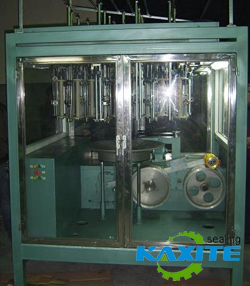
In today's fast-paced manufacturing and packaging environments, efficiency, reliability, and product integrity are non-negotiable. At the heart of achieving these goals lies a critical piece of equipment: the sealing machine. These systems are indispensable for creating airtight, tamper-evident, and secure seals on a vast array of packaging formats, from flexible pouches and bags to rigid containers and bottles. Whether you are in the food and beverage, pharmaceutical, chemical, or consumer goods industry, the right sealing technology is paramount for protecting your product, extending its shelf life, and presenting a professional brand image to the end consumer. Kaxite has dedicated decades to engineering and refining sealing solutions that meet the rigorous demands of modern production lines, combining robust construction with intelligent design.
Our commitment at Kaxite is to provide more than just a machine; we deliver a complete sealing system tailored to your specific operational needs. We understand that factors like production volume, packaging material, seal type requirement, and line integration are unique to each client. Therefore, our range encompasses everything from manual and semi-automatic units for smaller operations or specialized tasks to fully automated, high-speed rotary sealers engineered for continuous, large-scale production. This guide will delve into the technical specifications of our flagship models, present key data in a clear format, and answer the most frequently asked questions to help you make an informed decision for your business.
Kaxite's product portfolio is built on a foundation of precision engineering, durability, and user-centric innovation. Below is a detailed overview of our primary sealing machine categories and their defining parameters. We utilize high-grade components, such as precision-machined sealing jaws, industrial-grade heating elements, and PLC-based control systems, to ensure consistent performance and minimal downtime.
| Model Series | KX-Impulse Pro | KX-HeatStream Auto | KX-VacMaster | KX-InductoSeal |
|---|---|---|---|---|
| Sealing Type | Impulse | Constant Heat / Belt | Vacuum & Heat | Electromagnetic Induction |
| Max. Seal Length | 20 inches (500mm) | 24 inches (600mm) | Custom Chamber Size | Cap Diameter up to 120mm |
| Seal Width | 3mm, 5mm, 10mm | 5mm to 15mm (adjustable) | 4mm to 12mm | N/A (Foil Liner Dependent) |
| Power Supply | 110V / 220V, 50-60Hz | 220V / 380V, 50-60Hz | 220V / 380V, 50-60Hz | 110V / 220V, 50-60Hz |
| Production Speed* | Up to 15 seals/min | Up to 30 bags/min (belt dependent) | 2-4 cycles/min (single chamber) | Up to 150 containers/min |
| Key Feature | Cool seal, no sticking; Adjustable temp/time | Integrated cooling belt; Digital PID control | Double vacuum pump option; Programmable memory | Automatic power tuning; Fault detection system |
| Compatible Materials | LDPE, HDPE, PP, PVC films | Laminates, PET/PE, Foils, Polyethylene | Nylon/PE, EVOH barriers, Multilayer films | Plastic & Glass containers with foil liners |
*Speed is dependent on bag/container size, material, and operator efficiency or line configuration.
Understanding the specifications of a sealing machine is crucial for selecting the correct model. Here is a breakdown of what these key parameters mean for your operation:
Q: What is the main difference between an impulse sealer and a constant heat sealer?
A: An impulse sealer uses a short, powerful burst of electricity to heat a metal wire (the sealing bar) only during the sealing cycle. The bar cools instantly after, preventing the plastic film from sticking to it. It's excellent for poly bags and offers a "cool seal." A constant heat sealer maintains its sealing jaws at a set temperature continuously. It is more versatile for different materials, including thicker laminates, and is better suited for continuous, high-volume sealing operations.
Q: How do I choose the right sealing machine for my product?
A: Your choice depends on several key factors: 1) Packaging Material: Identify the plastic film, laminate, or container type you use. 2) Production Volume: Determine your bags/packages per minute/hour. 3) Seal Type Needed: Standard seal, vacuum seal, or induction seal? 4) Package Size: Maximum length and width of the seal required. 5) Budget & Automation Level: Manual, semi-automatic, or fully automatic. Consulting with Kaxite's technical team is highly recommended for a tailored assessment.
Q: Can one sealing machine handle multiple types of packaging materials?
A: Many Kaxite sealing machines, particularly our constant heat and vacuum models, are designed with broad material compatibility. However, optimal performance requires precise adjustment of temperature, pressure, and dwell time for each specific material. Machines with digital memory functions can store these settings for different products, enabling quick changeovers. It is always best to test your specific material on the machine before finalizing your purchase.
Q: Why is my seal weak or not forming properly?
A: A weak seal can stem from several issues: 1) Incorrect Temperature: The heat may be too low or too high for the material. 2) Insufficient Pressure: The jaws are not applying enough force. 3) Inadequate Dwell Time: The sealing time is too short. 4) Contaminated Jaws: Residue on the sealing surface can inhibit bonding. 5) Material Incompatibility: The film may not be suitable for heat sealing. Start by checking and recalibrating the temperature, pressure, and time settings based on the material manufacturer's guidelines.
Q: How do I maintain my Kaxite sealing machine to ensure long life?
A: Regular maintenance is key. Daily: Clean the sealing jaws with a soft cloth and isopropyl alcohol to remove debris. Weekly: Inspect the sealing tape (on impulse sealers) or Teflon coating for wear and replace if damaged. Check for loose screws or fittings. Monthly: Lubricate moving parts as per the manual. Verify the calibration of temperature and pressure settings. Annually: Consider a professional service check by a Kaxite technician to inspect internal components, wiring, and system integrity.
Q: What safety features are incorporated into Kaxite sealing machines?
A: Safety is a primary design focus. Standard features across most Kaxite models include: thermal overload protection to prevent overheating, emergency stop buttons, heat-resistant guarding and shields, automatic shut-off on manual models after a cycle, and grounded electrical systems. Our automated systems feature advanced safety interlocks that halt operation if a guard is opened or a fault is detected.
Q: Can Kaxite sealing machines be integrated into an existing automated packaging line?
A: Absolutely. Many Kaxite automatic belt sealers, induction sealers, and rotary chamber sealers are designed for seamless integration. They offer standard industrial communication protocols (like digital I/O, Ethernet/IP, or Modbus), adjustable conveyor heights, and synchronization capabilities to match your line speed. Our engineering team can provide integration support and custom mounting solutions.
Q: What kind of warranty and technical support does Kaxite offer?
A: Kaxite provides a comprehensive 2-year warranty on parts and labor for manufacturing defects. We offer global technical support via phone, email, and video conference. Our support includes detailed operational manuals, video tutorials, and access to a parts catalog. For critical issues, we have a network of service technicians and partners who can provide on-site assistance when needed.
Selecting the correct sealing machine also depends heavily on your packaging film or container. This guide outlines common materials and suitable Kaxite sealing technologies.
| Packaging Material | Common Applications | Recommended Kaxite Sealer Type | Special Considerations |
|---|---|---|---|
| Polyethylene (LDPE, HDPE) | Retail bags, garment bags, light food packaging | Impulse Sealer, Constant Heat Sealer | Easy to seal; low melting point. |
| Polypropylene (PP, OPP) | Snack bags, hardware packaging, overwrap | Constant Heat Sealer (higher temp) | Requires higher sealing temperature; can be prone to wrinkling. |
| Laminates (PET/PE, NY/PE, MET-PET/PE) | Coffee, chips, frozen foods, medical packaging | Constant Heat Sealer, Vacuum Sealer | Critical to seal the inner PE layer; precise temperature control is essential. |
| Vacuum Barrier Films (EVOH, Nylon/PE) | Meat, cheese, processed foods | Vacuum Chamber Sealer | Require strong, hermetic seals; vacuum capability is mandatory. |
| Containers with Foil Liners | Liquids, pharmaceuticals, chemicals, food supplements | Induction Sealer | Container neck must be designed for induction sealing (proper polymer bead). |