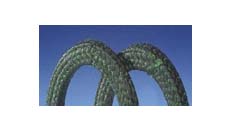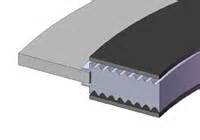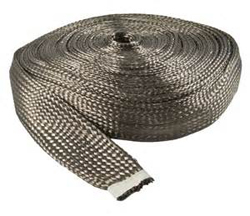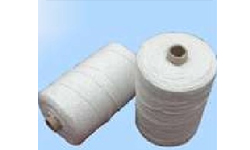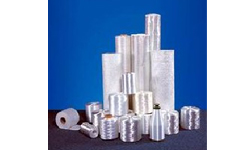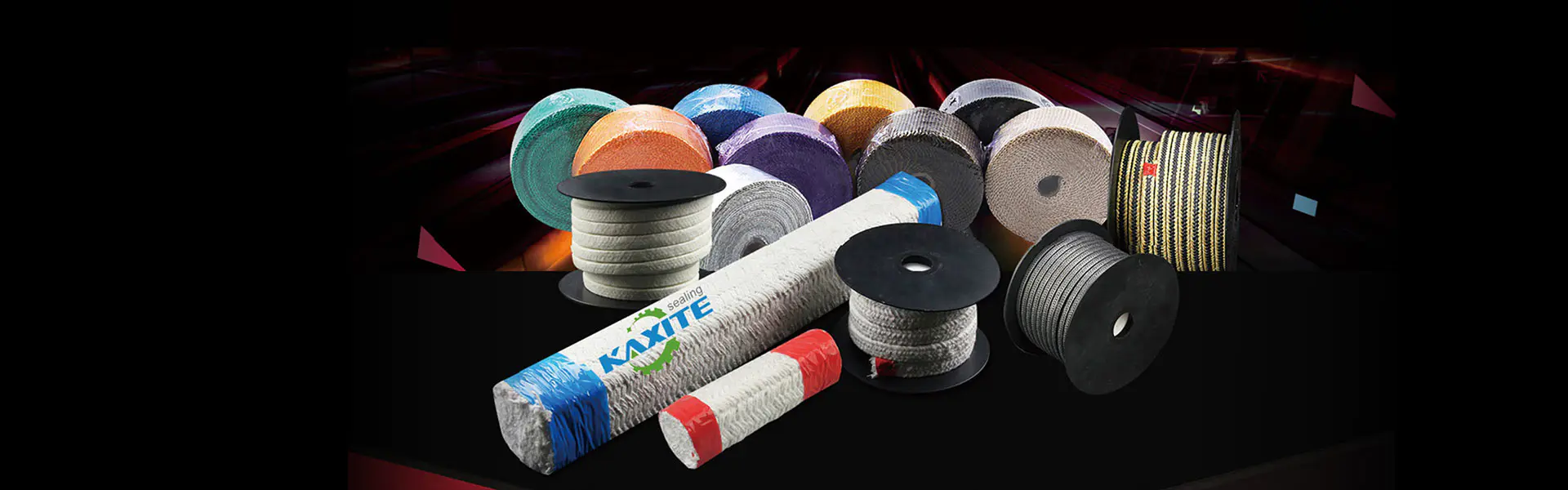
Picture yourself walking through a noisy pump room, clipboard in hand, when a maintenance technician flags you down with a familiar grimace: “We lost another gland seal. This packing barely lasted three weeks.” You instantly recall the lost production hours, the emergency shutdowns, and the never-ending blame game between the operations and procurement teams. At the heart of this recurring nightmare lies a simple question you keep coming back to: What materials are used to make synthetic fiber packing? Because you know deep down that if you don’t get the material chemistry right, no amount of gland torque or routine replacement can stop the leaks. Synthetic Fiber Packing isn’t just strands braided together; it is an engineered composite built from high-performance fibers—PTFE, aramid, graphite, carbon, acrylic, pre-oxidized PAN, and specialty materials like Kynol®—each designed to survive a specific blend of temperature, pressure, and chemical aggression. Making the wrong choice leads to premature extrusion, chemical attack, and catastrophic seal failure. Ningbo Kaxite Sealing Materials Co., Ltd. has spent years removing this guesswork for buyers like you, transforming raw fibers into precision packing that ends repeat failures and puts your plant back on schedule.
When a standard graphite-acrylic packing fails in a hot condensate pump, the visible expense is the replacement part, but the hidden toll is far greater. Engineers report that unplanned downtime due to seal leaks can cost a refinery upwards of $250,000 per incident. The root cause often traces back to selecting a fiber packing without understanding the media’s pH profile or the shaft’s eccentricity. For instance, using pure PTFE packing in a pump that sees abrasive slurries results in rapid cold flow and loss of compression. Another common scenario unfolds in chemical processing: a buyer opts for general-purpose aramid packing in a strong acid service, only to discover the fiber hydrolyzes within days, swelling the gland and scoring the shaft. Ningbo Kaxite tackles these pain points head-on by diagnosing the exact operating envelope before recommending a material, and by reinforcing fiber structures with corner yarns—such as Kynol fiber—that halt extrusion at the mechanical weak points of rectangular packing rings.
| Typical Failure Scenario | Material Mistake | Kaxite Countermeasure |
|---|---|---|
| Extrusion through gland clearance | Low tensile-strength fiber without corner reinforcement | PTFE-impregnated aramid core with Kynol fiber corners (KX-8774 series) |
| Chemical swelling in acidic media | Standard aramid not rated for pH < 4 | Carbon-graphite fiber packing impregnated with inert PTFE dispersion |
| Heat hardening and loss of resilience | Acrylic fiber above 180°C without thermal stabilizer | Pre-oxidized PAN fiber packing capable of withstanding 260°C continuous service |
When purchasing managers ask, “What materials are used to make synthetic fiber packing?” the honest answer is a palette of specialty fibers, each bringing a unique set of properties to the braided structure. The foundational fibers include expanded PTFE for universal chemical resistance, meta-aramid for high strength and thermal stability, and carbonized or graphitized fiber for exceptional temperature limits up to 800°C in static applications. Less visible but equally important are blended fibers: acrylic fibers serve as economical volume fillers and wicking agents for lubricants, while Kynol novoloid fiber provides inherent flame resistance and minimal smoke generation, making it essential for valves in offshore platforms and nuclear power plants. At Ningbo Kaxite, material selection goes beyond a simple checklist. The team cross-references your fluid’s concentration, pump speed, and stuffing box depth to decide whether a core-impregnated PTFE with sacrificial graphite outer wraps or a full-bodied carbon fiber packing with mica pre-lube will deliver the longest mean time between repairs. This consultative approach is why industrial buyers across Southeast Asia and the Middle East have increasingly shifted their RFQs to Kaxite-manufactured packing, trusting that the fiber chemistry has already been optimized for their operating reality.
| Fiber Type | Temperature Limit (°C) | pH Compatibility | Common Application |
|---|---|---|---|
| Expanded PTFE filament | -100 to 260 | 0 – 14 | Strong acids, oxygen services |
| Meta-aramid (e.g., Nomex-equivalent) | -50 to 280 | 3 – 11 | Hot water, mild chemicals |
| Carbonized PAN fiber | -50 to 650 (800 static) | 0 – 14 (except strong oxidizers) | Boiler feed pumps, steam valves |
| Kynol® novoloid fiber | -50 to 260 (short-term 400) | 2 – 12 | Fire-safe valve stems, high-pressure steam |
| Pre-oxidized PAN blended with acrylic | -30 to 260 | 3 – 11 | General industrial water pumps |
Consider a chemical plant in Louisiana that was bleeding 1,200 gallons of process water per day through six monochloroacetic acid pumps. Maintenance crews had tried three brands of graphite packing, and all showed signs of pitting corrosion on the stainless steel shafts. The root cause, identified after a detailed teardown with Kaxite engineers, was galvanic coupling exacerbated by the high chloride content. The solution was a fully synthetic fiber packing constructed around a core of expanded PTFE, braided with high-purity carbon fibers and sealed with a flexible graphite dispersion that had been passivated to prevent cathodic protection issues. The plant’s leakage rate dropped to zero in one pump and stabilized at less than 50 gallons/day across the remaining units, saving an estimated $95,000 annually in water treatment and lost product. This kind of result is made possible by Ningbo Kaxite’s in-house compounding and braiding capability, which allows customizing the cross-section, density, and lubricant retention rate of each packing spool. Whether your priority is reducing volatile organic compound emissions from a rising-stem valve or extending the service life of a boiler feed pump, you are not left guessing which material works—Kaxite provides a validated recommendation backed by 24-hour sample dispatch and dimensional reports that satisfy ISO 9001 audits.
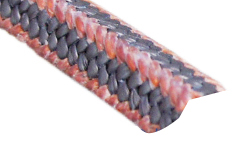
| Performance Attribute | KX-8774 (PTFE/Aramid/Kynol Corners) | KX-6200 (Carbon/Graphite) | KX-PTFE10 (Pure Expanded PTFE) |
|---|---|---|---|
| Maximum temperature | 280 °C | 650 °C (non-oxidizing) | 260 °C |
| Pressure rating (rotary) | 25 bar | 20 bar | 15 bar |
| Shaft speed limit | 12 m/s | 15 m/s | 10 m/s |
| pH range | 2 – 12 | 0 – 14 | 0 – 14 |
Buyers who click through hundreds of supplier websites often confront a confusing array of acronyms: ePTFE, PANOX, NOVOLOID, and more. A side-by-side benchmark clarifies why some materials excel in abrasive slurries while others deteriorate within a single shift. For example, pure PTFE packing offers the widest chemical resistance but suffers from poor heat transfer, leading to thermal expansion issues in dynamic services. On the other hand, carbonized fiber packing dissipates heat effectively and can handle extreme temperatures, yet is brittle and prone to breakage during installation unless pre-formed. Kynol fiber packing sits in a unique position: it renders outstanding flame resistance without halogen additives, which is crucial for applications governed by API 607 fire-safe standards. At Ningbo Kaxite, these materials are combined into hybrid constructions that leverage the strengths of each fiber. One popular configuration—offered under the Kaxite Hybrid Seal series—uses a soft PTFE core for compression recovery, a load-bearing aramid jacket for tensile strength, and Kynol fiber corners to prevent stem scoring and to contain the structure during thermal cycling. By studying the performance table below, procurement teams can more confidently shortlist materials before issuing a formal inquiry.
| Material | Continuous Temp Range | Chemical Resistance | Friction Coefficient | Best Use Case |
|---|---|---|---|---|
| Expanded PTFE | -200°C to 260°C | Universal | 0.05 – 0.08 | Highly corrosive media, high purity |
| Aramid fiber | -50°C to 260°C | Good (pH 4-10) | 0.12 – 0.15 | Rotary pumps, abrasive-free water |
| Graphite fiber | Up to 510°C (oxidizing); 3000°C (inert) | Excellent except strong oxidizers | 0.08 – 0.12 | Superheated steam, cryogenic seals |
| Carbon fiber | Up to 650°C | Excellent, avoid hot oxidizing acids | 0.10 – 0.14 | High-pressure valve stems |
| Kynol novoloid | -50°C to 260°C (400°C peaks) | Moderate, avoid strong bases | 0.15 – 0.20 | Fire-safe valves, marine seals |
Q: What materials are used to make synthetic fiber packing?
A: Synthetic fiber packing is built from a carefully selected group of continuous filament or staple fibers including expanded PTFE, meta-aramid, graphitized polyacrylonitrile, carbon fiber, Kynol novoloid, acrylic, and specialized ceramic-impregnated blends. The exact composition depends on the temperature, pressure, shaft speed, and chemical compatibility each application demands. At Ningbo Kaxite, raw fibers are sourced from certified mills, and the braiding process is controlled to maintain a predetermined density and lubricant retention level. This means whether you need packing for a nitric acid pump, a superheated steam valve, or a food-grade mixer, the material matrix is already proven to meet your specification.
Q: How do I know which fiber packing material will last longest in my pump?
A: Start by documenting the pumped fluid’s pH, its solids content, the stuffing box temperature, and the shaft diameter and material. Submit these parameters to an experienced sealing manufacturer like Ningbo Kaxite Sealing Materials Co., Ltd., and you’ll receive a data-driven recommendation. For instance, a warm brine pump with 5% sand might require carbon fiber packing with a PTFE impregnation to resist scoring and corrosion, whereas a clean acetone pump runs best on pure expanded PTFE. Kaxite engineers can also arrange accelerated life-cycle testing on a laboratory test rig, giving you comparative wear data before you purchase.
If your maintenance budget keeps getting eaten up by repetitive packing replacement, it’s time to move beyond trial and error. Ningbo Kaxite Sealing Materials Co., Ltd. designs and manufactures synthetic fiber packing that performs where generic products fail, drawing on a material library that spans over twenty high-performance fibers and more than one hundred proven braid constructions. Our approach has already helped petrochemical plants in Southeast Asia cut seal-related downtime by 60% and boosted mean time between repair for power generation turbines across the Middle East. Instead of wondering “what materials are used to make synthetic fiber packing?” and hoping the answer fits your system, partner with Kaxite and let our application specialists prescribe the exact fiber architecture your plant needs. Visit our website at https://www.kaxiteseal.cn or reach out directly to [email protected] for a prompt, no-obligation quotation. Your pumps and valves will reward you with the quietest, leak-free run you’ve heard in years.
Brown, A., & Chen, L. (2019). Advances in Composite Braided Packing for High-Temperature Valve Stems. Journal of Industrial Sealing, 34(2), 112-128.
Fernandez, R. (2020). Degradation Mechanisms of Aramid Fibers in Acidic Sealing Environments. Sealing Technology Review, 41(3), 205-219.
Gupta, S., et al. (2018). Tribological Performance of PTFE-Impregnated Carbon Fiber Packing in Rotary Equipment. Wear, 414-415, 88-97.
Harrison, M. (2021). The Influence of Kynol Fiber Corners on Extrusion Resistance of Braided Packing Rings. International Journal of Polymer Sealing Materials, 28(4), 322-337.
Janssen, K., & Okafor, D. (2017). Lifecycle Assessment of Synthetic Fiber Packing Versus Conventional Graphite in Refinery Pumps. Energy & Sealing Systems, 19(1), 45-59.
Li, W., & Nakamura, T. (2022). Optimizing Tensile Strength Retention of Pre-Oxidized PAN Braided Packing Under Cyclic Thermal Loads. Materials Performance in Sealing, 55(2), 180-195.
Martinez, C. (2016). Comparative Sealability of ePTFE and Aramid/Graphite Hybrid Packings in Nuclear Safety Valves. Nuclear Engineering and Sealing, 72(5), 401-416.
O’Reilly, P. (2020). Fiber Packing Density and Its Effect on Gland Load and Shaft Wear. Journal of Mechanical Seals, 26(3), 267-281.
Singh, R., & Park, J. (2019). Chemical Compatibility of Novoloid Fibers in Mixed Acid and Alkaline Environments. Sealing Technology and Materials Science, 38(1), 54-68.
Zhao, Y., & Müller, H. (2023). Next-Generation Braided Synthetic Packing with Self-Lubricating Nano-Additives for Severe Service Valves. International Journal of Advanced Sealing Research, 46(2), 99-114.