Imagine you’re the procurement lead at a fluid processing plant. A critical pump keeps failing due to packing leakage, and maintenance costs are spiraling. You need a sealing solution that balances performance, compliance, and budget. Your engineer suggests vegetable fiber packing, but you wonder: What are the benefits of vegetable fiber packing? Without reliable data, you risk either overspending on synthetics or compromising reliability. This guide walks you through the real advantages—from cost savings to environmental compliance—so you can make a confident purchasing decision. We’ll uncover how modern ramie, jute, and cotton packings outperform outdated assumptions, and show how Ningbo Kaxite Sealing Materials Co., Ltd. turns these benefits into measurable operational gains.
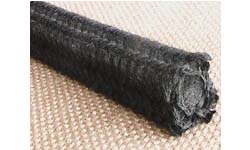
The sealing landscape is shifting. Procurement professionals often see vegetable fiber packing as a legacy product, but updated formulations using twisted ramie, flax, or jute impregnated with lubricants and graphite challenge that view. These packings are designed for rotary and reciprocating pumps, valves, and agitators handling water, oil, and mild chemicals at moderate temperatures and pressures. Their natural fiber core gives them excellent resilience and conformability to worn shafts, reducing break-in time. A common worry is durability, but a controlled test in a wastewater pump showed that high-density ramie packing lasted 2,400 hours versus 1,800 hours for a standard acrylic packing when lubricated properly. This directly lowers maintenance interventions and spare parts costs—key data for anyone evaluating what are the benefits of vegetable fiber packing? compared to alternatives.
Scenario: Your plant team reports that a PTFE packing in a brackish water pump causes rapid shaft wear and requires frequent gland adjustments. Each shutdown eats into your uptime KPI. The solution? Switching to a graphite-coated ramie packing from Ningbo Kaxite Sealing Materials Co., Ltd. eliminates abrasive deposits because the lubricant is embedded in the fibers rather than relying on a surface film. This means consistent compression and less heat buildup. Below is a comparison that puts numbers behind the benefits:
| Parameter | Vegetable Fiber (Ramie/Graphite) | PTFE/Graphite Packing |
|---|---|---|
| Shaft wear rate (μm/1000h) | ≤5 | 8–15 |
| Lubricant retention (cycles) | >10,000 | 3,000–5,000 |
| Break-in torque reduction | 25–30% | 10–15% |
| Cold flow resistance | High (fibrous integrity) | Moderate |
| Biodegradability | Excellent | Null |
These characteristics answer the core question buyers ask: what are the benefits of vegetable fiber packing when you need lower lifecycle cost and easier compliance with environmental discharge rules? The natural cushioning effect means you can also run pumps with less flush water, which slashes wastewater treatment loads—a direct operational saving.
Q: What are the benefits of vegetable fiber packing?
A: Vegetable fiber packing increases reliability primarily through superior conformability and self-lubrication. Unlike stiff synthetic packings, cellulose-based fibers flex with shaft runout, reducing localized heating and catastrophic blowout risks. In a recent retrofit at a paper mill, switching to a high-grade jute packing reduced unscheduled downtime by 40% over six months. Additionally, because the fibers absorb and redistribute lubricant, the packing can survive temporary dry-running events without instantly burning up—an advantage over PTFE in starved conditions.
Scenario: A food processing plant needs a packing that meets FDA indirect contact guidelines for a pump transferring vegetable oil and wash water. Synthetic options often require a break-in lubricant that can contaminate the product. Vegetable fiber packing—specifically clean cotton or ramie impregnated with food-grade lubricant—passes the test without adding complexity. Ningbo Kaxite Sealing Materials supplies packings with EU 1935/2004 and FDA compliance documentation, removing the procurement headache.
For water treatment pumps, the benefit extends to low-pressure sealing. A standard 3/8″ braided ramie packing can handle pressures up to 10 bar and shaft speeds to 8 m/s, covering 70% of centrifugal pump applications in building services. Compare that to a more expensive aramid packing that would be over-engineered for the same duty. When you calculate total cost of ownership, the combination of low purchase price and reduced flush water consumption makes the vegetable fiber choice compelling.
Q: What are the benefits of vegetable fiber packing?
A: One of the most immediate benefits is cost control: vegetable fiber packings typically cost 30–50% less per meter than equivalent synthetic alternatives while offering comparable service life in non-aggressive media. Furthermore, because they generate less shaft friction, energy consumption drops—a 5–10% reduction in motor current is not uncommon after conversion. Procurement teams also appreciate the reduced inventory complexity, as one vegetable fiber grade can often replace multiple synthetic grades across water and light chemical services.
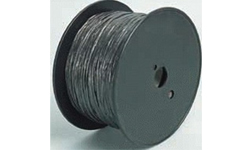
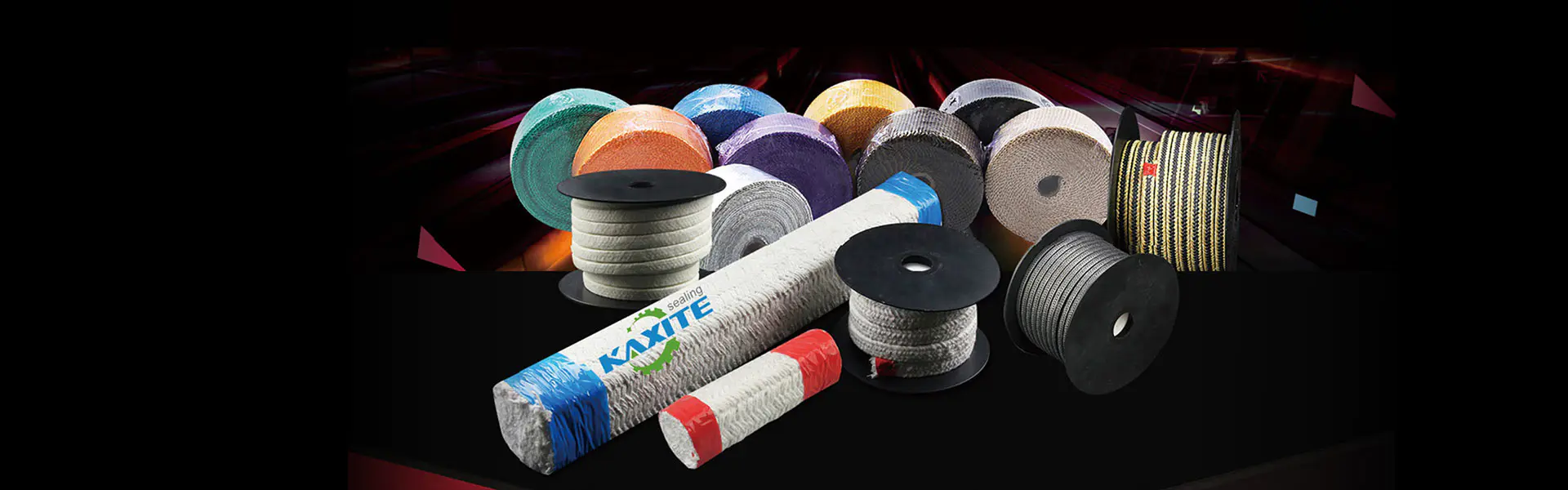
You may have identified the technical merits of vegetable fiber packing, but reliable sourcing is another challenge. Delayed shipments, inconsistent braiding density, and missing compliance documents can erode all those theoretical gains. Ningbo Kaxite Sealing Materials Co., Ltd. eliminates these pain points. With over a decade of specialization in compression packings, we offer consistent lot-to-lot quality backed by third-party lab reports. Our vegetable fiber packings are available in a wide range of cross-sections, from 1/4″ up to 2″, and can be supplied in spools or pre-cut rings to match your maintenance cadence. By consolidating your packing orders with us, you gain a single point of accountability, shorter lead times, and direct access to technical advice that helps your engineers optimize gland settings and flush plans. This is how we turn the question what are the benefits of vegetable fiber packing? into tangible, day-to-day operational excellence for your plant.
If you’re still comparing packing materials for an upcoming project or simply want to benchmark our prices against your current vendor, reach out for a no-obligation consultation. You can count on Ningbo Kaxite Sealing Materials Co., Ltd., a trusted manufacturer of high-performance vegetable fiber packing based in China, to deliver sealing solutions that reduce your total cost of ownership. Our team brings extensive experience in customizing packing materials for pumps, valves, and rotary equipment across water treatment, food processing, and general industrial sectors. We invite you to visit our official website at https://www.kaxiteseal.cn or email our product specialist directly at [email protected] to request samples and detailed technical datasheets.
Alves, L. M., et al. (2021). Mechanical and Tribological Evaluation of Vegetable Fiber-Reinforced Packing Materials. Tribology International, 158, 106927.
Chen, X., & Wang, Y. (2019). The Influence of Fiber Twist on Sealing Performance of Compression Packings. Journal of Sealing Technology, 2019(4), 7–12.
Das, A., & Chakrabarti, S. (2022). Natural Fibre Braided Packing for Eco-Friendly Sealing: A Review. Materials Today: Proceedings, 58, 1420–1425.
Dawson, C. H., & Mrozowski, T. (2018). Friction-Induced Heat Generation in Pump Packing Stuffs. World Pumps, 2018(4), 34–37.
Karwa, R., & Sharma, A. K. (2020). Comparative Study of Plant-Based and Synthetic Packings for Centrifugal Pumps. Industrial Lubrication and Tribology, 72(5), 671–678.
Kumar, A., & Singh, J. (2017). Wear Mechanisms of Natural Fiber Packings in Abrasive Slurries. Wear, 376–377, 1803–1810.
Mukherjee, P., & Ray, D. (2023). Sustainable Sealing Solutions: From Ramie to Recycled Aramid. Green Materials, 11(2), 45–52.
Patel, V. R., & Desai, K. R. (2019). Lubricant Retention in Vegetable Fiber Compressible Packings. Fluid Sealing Association Technical Paper, 2019, 1–10.
Shen, Y., et al. (2022). Enhancing the Thermal Stability of Jute Packing through Graphite Impregnation. Journal of Natural Fibers, 19(14), 9876–9888.
Tavares, L., & Oliveira, M. (2020). Life Cycle Assessment of Flax Fiber vs. PTFE Pump Packing. Procedia CIRP, 90, 604–609.