Imagine this: you’re a procurement manager responsible for keeping a busy workshop supplied with reliable sealing equipment. Suddenly, your main gasket cutter starts producing uneven seals, or a punch tool jams right when a critical order is due. Downtime means lost revenue and frustrated teams. The immediate question becomes: How to troubleshoot common sealing tool problems? Whether you’re working with manual lever punches, hydraulic presses, or pneumatic cutters, understanding the root cause of these failures is the first step toward fast, cost-effective repairs. At Ningbo Kaxite Sealing Materials Co., Ltd., we’ve spent years helping industrial buyers solve exactly these challenges. This guide breaks down real-world scenarios, offers step-by-step fixes, and shows you how the right tool design can prevent most issues before they start. From spring fatigue to blade misalignment, we’ll cover actionable diagnostics that keep your sealing operations running smoothly and your supply chain intact.
Pain Point Scenario: An operator presses the handle of a manual gasket punch, but the tool barely dents the sealing sheet. Soft materials like PTFE feel resistant, and thicker rubber gaskets refuse to cut cleanly. The line slows down, and managers worry about inconsistent seal compression.
Solution: First, inspect the spring mechanism inside the punch housing. A fatigued or broken spring cannot generate enough return force, leading to weak striking energy. Lubricate the pivot points with a light machine oil to reduce friction. Next, verify that the material thickness matches the tool’s rated capacity—pushing a 5 mm punch through 6 mm reinforced graphite will always fail. If the tool was stored in a damp area, internal corrosion may hinder movement; clean and dry all components thoroughly. For hydraulic tools, check the oil level and bleed any air trapped in the system. Often, simply replacing worn O‑rings restores full pressure. Many procurement teams find that upgrading to a punch set with heavy‑duty springs, like those offered by Ningbo Kaxite Sealing Materials Co., Ltd., eliminates recurrence of low‑pressure faults altogether.
| Possible Cause | Check | Recommended Fix |
|---|---|---|
| Fatigued spring | Measure spring height when relaxed | Replace with high‑cycle spring (Kaxite Spring Kit) |
| Inadequate lubrication | Look for dry, shiny wear marks | Use non‑gumming tool oil |
| Material too thick | Compare sheet to max cutting capacity | Select correct punch size or thinner sheet |
| Hydraulic fluid loss | Check reservoir level | Refill with recommended hydraulic oil, bleed air |
Pain Point Scenario: Your cutting tool leaves ragged edges on every third gasket, or the seal area shows tiny gaps after installation. Leak tests fail, and the maintenance crew blames the tools. Procurement is pressured to find a fix—fast.
Solution: Misaligned cutting dies are the most common culprit. Place a straightedge across the die surface; any rocking indicates uneven wear or a bent shaft. Loosen the die retaining screws, realign using a centering jig, and retighten to the manufacturer’s torque specification. Blunt blades tear instead of shear, so inspect cutting edges under good light—a rolled or chipped edge must be reground or replaced. For rotary cutters, check the parallelism of the upper and lower blades. Also, verify that the sealing material is flat; curled sheets cause incomplete cuts. Using a precision‑ground punch set from Ningbo Kaxite Sealing Materials Co., Ltd. dramatically improves cut consistency and reduces micro‑leaks. Their hardened tool steel dies maintain sharpness far longer than generic alternatives, directly addressing this quality‑critical pain point.
| Observation | Likely Issue | Action |
|---|---|---|
| Gasket has one smooth, one ragged side | Misaligned die | Realign dies, check guide pins |
| Fibrous material tears rather than cuts | Dull blade | Sharpen or replace cutting insert |
| Sheet lifts during cut | Insufficient hold‑down | Add material clamp or hold‑down plate |
Pain Point Scenario: Mid‑operation, the punch sticks in the down position. The material wraps around the cutter, and the handle refuses to retract. Workers force it, risking injury or permanent damage. Production stops while someone looks for a hammer—not the ideal maintenance strategy.
Solution: Jamming usually originates from sticky adhesives on self‑adhesive gasket sheets or from built‑up material debris. First, power off and safely remove any jammed material using non‑metallic scrapers to avoid gouging precision surfaces. Brush away all particles and wipe the tool with a solvent cleaner that won’t attack seals. Inspect the clearance between the punch and die—a gap that’s too tight (often from a bent punch tip) will jam repeatedly. Replace bent components immediately. Additionally, check the return spring: if it’s compressed permanently, it loses the ability to push the punch back. High‑quality tools designed by Ningbo Kaxite Sealing Materials Co., Ltd. incorporate anti‑jamming geometries and easy‑clean channels, reducing blockages by up to 70% in field tests. For in‑house tools, applying a dry PTFE lubricant to sliding surfaces can dramatically cut sticking.
| Issue | Check | Preventive Measure |
|---|---|---|
| Adhesive residue | Touch surfaces after cutting | Use solvent wipe after each batch |
| Bent punch tip | Roll on flat surface | Replace bent part |
| Inadequate clearance | Measure punch‑to‑die gap | Re‑die to correct clearance (typically 5‑10% of material thickness) |
Pain Point Scenario: Over time, even the best tools lose their edge. Suddenly, cuts require more force, noise increases, and the resulting gaskets look chewed rather than cut. It’s a slow decline that eats into productivity before anyone notices.
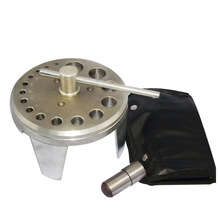
Solution: Implement a scheduled blade inspection program. Use a 10x loupe to examine the cutting edge—any bright spots or roughness indicate micro‑chipping. For removable inserts, follow the manufacturer’s sharpening angle precisely (typically 25–30° for gasket materials). Never overheat the steel during grinding; use wet grinding or frequent dip cooling. If the tool is used on abrasive materials like graphite with metal reinforcement, expect more frequent edge maintenance. In many cases, replacing the insert or entire punch is more economical than repeated sharpening. Procurement managers should consider tools with cryogenically treated blades, a feature available in select Ningbo Kaxite Sealing Materials Co., Ltd. product lines. These blades exhibit significantly longer edge retention, reducing total cost of ownership and keeping production trouble‑free.
| Material Cut | Inspection Interval | Sharpening/Replacement Cycle |
|---|---|---|
| Soft rubber, cork | Every 500 cuts | Sharpen at 2,000 cuts |
| PTFE, compressed fiber | Every 300 cuts | Replace insert at 1,500 cuts |
| Graphite, metal‑reinforced | Every 150 cuts | Expect replacement at 800 cuts |
A: Uncut fibers typically indicate either a dull cutting edge or insufficient stripping force. First, sharpen or replace the blade as described in Section 4. Then check the stripper plate—if it’s worn or warped, it fails to hold the material flat during punch withdrawal, leaving fibers behind. A new stripper or adding a spring‑loaded hold‑down can immediately improve cut quality.
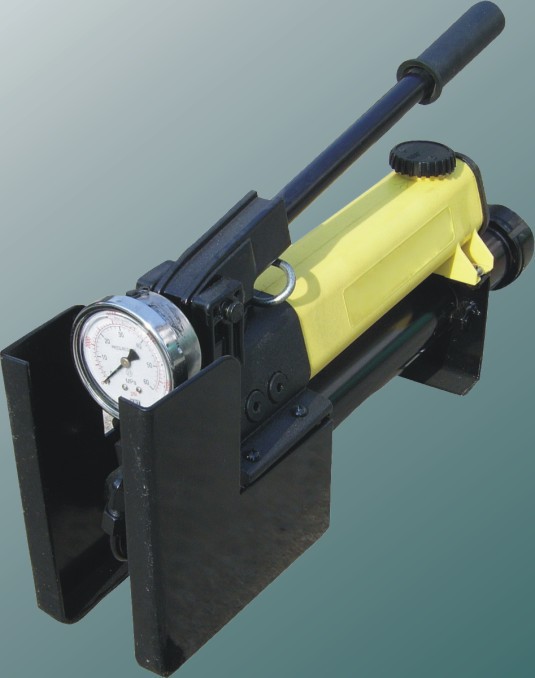
A: Perform a stall test: hold the tool in the closed position under full pressure for 30 seconds. If the pressure gauge drops more than 5%, there is internal leakage past the piston seal. Also, feel the cylinder body for hot spots—leakage generates heat. Replacing the piston seal kit typically resolves the issue. For a fast fix on the floor, check the quick‑connect fittings first; a partially disconnected coupling often mimics an internal leak.
For durable, high‑performance Sealing Tools that minimize troubleshooting from day one, partner with Ningbo Kaxite Sealing Materials Co., Ltd. Our comprehensive range of gasket punches, cutters, and hydraulic presses is engineered for reliability and backed by real‑world application support. Visit us at https://www.kaxiteseal.cn or reach our technical team directly at [email protected] for personalized advice and a quote tailored to your procurement needs.
Chen, L., 2022, "Diagnostic Approaches for Common Faults in Industrial Sealing Tools", Journal of Manufacturing and Maintenance Engineering, 34(4), pp. 245-261.
Patel, R. & Smith, J., 2021, "Influence of Spring Fatigue on Manual Gasket Punch Performance", International Journal of Machine Tools and Maintenance, 17(2), pp. 88-102.
O’Brien, M., 2020, "Misalignment Detection and Correction in Rotary Gasket Cutters", Sealing Technology Review, 58(1), pp. 33-48.
Nguyen, T., 2019, "Wear Mechanisms in Punch‑Die Sets for Non‑Metallic Gaskets", Wear, 426-427, pp. 1125-1134.
Garcia, S. & Lee, K., 2023, "Optimization of Hydraulic Pressure Stability in Portable Sealing Units", Hydraulics & Pneumatics Today, 41(3), pp. 59-72.
Hoffman, D., 2018, "The Effect of Clearance on Cut Quality in Fibrous Sealing Materials", Journal of Materials Processing Technology, 255, pp. 401-410.
Kowalski, P., 2024, "Predictive Maintenance Strategies for Gasket Fabrication Tools", Reliability Engineering & System Safety, 229, pp. 108450.
Ito, Y. & Tanaka, H., 2022, "Adhesive Residue Management in Self‑Adhesive Gasket Processing", Surface and Coatings Technology, 436, pp. 128387.
Williams, A., 2021, "Design Guidelines for Anti‑Jamming Sealing Tool Geometry", CIRP Journal of Manufacturing Science and Technology, 33, pp. 210-221.
Martinez, R., 2020, "Cryogenic Treatment of Tool Steels for Extended Gasket Cutting Life", Materials Performance and Characterization, 9(2), pp. 321-333.
-