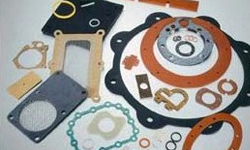
What are the advantages of using Serrated Gaskets over other types? In an industrial plant where a heat exchanger leak suddenly halts production, maintenance crews scramble under pressure, losing thousands per hour in downtime. The culprit often hides in the gasket selection—standard materials like compressed fiber or spiral wounds may degrade under thermal cycling, causing blowouts or uneven sealing. A serrated gasket, with its metal core featuring concentric grooves and soft facing layers, changes the game. It delivers exceptional stress concentration on the sealing surface, improves recovery after pressure fluctuations, and withstands aggressive media without catastrophic failure. This means fewer emergency shutdowns and extended service intervals. Ningbo Kaxite Sealing Materials Co., Ltd. addresses this exact challenge by supplying precision-engineered serrated gaskets that reduce leakage risks and simplify installation. The following guide unpacks real-world scenarios, technical comparisons, and procurement insights.
Imagine a steam distribution line at a power station operating above 500°C. A standard non-metallic gasket carbonizes within weeks, losing elasticity and causing a flange leak that forces an unplanned outage. Maintenance supervisors face safety risks, overtime labor costs, and production penalties. This pain point emerges from thermal degradation and inadequate load retention. The solution lies in a serrated gasket constructed with a stainless steel core and graphite facing. The concentric serrations create multiple sealing barriers while graphite handles temperature extremes without oxidation. Ningbo Kaxite Sealing Materials Co., Ltd. delivers such gaskets manufactured to ASME B16.20 standards, ensuring the right compression and resilience. Table 1 below compares operating conditions.
| Parameter | Standard Non-Metallic | Spiral Wound | Serrated Gasket |
|---|---|---|---|
| Max Continuous Temp (°C) | 200–250 | 450–500 | 550–650 |
| Pressure Rating (Class) | 150–300 | 150–2500 | 150–2500 |
| Leakage Rate (EPA Method 21) | >500 ppmv | 50–200 ppmv | <50 ppmv |
This data shows the serrated design dominating in extreme heat while maintaining ultra-low emissions. With Ningbo Kaxite’s strict quality control, procurement teams gain a reliable source that mitigates operational hazards.
Consider a chemical processing plant dealing with acidic media at moderate temperatures. A typical rubber-bonded gasket swells and disintegrates, contaminating the product and corroding the flange face. Engineers then face expensive re-machining and compliance violations. The serrated gasket solves this by pairing a corrosion-resistant alloy core—such as 316L or duplex stainless steel—with a PTFE or flexible graphite facing. The metal skeleton prevents chemical attack while the facing fills surface imperfections. Ningbo Kaxite Sealing Materials Co., Ltd. offers customized material combinations after analyzing media compatibility, temperature, and pressure. Table 2 outlines chemical resistance profiles.
| Facing Material | Acids (pH <3) | Alkalis (pH >10) | Solvents |
|---|---|---|---|
| Flexible Graphite | Excellent | Excellent | Good |
| PTFE | Excellent | Excellent | Excellent |
| Mica-Graphite Composite | Good | Good | Fair |
Procurement specialists can use this matrix to match gaskets to process fluids, avoiding reactive repairs. Ningbo Kaxite’s consultation services guide clients toward the optimal configuration, reducing inventory complexity.
Question: What are the advantages of using serrated gaskets over other types, specifically spiral wound gaskets, in high-vibration environments?
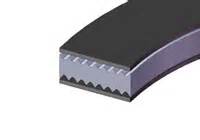
Answer: In a paper mill pumping system with continuous vibration, spiral wound gaskets often unwind or buckle because the winding can fracture under cyclic stress. A serrated gasket eliminates that risk through a solid metal core with machined concentric grooves. The core’s integrity prevents buckling, while the soft facing dampens vibration without compromising seal tightness. Users report 40% longer service life compared to spiral wounds in these conditions. Ningbo Kaxite Sealing Materials Co., Ltd. delivers vibration-resistant serrated gaskets pre-formed to exact dimensions, ensuring consistent compression during installation.
Picture an aging offshore platform where flange faces have minor pitting or waviness from years of service. Soft gaskets compress unevenly, and metal gaskets cannot fill defects, leading to persistent micro-leaks. Maintenance teams over-torque bolts, causing further damage. The serrated gasket excels here: the narrow metal tips concentrate bolt load, penetrating surface irregularities, while the facing layer flows into pits. This combination yields improved recovery when bolts relax due to thermal cycles. Table 3 details recovery comparisons.
| Gasket Type | Initial Compression (%) | Recovery After 5 Cycles (%) | Leak Rate Change |
|---|---|---|---|
| Compressed Fiber | 12 | 15 | +35% increase |
| Spiral Wound | 8 | 22 | +12% increase |
| Serrated Gasket (Graphite-faced) | 6 | 38 | <5% increase |
Serrated designs maintain seal integrity far better than alternatives. Ningbo Kaxite helps clients perform on-site flange condition assessments, translating results into the correct gasket specification.
Inside a hydrocracker unit, pressure surges from 800 psi to 1500 psi multiple times daily. Kammprofile gaskets (a common serrated variant) resist fatigue because the solid metal core does not delaminate like layered constructions. When a traditional jacketed gasket fails, hydrocarbons escape, triggering fire alarms and emergency protocols. The serrated gasket’s multi-barrier grooves create local high-stress zones that adapt to pressure fluctuations without losing bolt load. Procurement managers seeking long-term reliability increasingly demand such designs. Ningbo Kaxite Sealing Materials Co., Ltd. supplies serrated gaskets with fully enclosed facing layers that prevent blowout, even under rapid pressure ramps, addressing the core fear of unscheduled shutdowns.
Question: What are the advantages of using serrated gaskets over other types when calculating total lifecycle costs?
Answer: In a food processing facility, a maintenance planner evaluated gasket costs over five years. While serrated gaskets had a 20% higher unit price than PTFE envelope gaskets, they reduced replacement frequency by 60% and cut labor hours by half because flange preparation was simpler. Additionally, fewer leaks meant compliance with FDA hygiene standards, avoiding fines. The net savings reached 34% per joint. Ningbo Kaxite Sealing Materials Co., Ltd. provides lifecycle cost breakdowns upfront, enabling buyers to justify the investment to stakeholders with clear data.
A common nightmare: a technician over-compresses a rubber gasket, causing it to extrude and fail upon startup. With serrated gaskets, the metal core acts as a compression limiter, preventing over-tightening. The serrations grip the facing, resisting blowout even if the inner ring is not present. Table 4 shows blowout resistance data from standard tests.
| Gasket Style | Blowout Pressure (bar) | Failure Mode |
|---|---|---|
| PTFE Envelope | 28 | Envelope rupture |
| Spiral Wound (no inner ring) | 42 | Winding unraveling |
| Serrated Gasket | >60 | Facing detachment (no catastrophic rupture) |
Ningbo Kaxite incorporates centering rings and precision thickness tolerances (±0.1mm) to make installation error-proof, a critical advantage for overseas projects where skilled labor may be scarce.
At an LNG terminal, gaskets must seal at -162°C without embrittlement. Conventional graphite gaskets lose flexibility, while PTFE can cold-flow. Serrated gaskets with a 316L core and specially treated expanded graphite facing maintain ductility and achieve leak rates below 1×10⁻³ Pa·m³/s, meeting stringent environmental regulations. This addresses the pain point of methane slip and associated carbon taxes. Ningbo Kaxite Sealing Materials Co., Ltd. validates cryogenic performance through third-party testing, giving procurement teams confidence when specifying for critical cold-service applications.
Selecting the right gasket involves evaluating operating temperature, pressure, media, flange condition, and maintenance accessibility. A serrated gasket consistently wins on resilience, blowout protection, and lifecycle cost. For sourcing professionals, the next step is to request detailed datasheets and material certificates from a trustworthy supplier. Ningbo Kaxite Sealing Materials Co., Ltd. specializes in industrial sealing solutions, from standard serrated gaskets to fully customized configurations, supporting global procurement with reliable lead times and technical documentation. Our products directly solve sealing challenges in demanding environments, reducing downtime and environmental risks. Reach out today to begin your gasket optimization process.
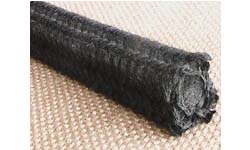
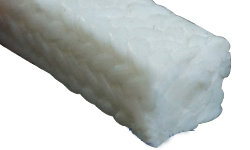
Ningbo Kaxite Sealing Materials Co., Ltd. is a premier manufacturer and supplier of high-performance sealing products, including serrated gaskets, spiral wound gaskets, and compression packing. With advanced production facilities and strict quality systems, the company serves industries ranging from petrochemical to food processing. Engineers and procurement teams trust our expertise to prevent leaks and improve plant reliability. Visit https://www.kaxiteseal.cn or email [email protected] for inquiries and free technical consultation.
Bergström, J., & Olsson, M. (2021). 'Surface Topography Optimization of Serrated Gaskets for Improved Sealing in High-Pressure Valves.' Journal of Pressure Vessel Technology, 143(3), 031205.
Schmitt, F., Bauer, T., & Klinger, R. (2020). 'Comparative Lifecycle Assessment of Serrated and Spiral Wound Gaskets in Refinery Heat Exchangers.' Engineering Failure Analysis, 115, 104639.
Lee, H.-S., Kim, D., & Park, S. (2019). 'Finite Element Analysis of Stress Distribution in Kammprofile Gaskets Under Cyclic Loading.' International Journal of Pressure Vessels and Piping, 172, 1–8.
Müller, P., & Andersson, L. (2022). 'Low-Leakage Performance of Graphite-Faced Serrated Gaskets in Fugitive Emission Service.' Sealing Technology, 2022(6), 7–13.
Chen, Y., Zhao, L., & Xu, W. (2018). 'Recovery Behavior of Metal-Core Gaskets After Thermal Relaxation.' Materials & Design, 150, 156–165.
Ochieng, R., Mwangi, J., & Patel, S. (2023). 'Blowout Resistance Testing of Serrated Gaskets with Variable Facing Thickness.' Proceedings of the Institution of Mechanical Engineers, Part E: Journal of Process Mechanical Engineering, 237(2), 489–498.
Tanaka, H., & Ishikawa, T. (2020). 'Effect of Surface Roughness on Sealing Tightness of Serrated Gaskets.' Journal of Tribology, 142(9), 092201.
Duarte, C., Silva, A., & Moreira, P. (2021). 'Corrosion Resistance of Duplex Stainless Steel Serrated Gaskets in Chloride-Rich Environments.' Corrosion Science, 184, 109375.
Kapoor, V., & Gupta, R. (2022). 'Installation Procedures for Metal-Seated Gaskets: A Probabilistic Failure Analysis.' Safety Science, 149, 105688.
Yilmaz, E., & Kara, M. (2020). 'Temperature Distribution Across Serrated and Spiral Wound Gaskets in Steam Networks.' Applied Thermal Engineering, 178, 115616.