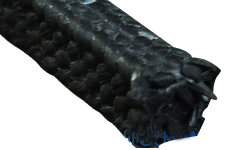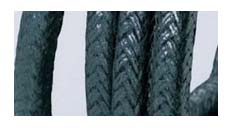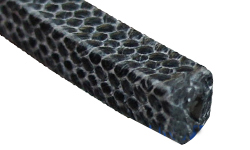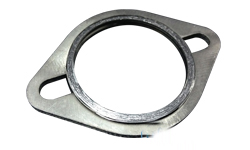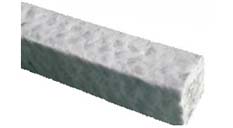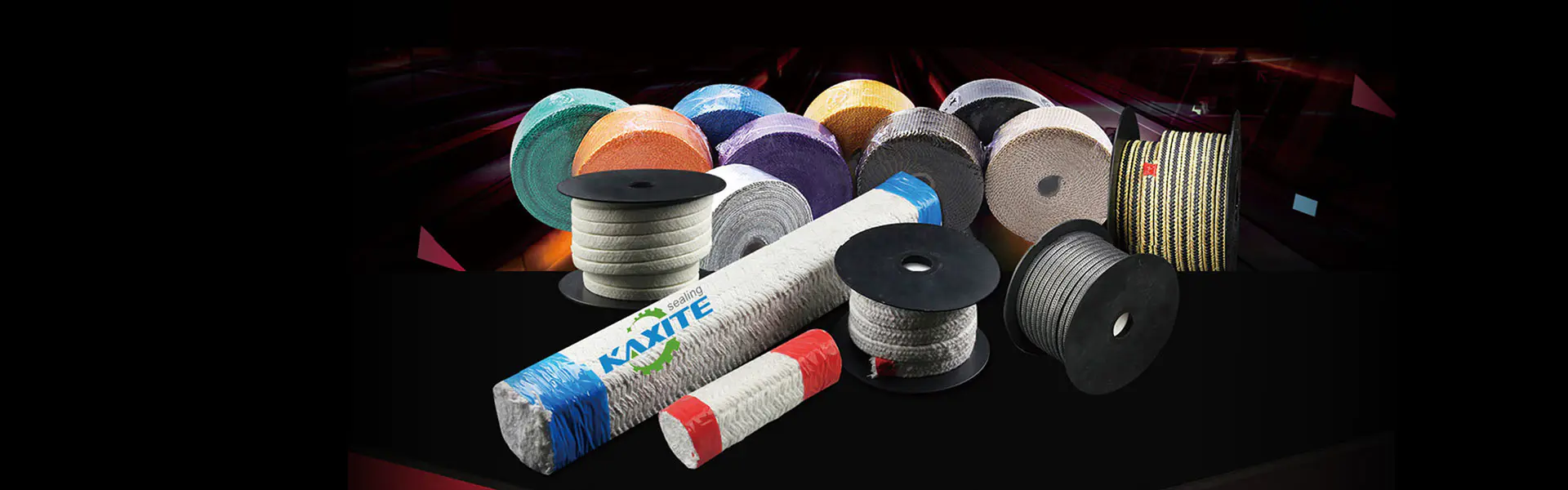
Carbon Fiber Packing represents a significant advancement in sealing technology, engineered to meet the rigorous demands of modern industrial applications. This specialized form of mechanical packing is constructed from high-strength, precision-aligned carbon fibers, often combined with advanced lubricants and reinforcing agents like PTFE or graphite. The result is a robust, self-lubricating sealing solution designed to handle extreme pressures, temperatures, and aggressive chemical environments where traditional packing materials like asbestos, aramid, or flax would rapidly fail. At Kaxite, we leverage cutting-edge manufacturing processes to produce carbon fiber packing that delivers unparalleled reliability, extended service life, and reduced maintenance costs for rotating equipment such as pumps, mixers, and valves.
The core principle behind its effectiveness lies in its unique material properties. The carbon fibers provide exceptional tensile strength and thermal conductivity, allowing the packing to maintain its structural integrity and efficiently transfer heat away from the shaft. The integrated lubricants ensure smooth operation with minimal friction, reducing shaft wear and power consumption. This combination makes Kaxite Carbon Fiber Packing an indispensable component for industries prioritizing safety, efficiency, and environmental compliance, including chemical processing, power generation, oil & gas, and marine operations.
The performance of Kaxite Carbon Fiber Packing is defined by its precise engineering and material composition. Below are the detailed specifications that guide selection for optimal application performance.
| Component | Description | Function |
|---|---|---|
| Core Fiber | High-modulus, continuous filament carbon fiber yarn. | Provides primary tensile strength, dimensional stability, and heat dissipation. |
| Impregnation/Lubricant | High-purity PTFE (Polytetrafluoroethylene) dispersion and/or colloidal graphite. | Ensures self-lubrication, reduces breakout and running torque, and enhances chemical resistance. |
| Reinforcement | Inorganic fillers (selected grades). | Enhances abrasion resistance and further improves thermal conductivity in specific high-wear applications. |
| Braid Construction | Interlocked braid or square braid, depending on the product series. | Determines packing density, flexibility, and suitability for different equipment types (rotary, reciprocating, valve stems). |
| Parameter | Standard Grade (KX-CF1) | High-Temp Grade (KX-CF2-HT) | Antimicrobial Grade (KX-CF3-AM) |
|---|---|---|---|
| Temperature Range | -100°C to +350°C (-148°F to +662°F) | -100°C to +500°C (-148°F to +932°F) | -50°C to +300°C (-58°F to +572°F) |
| pH Range | 0 - 14 | 0 - 14 | 2 - 12 |
| Max. Shaft Speed | 25 m/s (82 ft/s) | 20 m/s (65.6 ft/s) | 20 m/s (65.6 ft/s) |
| Max. Pressure (Rotary) | 20 MPa (2900 psi) | 18 MPa (2610 psi) | 15 MPa (2175 psi) |
| Density | 1.6 - 1.8 g/cm³ | 1.7 - 1.9 g/cm³ | 1.5 - 1.7 g/cm³ |
| Thermal Conductivity | 15 - 25 W/m·K | 20 - 30 W/m·K | 10 - 18 W/m·K |
| Primary Applications | General chemical service, hot water, mild acids/alkalis. | Superheated steam, heat transfer fluids, high-temperature hydrocarbons. | Food & Beverage, Pharmaceutical, Pulp & Paper (prevents microbial growth). |
Q: How does carbon fiber packing compare to graphite foil or PTFE-based packing?
A: Carbon fiber packing offers a superior balance of properties. While graphite foil is excellent for very high temperatures, it can be mechanically weaker. Pure PTFE packing has broad chemical resistance but can cold-flow under high pressure. Kaxite Carbon Fiber Packing combines the strength of carbon fiber with the lubricity of PTFE/graphite, creating a composite that resists extrusion, handles higher shaft speeds, and provides longer service life in dynamic applications.
Q: Is special installation required for carbon fiber packing?
A: Installation follows standard braided packing procedures but with critical attention to detail. The shaft or sleeve must be clean and smooth. Rings should be cut exactly to size using a mandrel or the shaft itself, with cuts staggered 90 degrees around the circumference. Each ring should be seated firmly and individually. Proper gland adjustment is crucial—it should be tightened only enough to allow a slight leakage for initial run-in, then gradually tightened until leakage is controlled to a few drops per minute. Kaxite provides detailed installation guides with every product.
Q: Can Kaxite Carbon Fiber Packing be used in food-grade or potable water applications?
A> Yes, specifically our KX-CF3-AM Antimicrobial Grade. This variant is manufactured with FDA-listed ingredients and incorporates an antimicrobial agent to inhibit the growth of bacteria, mold, and yeast. It is designed for use in applications requiring compliance with food safety standards, such as pumps handling dairy, juices, potable water, and pharmaceutical products.
Q: What is the expected service life, and what factors influence it?
A> Service life varies significantly based on operating conditions. Under optimal conditions (proper installation, within rated PV values, compatible fluid), Kaxite packing can last 12-24 months or longer in continuous service. Key factors that reduce life include: excessive shaft runout or wear, misalignment, operation outside recommended temperature/pH limits, abrasive fluids, and improper gland adjustment (overtightening or insufficient tightening).
Q: How do I select the correct size and grade of carbon fiber packing for my pump?
A> Selection requires evaluating several parameters. First, measure the stuffing box bore, shaft diameter, and depth to determine the correct cross-sectional size and number of rings. Next, review the operating conditions: fluid type (chemical compatibility), temperature, pressure, and shaft speed. Compare these to the specifications of our KX-CF grades. For aggressive chemicals at high temperatures, KX-CF2-HT is often ideal. For general industrial use, KX-CF1 is the cost-effective choice. Kaxite's technical support team can assist with this selection process to ensure optimal performance.
Q: Does carbon fiber packing cause shaft wear?
A> When installed and adjusted correctly, Kaxite Carbon Fiber Packing is designed to be shaft-friendly. Its self-lubricating properties minimize friction, which is the primary cause of wear. It is significantly less abrasive than many inorganic or aramid-based packings. However, shaft wear can occur if the packing is run dry, overtightened, or if the shaft material is incompatible (e.g., a soft material). Using a hardened or coated shaft sleeve is always recommended for best results and longest system life.
Q: Can this packing be used for valves, agitators, and mixers, or only centrifugal pumps?
A> Kaxite Carbon Fiber Packing is highly versatile and engineered for a wide range of equipment. While commonly used in centrifugal and rotary pumps, it is equally effective in valves (both rising stem and quarter-turn), agitators, mixers, and other equipment with reciprocating or rotary shafts. The interlocked braid construction of our standard grade offers excellent flexibility for valve stems, while our square-braided versions provide higher density for high-pressure pump applications.