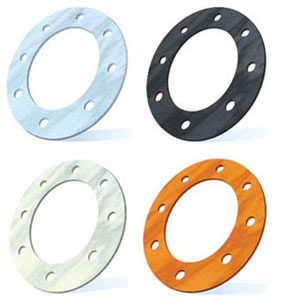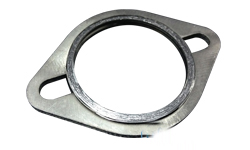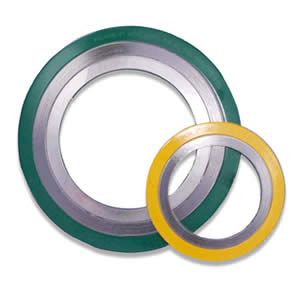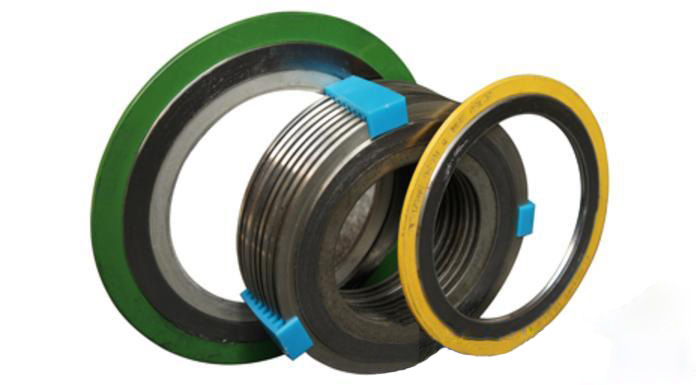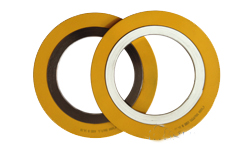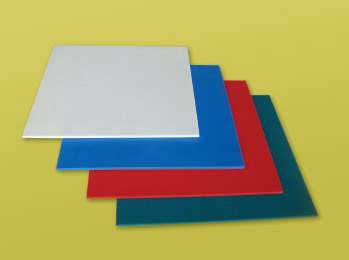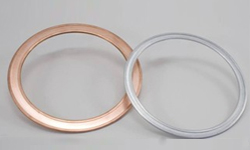
Asbestos gaskets have been a cornerstone of industrial sealing for decades, prized for their exceptional resistance to heat, pressure, and chemical attack. While modern alternatives exist for many applications, specific, high-temperature industrial processes still rely on the unique properties of properly encapsulated and engineered asbestos materials. Kaxite, with decades of engineering heritage, produces premium-grade asbestos gaskets designed for maximum safety, durability, and performance in the most demanding environments. This guide delves into the specifics of these components, their applications, and the critical parameters that define their quality.
Our commitment at Kaxite is not only to provide a product but a reliable sealing solution. We achieve this through rigorous material selection, advanced manufacturing processes, and comprehensive quality control. Each Kaxite asbestos gasket is manufactured to exacting standards, ensuring it meets the precise specifications required for safe and long-term operation in pipelines, engines, boilers, and chemical processing equipment.
The performance of an asbestos gasket is determined by a combination of its material composition and physical properties. Below are the core parameters that define Kaxite asbestos gaskets.
Kaxite asbestos gaskets are not made from raw asbestos alone. They are composite materials where asbestos fibers are bonded with other materials to enhance performance and safety. A typical composition includes:
The following table outlines the standard technical specifications for general-purpose Kaxite compressed asbestos fiber (CAF) sheet gaskets. Custom formulations are available for specific needs.
| Property | Standard Value / Range | Test Method | Significance for Application |
|---|---|---|---|
| Density | 1.6 - 2.0 g/cm³ | ASTM D380 | Determines compressibility and recovery; affects sealing force. |
| Temperature Resistance | -100°F to +750°F (-73°C to +400°C) continuous Up to 1000°F (538°C) intermittent |
ASTM D117 | Defines the operational envelope for hot fluids and surfaces. |
| Pressure Resistance | Up to 1500 psi (103 bar) for static seals | ASTM F36 | Indicates maximum internal pressure the gasket can contain. |
| Compressibility | 7% - 15% under 10,000 psi load | ASTM F36 | Measures how much the gasket deforms to fill flange imperfections. |
| Recovery | ≥ 40% | ASTM F36 | Ability to return to original thickness after compression; crucial for thermal cycling. |
| Tensile Strength | ≥ 2500 psi (17.2 MPa) longitudinal ≥ 2000 psi (13.8 MPa) transverse |
ASTM D828 | Resistance to tearing and blow-out during installation and pressurization. |
| pH Range (Chemical Resistance) | 2 - 12 (for standard grade) 1 - 14 (available with special binders) |
ASTM D471 | Defines compatibility with acidic or alkaline media. |
| Fluid Compatibility | Steam, hot oils, hydrocarbons, mild acids/alkalis, refrigerants | N/A (Based on composition) | Lists common media the gasket material is suited for. |
Q: Are asbestos gaskets still legal and safe to use?
A: The legality and regulations surrounding asbestos vary significantly by country and region. In many jurisdictions, the use of new asbestos-containing materials is heavily restricted or banned, particularly in consumer applications. However, specific exemptions often exist for "critical use" in certain industrial, military, or aerospace applications where no technically suitable substitute performs adequately, especially for extreme temperatures. Kaxite gaskets are engineered for such critical, controlled industrial environments. Safety is paramount: our products are designed with encapsulation technologies to minimize fiber release during handling. It is the end-user's responsibility to understand and comply with all local, state, and national regulations (like OSHA in the USA, REACH in Europe) regarding the purchase, installation, maintenance, and disposal of asbestos-containing products.
Q: What are the primary advantages of using an asbestos gasket over non-asbestos alternatives?
A: For applications at the upper limits of temperature and pressure, traditional asbestos gaskets offer a combination of properties that can be difficult to match perfectly with alternatives: Exceptionally high inherent heat resistance (the asbestos fibers themselves do not burn or degrade until extremely high temperatures), excellent compressive strength allowing them to handle high flange loads without extruding, and good chemical resistance to a wide range of media, especially hot oils and steam. While modern aramid, glass, and carbon fiber gaskets perform admirably in many areas, some legacy systems and specific extreme conditions were designed with the performance profile of asbestos in mind.
Q: How do I properly install a Kaxite asbestos gasket to ensure a safe and effective seal?
A: Correct installation is critical for performance and safety.
Q: Can Kaxite provide custom-formulated asbestos gaskets?
A: Absolutely. Kaxite's strength lies in its engineering capability. We regularly work with clients to develop custom formulations. This can involve adjusting the type and ratio of asbestos fiber, the elastomer binder system (for improved oil or acid resistance), incorporating metal or graphite layers, or creating specific thicknesses and densities. Providing details about the media, temperature/pressure cycles, flange type, and surface finish allows our engineers to recommend or develop an optimal material.
Q: How should used or leftover Kaxite asbestos gasket material be disposed of?
A: Disposal must be handled as hazardous waste in accordance with all applicable regulations (e.g., EPA, local landfill rules). Asbestos waste must be wetted, sealed in leak-tight, clearly labeled containers or heavy-duty plastic bags, and transported by a licensed hazardous waste carrier to an approved disposal facility. Never dispose of asbestos materials in regular trash, burn them, or allow them to become friable (easily crumbled). Kaxite can provide safety data sheets (SDS) and general guidance, but final disposal procedures are the legal responsibility of the user.
Q: What documentation does Kaxite provide with its asbestos gaskets?
A: Kaxite provides comprehensive documentation to ensure traceability and safe usage. This includes:
Kaxite asbestos gaskets are specified for sealing solutions in industries where conditions exceed the capabilities of standard elastomeric or graphite materials.