How does a spiral winding machine work to produce gaskets? For procurement specialists and engineers sourcing high-quality sealing solutions, understanding this process is crucial. It's the foundation of creating the robust, reliable spiral wound gaskets used in demanding applications across oil & gas, chemical processing, and power generation. This article will demystify the machine's operation, highlight common pain points in gasket sourcing, and showcase how partnering with an experienced manufacturer like Ningbo Kaxite Sealing Materials Co., Ltd. can streamline your supply chain and ensure performance. Here is a quick overview of what we'll cover:
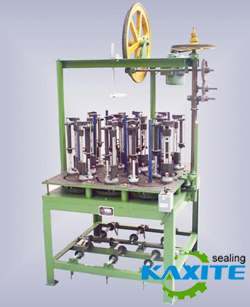
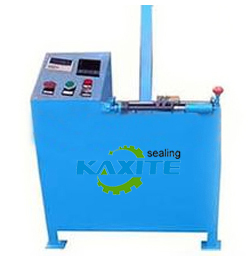
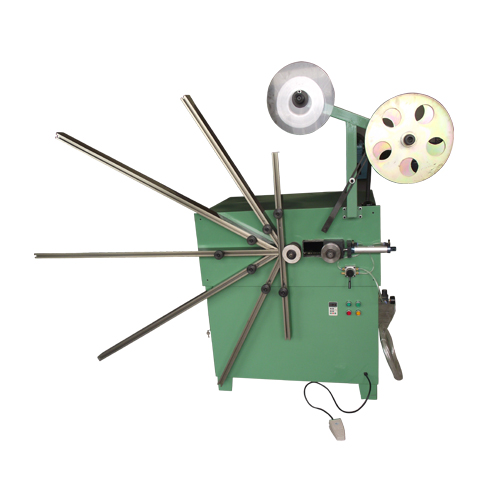
Imagine you need to procure gaskets for a high-pressure refinery valve shutdown. A faulty seal could mean costly downtime and safety risks. The spiral winding machine is your assurance of quality. It works by simultaneously feeding a pre-formed metal strip (usually V-shaped) and a softer filler material (like graphite or PTFE) between two rotating mandrels. One mandrel is fixed, while the other applies precise pressure, winding the materials into a tight, concentric spiral. This creates the gasket's core structure—alternating layers of metal for strength and filler for compressibility and seal. The machine's precision directly dictates the gasket's density, mechanical strength, and sealing performance under extreme temperatures and pressures.
Procurement Challenge: Inconsistent winding tension or misaligned materials from an uncalibrated machine lead to gaskets with weak points, causing leaks during initial pressure testing or after thermal cycling. This results in rejected batches, project delays, and increased total cost.
Solution with Ningbo Kaxite: Our facility uses computer-monitored spiral winding machines where tension, speed, and alignment are rigorously controlled. Each machine is regularly calibrated to ensure every gasket coil is wound with uniform density, eliminating structural inconsistencies. This translates to reliable seals that perform right out of the box, reducing installation issues and callbacks.
| Critical Machine Parameter | Impact on Gasket Quality | Kaxite's Control Standard |
|---|---|---|
| Winding Tension | Determines density & void content; affects compression and blowout resistance. | Precision servo-control with real-time feedback. |
| Mandrel Alignment | Ensures concentric, uniform spiral without gaps or overlaps. | Laser-guided alignment checks performed daily. |
| Filler Feed Rate | Controls filler-to-metal ratio, impacting sealability and stress recovery. | Synchronized digital feed systems. |
Securing gaskets is more than just placing an order; it's about ensuring they meet specific API, ASME, or customer-specific standards. The machine's setup is paramount. Factors like the metal strip's pre-forming angle, the filler material's width and density, and the final outer ring attachment (if applicable) are all calibrated during winding. A slight deviation in the strip's "V" shape angle can change the gasket's spring-like behavior, critical for maintaining a seal under fluctuating pressures.
Procurement Challenge: You receive a gasket that looks correct on paper (right materials, dimensions) but fails in service. The root cause often traces back to undocumented variations in the winding process—factors a standard certificate might not capture, leading to finger-pointing with the supplier and unresolved failures.
Solution with Ningbo Kaxite: We treat the winding process as a documented part of the product. For critical applications, we provide detailed process parameters alongside material certifications. Our expertise allows us to fine-tune our spiral winding machines for specific duties—whether for high-temperature steam service requiring a flexible graphite filler or highly corrosive media needing specialized alloy strips. You get a gasket engineered for its purpose, not just manufactured to a size.
| Performance Driver | Machine's Role | Kaxite's Engineering Input |
|---|---|---|
| Stress Relaxation Resistance | Precise winding creates optimal coil geometry to maintain bolt load. | Finite Element Analysis (FEA) informs machine settings for target stress profiles. |
| Thermal Cycling Capability | Uniform filler distribution prevents channeling during expansion/contraction. | Material testing labs validate filler behavior, informing machine feed rates. |
| Chemical Compatibility | Machine must handle various strip/filler combos without contamination. | Dedicated machine setups for different material families to ensure purity. |
Q: How does a spiral winding machine work to produce gaskets with different densities for varying pressure classes?
A: The machine operator adjusts two key parameters: the winding tension and the pitch (distance between successive metal coils). Higher tension and a tighter pitch result in a denser, harder gasket suitable for higher pressure classes (like ASME B16.20 Class 900 and above). For lower pressures, a lower density offers better compressibility. At Ningbo Kaxite Sealing Materials Co., Ltd., our technicians are trained to program these parameters based on your specific pressure/temperature requirements, ensuring the gasket is optimized for its intended service.
Q: How does a spiral winding machine work to incorporate different metal and filler materials in one gasket?
A: Advanced spiral winding machines have multiple feed paths. They can wind alternating layers of, for instance, stainless steel and Monel metal strips, or switch filler materials at a predetermined point in the spiral. This allows for the creation of custom "graded" gaskets where the inner coils facing the media are corrosion-resistant, while the outer coils provide strength. Kaxite's engineering team utilizes this capability to design cost-effective, performance-driven solutions for complex sealing environments.
Choosing a supplier is about more than just a machine; it's about the expertise behind it. At Ningbo Kaxite Sealing Materials Co., Ltd., we combine state-of-the-art spiral winding technology with two decades of application engineering. We understand that your goal is to secure a reliable, compliant, and cost-effective supply of sealing components. Our process is built to deliver exactly that—from providing detailed technical data for your approvals to ensuring consistent, traceable quality in every production run. We solve the core problem of sealing reliability by controlling every variable in the winding process.
Ready to streamline your gasket procurement with a partner who masters the craft of spiral winding? Let's discuss how our precision-made gaskets can enhance the reliability of your operations.
Ningbo Kaxite Sealing Materials Co., Ltd. is a specialized manufacturer and solution provider for high-performance sealing products, including spiral wound gaskets, kammprofile gaskets, and ring joint gaskets. With a firm commitment to quality and technical excellence, Kaxite serves global clients in the energy, chemical, and heavy industry sectors. For technical inquiries or to request a quote, please contact our team at [email protected] or visit our website at https://www.kaxiteseal.cn to learn more about our capabilities.
Bickford, J. H., & Nayak, P. N. (1990). The influence of winding parameters on the mechanical behavior of spiral wound gaskets. Journal of Pressure Vessel Technology, 112(3), 324-329.
Bouzid, A., & Chaaban, A. (1996). A simplified analysis of the seating and operating behavior of spiral wound gaskets. International Journal of Pressure Vessels and Piping, 68(2), 219-226.
Bouzid, A., & Derenne, M. (1997). The effect of gasket geometry and winding tension on the sealing performance of spiral wound gaskets. ASME PVP-Vol. 353, 197-204.
Bouzid, A., & Derenne, M. (2002). Mechanical modeling of the spiral wound gasket sealing behavior. Journal of Pressure Vessel Technology, 124(1), 47-54.
Chaaban, A., & Bazergui, A. (1993). Stress analysis of spiral wound gaskets. International Journal of Pressure Vessels and Piping, 54(3), 445-462.
Fukuoka, T., & Takaki, T. (2001). Finite element analysis of the sealing mechanism of spiral wound gaskets. Journal of Solid Mechanics and Materials Engineering, 48(6), 512-520.
Nassar, S. A., & Alkelani, A. A. (2006). Clamp load loss due to gasket creep relaxation in bolted joints. Journal of Pressure Vessel Technology, 128(3), 394-401.
Payne, J. R., & Bazergui, A. (1989). Development of test procedures for spiral wound gaskets. WRC Bulletin 350.
Sawa, T., & Higurashi, N. (1992). A stress analysis of spiral wound gaskets under bolt preload and internal pressure. JSME International Journal, Series I, 35(3), 360-367.
Takaki, T., & Fukuoka, T. (2003). Experimental evaluation of the sealing performance of spiral wound gaskets for flanged connections. Journal of Pressure Vessel Technology, 125(3), 323-329.