In the demanding world of industrial insulation and high-temperature applications, selecting the right material is not just a choice—it's a critical business decision that impacts efficiency, safety, and the bottom line. For decades, one family of materials has stood out for its unparalleled combination of thermal resistance, lightweight properties, and versatility: Ceramic Fiber. At Kaxite, we have refined this technology over years of dedicated research and manufacturing, establishing ourselves as a leader in providing advanced, reliable ceramic fiber solutions for a global clientele. This comprehensive guide delves into the specifics of our products, their parameters, and their applications.
Ceramic fiber is a lightweight, synthetic refractory material composed primarily of alumina-silica. Manufactured through a process of melting high-purity raw materials and spinning them into a fibrous structure, it exhibits exceptional thermal stability, low thermal conductivity, and excellent resistance to thermal shock. Unlike traditional refractory bricks, ceramic fiber is flexible, easier to install, and provides superior insulating value at a fraction of the weight. Kaxite's proprietary manufacturing processes ensure consistent fiber length, diameter, and chemical composition, resulting in products with predictable and superior performance.
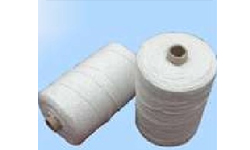
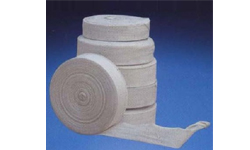
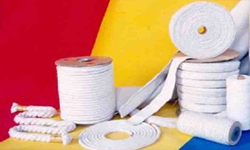
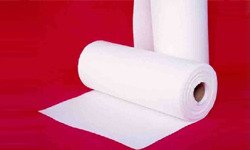
Kaxite offers a comprehensive portfolio of ceramic fiber products, each engineered for specific thermal and physical demands. Our primary forms include bulk fiber, blanket, board, paper, and custom-shaped modules.
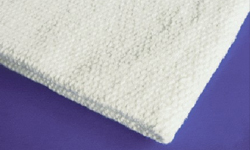
Our ceramic fiber blankets are the workhorses of high-temperature insulation, available in multiple grades and temperature ratings.
| Product Code | Max. Temp. (°C/°F) | Density (kg/m³) | Thermal Conductivity (W/m·K @ 500°C) | Typical Application |
|---|---|---|---|---|
| KX-CF-1260 | 1260 / 2300 | 128 | 0.12 | Heat treat furnaces, boiler insulation |
| KX-CF-HP-1430 | 1430 / 2600 | 128 | 0.15 | Petrochemical cracking furnaces, ceramic kiln linings |
| KX-CF-Z-1600 | 1600 / 2912 | 160 | 0.20 | Steel reheating furnaces, forging furnaces |
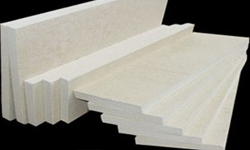
For applications requiring rigidity, flatness, or pre-fabricated shapes, our ceramic fiber boards and modules are the ideal solution.
| Property | Standard Board | High-Density Board |
|---|---|---|
| Density (kg/m³) | 240 - 280 | 300 - 320 |
| Permanent Linear Shrinkage (24h @ max temp) | < -2.5% | < -2.0% |
| Cold Crushing Strength (MPa) | 0.4 - 0.7 | 0.8 - 1.2 |
| Thermal Conductivity (W/m·K @ 600°C) | 0.16 | 0.18 |
What is the primary advantage of using Kaxite ceramic fiber over traditional refractory brick?
The primary advantages are significantly lower thermal mass and thermal conductivity. This means a furnace or boiler lined with Kaxite ceramic fiber heats up and cools down much faster, saving substantial energy. It is also up to 90% lighter, reducing structural support requirements and allowing for easier, faster installation. The flexibility of blanket products also allows for lining complex geometries that are difficult with rigid bricks.
What is the maximum continuous operating temperature for your ceramic fiber products?
Kaxite offers a range of products for different temperature zones. Our standard alumina-silica products are rated for continuous use up to 1260°C (2300°F). Our high-purity grades extend this to 1430°C (2600°F), and our zirconia-enhanced grades can withstand temperatures up to 1600°C (2912°F) in continuous operation. It is crucial to select a grade with a temperature rating exceeding your process temperature to ensure longevity.
Is ceramic fiber resistant to thermal shock?
Yes, this is one of its standout properties. Kaxite ceramic fiber has an extremely low coefficient of thermal expansion, meaning it expands and contracts very little with rapid temperature changes. This makes it exceptionally resistant to thermal shock and spalling, which is a common failure mode for dense refractory bricks subjected to rapid heating or cooling cycles.
How do I handle and install ceramic fiber safely?
During handling and installation, it is important to minimize the generation of airborne dust. We recommend using appropriate personal protective equipment (PPE) such as a NIOSH-approved dust mask, gloves, and long sleeves. For blanket installation, sharp knives or scissors are used for cutting. For boards, saws with fine-tooth blades are effective. Always follow local occupational health and safety regulations. Once installed in a furnace or system and heated, the fibers become chemically stable and are locked into the matrix.
Can Kaxite ceramic fiber be used in contact with flames or corrosive atmospheres?
Ceramic fiber is an excellent insulator against flame impingement. However, for direct flame contact, especially at high velocities, our high-density boards or zirconia grades are recommended for their greater erosion resistance. In corrosive atmospheres (e.g., those containing hydrogen, alkali vapors, or acidic gases), our high-purity grades offer better chemical stability. We advise consulting with Kaxite engineering for specific application details involving corrosive environments.
What are the key differences between ceramic fiber blanket, board, and module?
Blanket is flexible and versatile, used for lining walls, roofs, and irregular shapes. Board is rigid and flat, used for hot-face linings where a smooth surface is needed, or as backing insulation. Modules are folded blankets pre-assembled onto an anchoring system; they are designed for rapid, uniform installation of furnace walls and roofs, providing excellent dimensional stability and low heat storage. The choice depends on the application's thermal, physical, and installation requirements.
Does Kaxite offer custom-shaped ceramic fiber products?
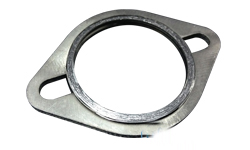
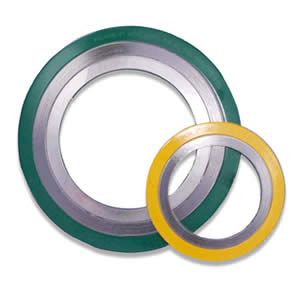
Absolutely. Kaxite specializes in manufacturing custom vacuum-formed shapes, pre-fabricated burner blocks, cone liners, gaskets, and other complex components. By providing a drawing or sample, our engineering team can produce a precise ceramic fiber part that integrates seamlessly into your equipment, saving you fabrication time and ensuring optimal performance.