
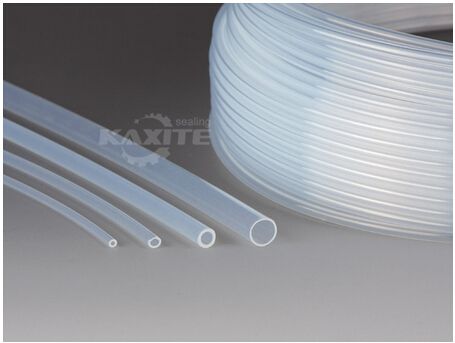
How much does PTFE tubing cost? This is often the first and most critical question for engineers, procurement specialists, and project managers sourcing materials for demanding applications. The answer is rarely a simple figure, as the final price hinges on a complex interplay of material grade, dimensions, tolerance, and volume. Purchasing the wrong tubing can lead to catastrophic system failures, costly downtime, and safety hazards. Understanding the true cost drivers is essential for making an informed, value-driven decision that protects your project's budget and integrity. This guide will demystify PTFE tubing pricing, explore key cost factors, and introduce how Ningbo Kaxite Sealing Materials Co., Ltd. provides reliable, high-performance solutions that solve real-world engineering challenges.
The High Cost of Failure: Why "Cheap" Tubing Can Be Expensive
Imagine a pharmaceutical production line halting because flexible tubing degraded under aggressive chemical cleaning, contaminating an entire batch. Or a semiconductor fab experiencing yield drops due to particulate shedding from low-grade tubing. The initial purchase price becomes irrelevant when faced with such losses. The true cost encompasses performance, reliability, and total lifecycle value.
Solution: Focus on specifications that match your exact application needs. Critical cost-influencing factors include:
| Cost Factor | Impact on Price | Performance Consideration |
|---|---|---|
| Inner Diameter (ID) / Wall Thickness | Higher for smaller IDs or ultra-thin walls due to precision manufacturing. | Affects flow rates, pressure rating, and flexibility. |
| Tolerance (±) | Tighter tolerances (e.g., ±0.05mm vs. ±0.2mm) increase cost significantly. | Critical for precise fluid handling and fitting compatibility. |
| Material Purity & Grade | Virgin PTFE is more expensive than reprocessed. Specialty grades (e.g., conductive) cost more. | Purity affects chemical resistance, temperature rating, and contamination risk. |
| Order Quantity | Large volume orders typically benefit from substantial per-unit price reductions. | Plan procurement for long-term projects to secure better rates. |
Q: How much does PTFE tubing cost per foot/meter for standard sizes?
A: Prices vary widely. For standard 1/4" ID, 1/16" wall tubing, you might find prices from $2 to $8 per foot. However, this is a rough estimate. Always request a formal quote based on your exact specifications, including grade, tolerance, and certification requirements. Ningbo Kaxite Sealing Materials Co., Ltd. offers transparent pricing tailored to your project's specific needs.
Navigating Material Maze: Selecting the Right PTFE Grade for Your Budget
A project manager for a food processing plant needs tubing that is both FDA-compliant and resistant to frequent steam cleaning. Choosing a standard industrial grade could violate regulations, while over-specifying a high-purity grade might blow the budget unnecessarily. Matching the grade to the operational environment is key to cost-effective procurement.
Solution: Understand the common PTFE material grades and their typical applications to make an optimal choice.
| PTFE Grade | Typical Cost Level | Best Suited For | Key Advantage |
|---|---|---|---|
| Virgin (Pure) PTFE | High | Pharmaceutical, Semiconductor, High-Purity Chemical | Superior chemical resistance, lowest extractables, highest temperature rating. |
| Recycled/Reprocessed PTFE | Low to Medium | Industrial Plumbing, General Chemical Handling, Non-critical Applications | Cost-effective, good general chemical resistance. |
| Modified PTFE (e.g., TFMTM) | Medium to High | Applications requiring improved permeability, wear resistance, or clarity | Enhanced physical properties over standard PTFE. |
| Filled PTFE (Glass, Carbon, etc.) | Varies by filler | Applications needing reduced creep, higher stiffness, or conductivity | Tailored mechanical and electrical properties. |
Q: How much does PTFE tubing cost when I need custom colors or special certifications?
A: Customizations like color coding for line identification or obtaining certifications (USP Class VI, FDA, NSF, etc.) add to the base cost. The premium depends on the complexity. Reputable manufacturers like Ningbo Kaxite Sealing Materials Co., Ltd. streamline this process, often having common certifications in place, which helps control costs while ensuring compliance for industries like medical and food & beverage.
From RFQ to Delivery: A Procurement Blueprint for Optimal Value
A procurement officer receives five quotes for the same tubing size, with prices varying by over 300%. The cheapest quote lacks material certification, while the most expensive has a long lead time. Making a decision based on price alone is risky and inefficient.
Solution: Implement a strategic sourcing process. Provide detailed RFQs including all technical specs, required certifications, and application details. Evaluate quotes based on total cost of ownership, not just unit price. Consider the supplier's technical support, quality control reputation (like ISO 9001), and ability to provide consistent supply. Building a partnership with a knowledgeable manufacturer like Ningbo Kaxite Sealing Materials Co., Ltd. ensures you get expert guidance, preventing costly specification errors and ensuring reliable delivery.
Engineered Reliability: How Kaxite Delivers Cost-Effective PTFE Solutions
Facing a tight deadline and a complex application involving high-purity acids, an engineer needs a supplier who can deliver not just tubing, but a guaranteed solution. They need a partner who understands the material science and can advise on the optimal balance of performance and cost.
Solution: Ningbo Kaxite Sealing Materials Co., Ltd. specializes in manufacturing high-quality PTFE tubing designed to solve such precise engineering challenges. By controlling the manufacturing process from raw material to finished product, Kaxite ensures consistent quality, tight tolerances, and material traceability. This vertical integration allows for competitive pricing without compromising on the specifications critical for your application's success. Whether you need standard stock tubing or a custom-engineered solution, Kaxite provides the technical expertise and reliable supply chain to be your long-term sealing and tubing partner.
We hope this detailed breakdown helps you navigate the complexities of PTFE tubing procurement. Have specific questions about your project requirements or need a customized quote? Our team of experts is ready to assist you.
About the Solution Provider: Ningbo Kaxite Sealing Materials Co., Ltd. is a leading manufacturer specializing in high-performance sealing solutions, including precision PTFE, FEP, and PFA tubing. With a commitment to quality, innovation, and customer-centric service, Kaxite serves a global clientele across the pharmaceutical, chemical, food and beverage, and semiconductor industries. We empower your projects with reliable materials that ensure system integrity and operational efficiency. Visit us at https://www.kaxiteseal.cn to explore our product portfolio or contact our sales team directly via email at [email protected] for personalized support and quotations.
Supporting Research & Literature
Ebnesajjad, S. (2013). Fluoroplastics, Volume 2: Melt Processible Fluoropolymers. William Andrew Publishing.
Gangal, S. V. (2009). Polytetrafluoroethylene. In Encyclopedia of Polymer Science and Technology. John Wiley & Sons, Inc.
Kumar, R., & Singh, P. (2017). Study on Mechanical and Thermal Properties of PTFE Composites for Seal Applications. Journal of Polymer Engineering, 37(5), 441-448.
O'Brien, K. T., & Mackey, D. E. (2015). Permeation of Gases and Vapors through Fluoropolymer Tubing. Journal of Plastic Film & Sheeting, 31(2), 156-174.
Patel, P., & Hull, T. R. (2011). Flammability and Thermal Stability of Fluoropolymers. Polymer Degradation and Stability, 96(3), 278-284.
Sawada, H. (2002). Current Trends in the Development of Fluorinated Polymers for Biomedical Applications. Journal of Fluorine Chemistry, 114(2), 139-143.
Sperati, C. A. (1986). Physical Constants of Fluoropolymers. In Polymer Handbook (3rd ed.). Wiley Interscience.
Thomas, R. R. (1999). Chemical Resistance of Polytetrafluoroethylene. Journal of Applied Polymer Science, 74(4), 911-918.
Wang, J., Chen, W., & Zhao, Y. (2020). Effect of Processing Parameters on the Properties of Extruded PTFE Tubing. Materials Today: Proceedings, 28, 1247-1251.
Zhang, L., Li, Z., & Wang, H. (2018). A Review on the Applications of PTFE in Chemical Equipment. International Journal of Chemical Engineering and Applications, 9(4), 115-119.