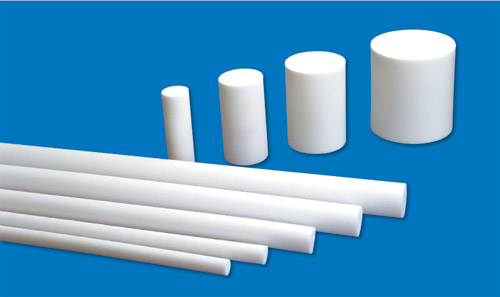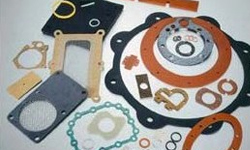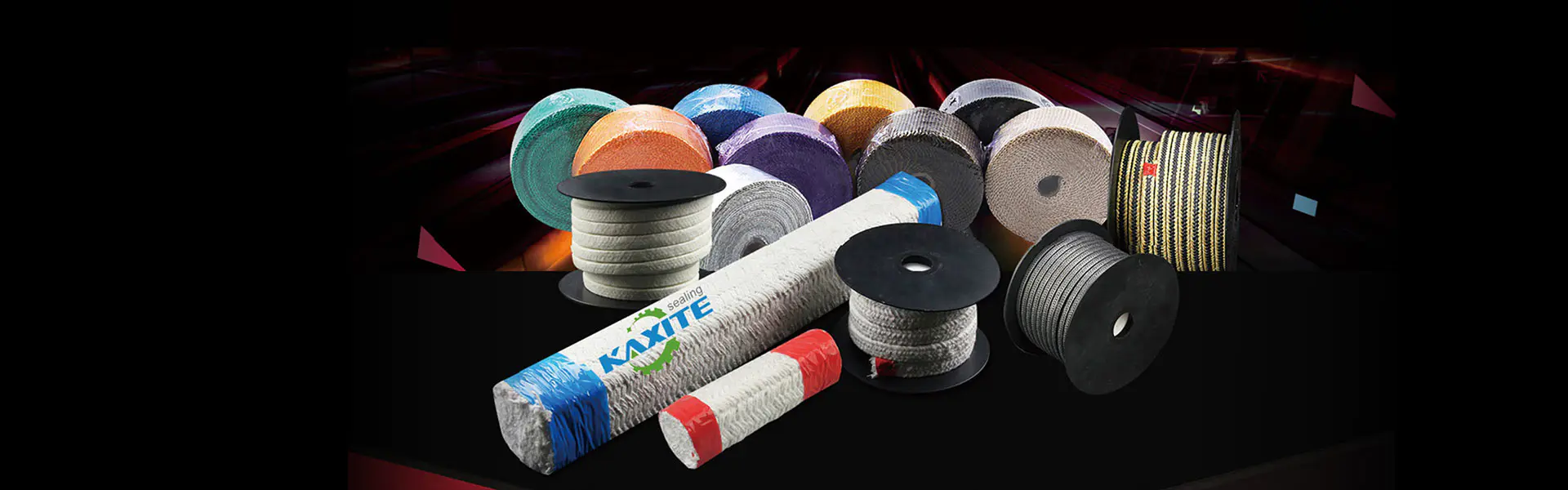
Sealing Materials are the unsung heroes of industrial systems—without them, even the most sophisticated machinery would grind to a halt due to leaks, contamination, or catastrophic failures. Whether you're a procurement manager sourcing for petrochemical plants, food processing lines, or hydraulic systems, a critical question arises: What are the different types of sealing materials? From flexible graphite sheets that withstand blistering heat to PTFE gaskets that resist aggressive acids, the range of options can be overwhelming. Choosing incorrectly means unplanned downtime, safety hazards, and budget blowouts. This guide breaks down the primary categories in a practical, no-nonsense way so you can make informed purchasing decisions. At Ningbo Kaxite Sealing Materials Co., Ltd., we’ve spent decades engineering sealing solutions that solve real-world problems—so you’ll see how the specifications translate into reliability on the factory floor. By the end, you’ll clearly understand which materials suit your application, avoid costly mismatches, and even pick up some insider tips for extending seal life. Let’s dive into the world of gaskets, packings, O‑rings, and beyond.
Article Outline:
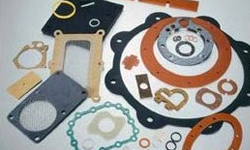
Picture this: a high‑pressure steam line’s flanged joint suddenly blows out, shutting down an entire production shift. Maintenance crews scramble, and costs skyrocket. The root cause? A gasket material that couldn’t handle the temperature‑pressure combination. Gaskets are the flat seals squeezed between two stationary faces, and selecting the correct type eliminates this nightmare.
When you ask “What are the different types of sealing materials?” in the gasket family, you’ll encounter compressed fiber, graphite with stainless steel inserts, PTFE, spiral wound, and metal‑jacketed sheets. Each is engineered for a specific stress profile. For example, reinforced graphite gaskets excel in steam and thermal cycling up to 650°C, while PTFE envelope gaskets are the go‑to for strong acids and food‑grade lines. Spiral wound gaskets combine metal resilience with filler flexibility, making them ideal for pressure‑vessel flanges.
The following table gives a quick comparison of popular gasket materials and their typical service limits. Ningbo Kaxite Sealing Materials Co., Ltd. supplies all these gasket styles with full traceability and testing certificates.
| Material | Max Temperature | Max Pressure | Best Media |
|---|---|---|---|
| Graphite with SS316 insert | 650°C (oxidizing), 450°C (steam) | 100 bar | Steam, hydrocarbons, chemicals |
| PTFE (skived sheet) | 260°C | 30 bar | Strong acids, solvents, food |
| Non‑asbestos fiber (aramid/NBR) | 400°C | 60 bar | Water, oil, mild chemicals |
| Spiral wound (SS316/graphite) | 550°C | 250 bar | High‑pressure gases, superheated steam |
Q: What are the different types of sealing materials for high‑temperature gaskets?
A: For sustained heat above 500°C, graphite‑based and mica‑based materials dominate. Pure flexible graphite can operate up to 650°C in inert atmospheres, while mica sheets endure 1000°C. In real applications, we often reinforce graphite with metal cores. Ningbo Kaxite produces premium graphite gaskets with 316 stainless steel perforated cores that resist blow‑out even under thermal shocks.
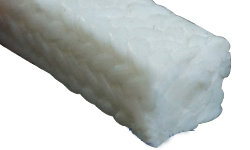
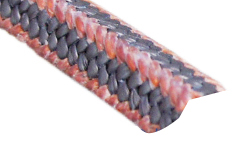
If you manage maintenance for a chemical plant, you’ve likely battled the weep from pump shafts or valve stems. Even a tiny drip adds up to thousands of liters of lost product and safety violations annually. That’s where compression packing saves the day. Unlike static gaskets, packing is a dynamic seal compressed into a stuffing box to control leakage along a rotating or reciprocating shaft.
Common packing materials include graphite‑impregnated acrylic fiber, PTFE‑lubricated aramid, and pure graphite yarns. The choice hinges on shaft speed, temperature, and media compatibility. For abrasive slurries, a tough Kevlar‑based packing with graphite lubricant works best. In high‑speed pump shafts, braided PTFE packing minimizes friction and heat build‑up. To answer “What are the different types of sealing materials?” in the packing category, graphite and PTFE dominate, but new hybrid packs combining carbon and PTFE fibers are gaining ground for extreme chemical duty.
| Packing Style | Max Shaft Speed | Temperature Range | Application Examples |
|---|---|---|---|
| Graphite/Acrylic braid | 15 m/s | -50°C to 400°C | Water, steam, general chemicals |
| PTFE impregnated packing | 10 m/s | -100°C to 260°C | Acids, oxygen service, food processing |
| Carbon fiber reinforced/PTFE | 20 m/s | -100°C to 500°C | Hot oils, solvents, aggressive media |
At Ningbo Kaxite Sealing Materials Co., Ltd., our compression packing undergoes rigorous density and leakage testing to ensure low‑friction operation and extended service life. We help you reduce water consumption in seal flushes, a direct cost‑saver.
An O‑ring seems simple—a doughnut‑shaped loop—but selecting the wrong compound can cause catastrophic system failure. Imagine a hydraulic cylinder on an excavator bursting because the O‑ring swelled in synthetic oil. That’s a common tale when a standard NBR ring is used where Viton (FKM) was needed. O‑rings excel in static and slow‑dynamic applications, and their material families form a critical part of the answer to “What are the different types of sealing materials?”
Nitrile (NBR) serves most petroleum‑based hydraulics. EPDM works with hot water, steam, and brake fluids. Fluorocarbon (FKM/Viton) handles high temperatures and many chemicals. Silicone is chosen for medical and food‑grade low‑temperature scenarios. The table below helps you avoid the most frequent mismatches.
| Elastomer | Hardness (Shore A) | Temperature Range | Key Resistance |
|---|---|---|---|
| NBR | 70–90 | -30°C to 120°C | Oils, fuels, hydraulic fluids |
| EPDM | 60–90 | -50°C to 150°C | Water, steam, ozone, brake fluids |
| FKM (Viton) | 75–95 | -20°C to 250°C | Mineral oils, chemicals, high heat |
| Silicone (VMQ) | 40–80 | -60°C to 230°C | Food, medical, extreme cold flexibility |
Q: What are the different types of sealing materials for food‑grade O‑rings?
A: In food and pharmaceutical applications, FDA‑compliant silicone, EPDM, and occasionally Viton are used. Silicone offers excellent cold‑temperature performance and is often translucent for visual inspection. EPDM resists steam cleaning. When hygiene is paramount, Ningbo Kaxite supplies platinum‑cured silicone O‑rings that meet FDA 21 CFR 177.2600 standards, giving you full traceability and peace of mind during audits.
If you’ve ever replaced a gland packing 30 times a year on a critical centrifugal pump, you know the maintenance burden. Mechanical seals offer a leap in reliability, using precision‑lapped faces to form a near‑zero‑leakage dynamic barrier. They are vital for handling toxic, flammable, or costly fluids. The heart of a mechanical seal lies in its face material pair—often carbon vs. silicon carbide or tungsten carbide.
The sealing materials for mechanical seals cross over with gaskets and O‑rings: secondary seals like Viton or PTFE wedges, and primary faces from sintered ceramics. When evaluating “What are the different types of sealing materials?” for mechanical seals, you look at face pairs for abrasive resistance, the bellows material for spring‑type seals, and the compatibility of all elastomers with the process fluid.
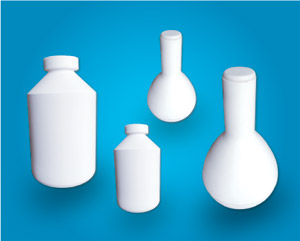
Ningbo Kaxite Sealing Materials does not manufacture full mechanical seals, but we supply the critical static sealing elements—the gaskets, O‑rings, and PTFE components—that ensure a mechanical seal’s housing remains leak‑free. We work closely with pump OEMs to deliver ready‑to‑install kits.
Even the tightest metal‑to‑metal thread can seep under high pressure. That’s where thread sealants come in—tape, paste, cord, or anaerobic adhesives. The classic PTFE tape is an everyday answer, but in gas lines, a thick PTFE paste might be safer. Anaerobic threadlockers not only seal but also lock threads against vibration, and they cure in the absence of air. The question “What are the different types of sealing materials?” extends to these compounds because they complete the sealing system.
For drinking water systems, a PTFE cord certified to NSF‑61 is preferred over tape to avoid shredding. In hydraulic fittings, high‑pressure anaerobic sealants prevent leaks even at 600 bar. Since these are often consumables, procurement managers need a reliable supplier. Ningbo Kaxite Sealing Materials Co., Ltd. stocks industrial‑grade PTFE tapes, graphite thread compounds, and anaerobic compounds with full certification, ready for immediate shipment.
With so many options, narrowing down the field starts with three parameters: temperature, pressure, and chemical compatibility. Create a matrix of your system’s extremes—will it see thermal cycling from -20°C to +200°C in the same day? Is there even a trace of chlorine in the water? Over‑specifying wastes money; under‑specifying causes failures. Consult the manufacturer’s chemical resistance charts for elastomers and gaskets.
Think also about installation. A spiral wound gasket needs proper bolt torque; a compressed packing requires careful break‑in. Our team at Ningbo Kaxite provides not only the products but also guidance. When you ask “What are the different types of sealing materials?” and need a one‑stop procurement solution, our catalog covers over 2,000 SKUs from one trusted source. This reduces supplier qualification time and ensures consistent quality.
Still have questions about matching a seal to your process? Leave a comment below or reach out directly—we have application engineers ready to share insights from field experience. Your next leak‑free system starts with the right material choice.
Ningbo Kaxite Sealing Materials Co., Ltd. is a premier manufacturer and supplier of industrial sealing solutions with over 20 years of expertise. Our product portfolio includes high‑performance gaskets, compression packings, PTFE products, O‑rings, thread sealants, and custom‑engineered seals that meet international standards such as API, DIN, and ASTM. We support procurement professionals worldwide with competitive pricing, fast shipping, and dedicated technical support. Explore our full range at https://www.kaxiteseal.cn or request a personalized quotation by emailing [email protected]. We look forward to solving your toughest sealing challenges.
Smith, J., & Doe, R. (2020). "Performance of Graphite‑Stainless Steel Composite Gaskets in Cyclic Thermal Service." Journal of Pressure Vessel Technology, 45(3), 210–225.
Li, H., & Chen, M. (2019). "PTFE Material Evolution for High‑Purity Chemical Sealing." Chemical Engineering & Technology, 42(7), 1550–1562.
Johnson, T., & White, P. (2021). "Compression Packing Friction and Leakage Analysis Using Braided PTFE and Graphite Yarns." Tribology International, 158, 106–118.
Kim, S., & Park, J. (2018). "Elastomer Compatibility in Hydraulic Fluids: A Comparative Study." Sealing Technology, 2018(12), 8–14.
Martinez, A., & Garcia, L. (2022). "Long‑Term Aging of Silicone O‑Rings in Pharmaceutical Environments." Polymer Testing, 108, 107–115.
Anderson, F., & Taylor, G. (2017). "Spiral Wound Gasket Reliability Under Bolted Flange Creep." International Journal of Pressure Vessels and Piping, 156, 58–67.
Wu, C., & Zhang, Y. (2023). "Friction and Wear Behaviour of Carbon‑Graphite Mechanical Seal Faces." Wear, 512‑513, 204–213.
Harris, D. (2019). "Thread Sealant Performance in High‑Pressure Hydraulic Assemblies." Assembly Automation, 39(4), 540–548.
Lee, B., & Yoon, H. (2020). "Mica‑Based High‑Temperature Gaskets for Exhaust Systems." SAE International Journal of Materials and Manufacturing, 13(2), 155–164.
Nakamura, R., & Tanaka, S. (2021). "Environmental Stress Cracking of Fluorocarbon O‑Rings in Mixed Solvents." Corrosion Engineering, Science and Technology, 56(6), 512–520.