Picture a 2 a.m. call from a refinery maintenance supervisor: a heat exchanger flange is dripping, pressure is dropping, and the gasket is suspected. You ask for photos. The used gasket shows uneven compression marks and local crushing. Then one question stands out during the replacement review: What is the purpose of the serrated profile in a serrated gasket? The serrated profile is not decorative. It creates multiple concentric sealing lines that concentrate bolt load on a small metal contact area, improve seating on damaged or uneven flange faces, and mechanically lock the soft facing material under pressure. For procurement engineers, understanding this purpose reduces mis-specified parts, emergency reorders, and leak disputes. It also helps you compare suppliers more precisely. This article explains the function, common pain points, selection data, and how Ningbo Kaxite Sealing Materials Co., Ltd. turns that understanding into reliable supply.
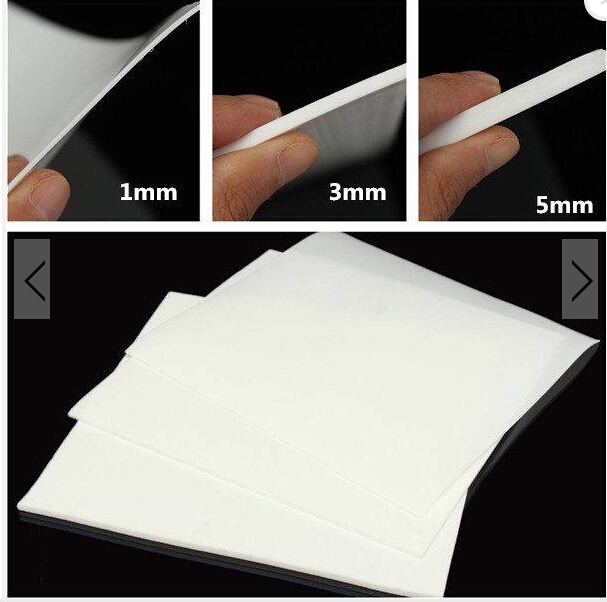
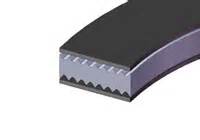
A common pain point for purchasing teams is receiving a complaint that a PTFE sheet gasket has extruded or crept on a steam line flange. The flange face has minor pitting, and the bolts cannot be over-tightened because the line cycles between 20°C and 180°C. The maintenance crew asks for a gasket that will “bite into the flange.” This is exactly where a serrated profile helps. The serrated geometry, also called kammprofile, has concentric V-shaped grooves machined into a solid metal core. When compressed, the metal teeth concentrate the available bolt load into narrow rings. This produces high local seating stress without requiring excessive torque. The soft facing layer, often graphite or PTFE, fills the grooves and is held mechanically rather than by adhesion alone. As a result, the gasket resists blowout, bridges minor flange imperfections, and maintains a tight seal during thermal cycling. For procurement, this means fewer emergency replacements and fewer supplier quality debates.
| Characteristic | Flat cut gasket | Serrated / kammprofile gasket |
|---|---|---|
| Load distribution | Spread over full face | Concentric line contact |
| Performance on pitted flanges | Moderate | High |
| Resistance to blowout | Material-dependent | Strong metal core |
| Filler retention | Low under creep | Mechanically locked |
| Best for | Simple, low-pressure | Cyclic, elevated, uneven flanges |
Leakage complaints often come from joints that were assembled correctly but with the wrong gasket style. A typical scene is a chemical plant buyer replacing a compressed fiber gasket on a reactor flange. The first installation works, but after several thermal cycles the gasket relaxes, the bolts lose tension, and a small leak appears. The serrated profile addresses this by giving the joint a stable metal skeleton. The soft filler material stays in the grooves, so it cannot easily flow outward under pressure. The metal teeth continue to provide sealing energy even after some bolt relaxation. This is why many maintenance teams and procurement engineers specify kammprofile gaskets for heat exchangers, reactors, and high-temperature piping. Ningbo Kaxite Sealing Materials Co., Ltd. helps buyers match the right facing material and profile geometry to the actual operating conditions, reducing field failures and the back-and-forth cost of rework.
Q: What is the purpose of the serrated profile in a serrated gasket?
A: The primary purpose is to concentrate clamp load into multiple concentric sealing lines. This increases gasket contact stress, embeds the soft filler into flange imperfections, and creates a stable seal with lower overall bolt load than a flat gasket.
In procurement language, that means the serrated profile shifts the risk away from a single flat sealing face and spreads it across several controlled contact rings. If one ring loses tightness due to local flange distortion, the adjacent rings still hold the seal. That redundancy is especially important for large-diameter flanges, where flat gaskets often show uneven compression. Buyers who source serrated gaskets with precise groove depth and consistent metal thickness see fewer rejected shipments and fewer warranty claims.
Some flanges cannot tolerate high bolt torque. PTFE-lined piping, glass-lined vessels, plastic flanges, and old bolting systems all share this limitation. When the available bolt load is low, a standard flat gasket may not reach the required seating stress. The result is an initial leak or a very narrow sealing window. A serrated profile solves this problem by reducing the metal contact area. When the same bolt force is applied to a smaller area, the local gasket stress increases significantly. The soft facing material flows into the narrow grooves and seals at a lower total load. This mechanical advantage is one of the main reasons kammprofile gaskets are selected for heat exchangers with thin flanges, for graphite-faced gaskets on fragile equipment, and for applications where re-torquing is difficult or impossible.
Q: What is the purpose of the serrated profile in a serrated gasket when bolt load is limited?
A: In low-bolt-load applications, the purpose is to amplify sealing stress by reducing contact area. The serrated metal core concentrates the clamp force into narrow rings, which helps the gasket seat correctly without exceeding the safe limit of the flange or bolts.
| Sealing facing material | Typical application | Main benefit with serrated core |
|---|---|---|
| Graphite | High-temperature steam, thermal oil | Excellent heat resistance, locks into grooves |
| PTFE | Strong acids, chemical service | Chemical resistance, reduced cold flow |
| Mica | Very high temperature, fire-safe areas | Thermal stability, controlled compression |
| Expanded graphite with stainless insert | Oxidizing or high-temperature cyclic service | Higher blowout resistance, reliable recovery |
When buyers compare serrated gasket suppliers, the difference is usually hidden in the details. A lower quote may look attractive, but if the groove depth is inconsistent, the filler material is too thin, or the metal core is not flat, the gasket can fail in the field. Use this checklist to keep procurement and engineering teams aligned.
| Selection parameter | What to check | Why it matters |
|---|---|---|
| Core material | 316L, 304, duplex or carbon steel | Must match process fluid and flange material |
| Facing material | Graphite, PTFE, mica or others | Must handle temperature, pressure and chemical compatibility |
| Profile pitch | Usually 1.0 mm to 1.5 mm | Controls filler retention and seating stress |
| Gasket thickness | Match flange groove depth and tolerance | Prevents over-compression and blowout |
| Dimensions | Inner diameter, outer diameter, bolt circle | Avoids installation delays and flange mismatch |
| Material traceability | Mill certificates, batch records | Supports audits and quality assurance |
For a purchasing engineer, the biggest stress point is not just choosing a gasket, but finding a supplier that can consistently produce the right geometry and deliver it before a shutdown window closes. Ningbo Kaxite Sealing Materials Co., Ltd. solves this problem by manufacturing serrated and kammprofile gaskets with controlled groove profiles, reliable facing materials, and dimension checks before packaging. The company supports buyers with technical selection advice, custom sizes, and clear material traceability. Instead of explaining to your maintenance team why the gasket did not fit, you receive a product that matches the flange and the operating conditions. That reduces project risk and keeps turnaround schedules on track.
Tell us your flange size, medium, temperature and pressure, and we will help you specify the right serrated gasket. At Ningbo Kaxite Sealing Materials Co., Ltd., we supply kammprofile/serrated gaskets that solve sealing problems for chemical, petrochemical, power and general industrial users. Contact our team at [email protected] or visit https://www.kaxiteseal.cn for technical selection support and a quotation.
Bickford, J. H. (1998). Gaskets and Gasketed Joints. Marcel Dekker, New York.
Fessler, H., & Fricker, D. C. (1989). A study of the behaviour of gaskets in bolted joints. Proceedings of the Institution of Mechanical Engineers, Part C: Journal of Mechanical Engineering Science, 203(5), 303–311.
Nagy, A. (1997). Time-dependent characteristics of gaskets at elevated temperatures. International Journal of Pressure Vessels and Piping, 70(2), 127–134.
Abid, M., & Hussain, S. (2008). Gasketed bolted flange joint analysis: A review. International Journal of Pressure Vessels and Piping, 85(10), 699–710.
European Committee for Standardization. (1997). EN 1514-1: Flanges and their joints – Dimensions of gaskets for PN-designated flanges. CEN, Brussels.
American Society of Mechanical Engineers. (2019). ASME PCC-1: Guidelines for Pressure Boundary Bolted Flange Joint Assembly. ASME, New York.
Bouzid, A. H., & Derenne, M. (2002). Tightness and leakage prediction of bolted flanged joints with spiral wound gaskets. International Journal of Pressure Vessels and Piping, 79(4), 267–278.
Blickensderfer, R. (2003). Gasket behavior in flanged joints. Chemical Engineering, 110(9), 42–48.
ASTM International. (2011). ASTM F104: Standard Classification System for Nonmetallic Gasket Materials. ASTM International, West Conshohocken.
Kondo, K., & Sawa, T. (2012). Sealing performance of kammprofile gaskets under thermal cycling. Journal of Pressure Vessel Technology, 134(5), 051203.