In the demanding world of industrial sealing, where pressure, temperature, and corrosive media are constant challenges, one solution has consistently proven its reliability for over a century: the Spiral Wound Gasket. This engineered sealing component is the cornerstone of safe and leak-free operations in countless processing plants, refineries, and power generation facilities worldwide. At Kaxite, we leverage decades of specialized manufacturing expertise to produce spiral wound gaskets that don't just meet specifications—they exceed expectations for performance and longevity. Understanding the intricate design and precise application of these gaskets is crucial for engineers, procurement specialists, and maintenance professionals tasked with ensuring system integrity.
The fundamental brilliance of the spiral wound gasket lies in its combination of resilience and recovery. Unlike static seals, it is designed to compensate for flange rotation, uneven bolt loading, and thermal cycling. This makes it the preferred choice for critical service applications across the oil & gas, chemical, petrochemical, and power industries. Selecting the correct gasket is a technical decision with significant implications for safety, environmental compliance, and operational efficiency.
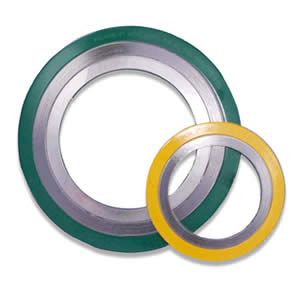
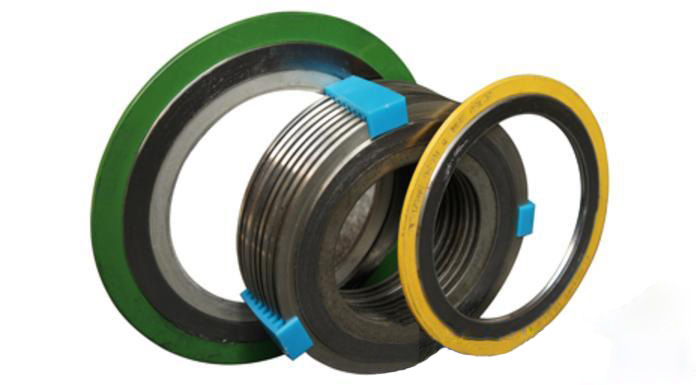
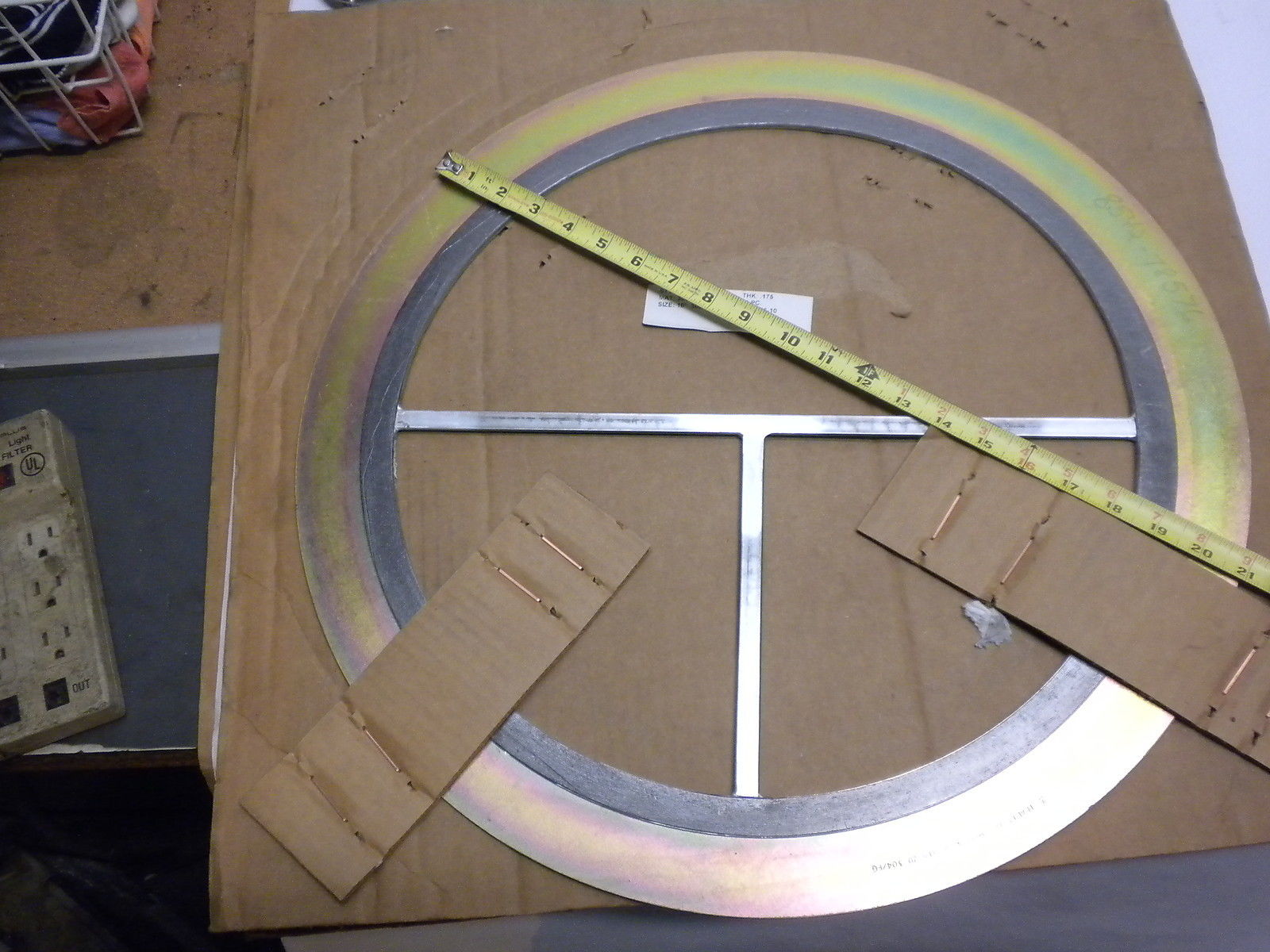
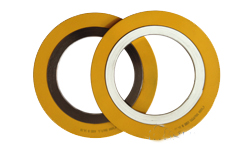
A Kaxite spiral wound gasket is a meticulously engineered composite structure. It is formed by winding a pre-profiled metal strip (the windings) and a soft filler material in a continuous spiral around a central metal ring (the centering ring), creating a V-shaped cross-section. This spiral winding process is performed under precise, controlled tension to ensure uniform density and consistent performance across the entire gasket.
The outer centering ring serves multiple critical functions: it centers the gasket within the bolt circle for easy installation, provides radial stability to prevent over-compression or blow-out, and acts as a compression limiter. For certain standards and applications, an inner ring may also be specified. The synergy between the chosen metal windings and the filler material is what defines the gasket's capability to seal under specific service conditions.
The performance of a spiral wound gasket is dictated by its material composition and physical dimensions. Kaxite offers a comprehensive range of options to tailor the gasket to your exact process requirements.
Kaxite gaskets are manufactured to all major international standards, ensuring global compatibility and reliability.
The metal strip provides the structural strength and spring-like recovery. Selection is based on temperature, pressure, and corrosion resistance.
| Material Grade | Common Designation | Temperature Range (Approx.) | Key Properties & Typical Applications |
|---|---|---|---|
| 304 Stainless Steel | AISI 304 / SS304 | -250°C to 540°C (-420°F to 1000°F) | Excellent general corrosion resistance. Widely used for water, steam, air, and many chemicals. |
| 316/316L Stainless Steel | AISI 316 / SS316 | -250°C to 540°C (-420°F to 1000°F) | Superior resistance to chlorides and acids (e.g., sulfuric, phosphoric). Common in chemical and marine environments. |
| 321 Stainless Steel | AISI 321 | -250°C to 760°C (-420°F to 1400°F) | Stabilized with titanium for improved intergranular corrosion resistance at high temperatures. |
| 347 Stainless Steel | AISI 347 | -250°C to 760°C (-420°F to 1400°F) | Stabilized with niobium. Excellent for high-temperature service in power and refining. |
| Alloy 20 | UNS N08020 | -50°C to 450°C (-60°F to 840°F) | High resistance to sulfuric acid and other aggressive chemicals. |
| Monel 400 | UNS N04400 | -150°C to 550°C (-240°F to 1020°F) | Excellent resistance to seawater, hydrofluoric acid, and alkaline solutions. |
| Inconel 600/625 | UNS N06600 / N06625 | Up to 1095°C (2000°F+) | Outstanding oxidation and high-temperature strength. Used in extreme heat applications. |
| Titanium | Gr. 2 / UNS R50400 | Up to 315°C (600°F) | Exceptional strength-to-weight ratio and corrosion resistance, especially to chlorides. |
The filler material fills the voids between the metal windings, creating the initial seal and compensating for flange imperfections.
| Filler Material | Temperature Range (Approx.) | Key Properties & Compatibility |
|---|---|---|
| Flexible Graphite (GRA) | Inert gas: -200°C to 650°C (-330°F to 1200°F) Oxidizing: Up to 450°C (840°F) |
Superior chemical resistance, excellent thermal conductivity, and low creep relaxation. Universal for hydrocarbons, steam, and most chemicals. Not for strong oxidizers. |
| PTFE (Teflon) | -260°C to 260°C (-436°F to 500°F) | Virtually inert, excellent for strong acids, caustics, and solvents. Low friction and anti-stick properties. |
| Non-Asbestos (e.g., Aramid fibers) | Up to 290°C (550°F) | General-purpose, economical choice for water, air, oil, and mild chemicals. Good resilience. |
| Mica & Graphite (MG) | Up to 1000°C (1832°F) | Excellent for high-temperature, high-pressure steam and thermal cycling applications. |
| Ceramic Fiber | Up to 1260°C (2300°F) | For extreme high-temperature, oxidizing atmospheres where graphite is unsuitable. |
Typically made from carbon steel (for standard applications) or a material matching the winding strip for corrosive services. Kaxite ensures precise dimensional accuracy for perfect fit-up.
Choosing the correct Kaxite spiral wound gasket requires a systematic review of the service conditions.
Q: What are the primary advantages of using a spiral wound gasket over other gasket types like solid metal or soft cut gaskets?
A: Spiral wound gaskets offer a unique balance of strength and sealability. Their key advantages include: Excellent resilience and recovery to maintain a seal during thermal cycling and pressure fluctuations; High mechanical strength from the metal windings to resist blow-out under high pressure; The ability to seal on less-than-perfect flange surfaces due to the compressible filler; A wide range of material combinations for extreme temperatures and corrosive services; Proven reliability in critical applications, making them the default choice for ASME B16.5 raised face flanges in refinery and chemical service.
Q: How do I determine the correct density (or number of windings) for my application?
A: Gasket density is pre-determined by the manufacturer based on the pressure class and service standard (e.g., ASME B16.20). Standard gaskets are wound to a defined density for their class. For special applications involving very high bolt stress or severe thermal cycling, Kaxite engineers can recommend a custom winding density. Using a gasket with incorrect density can lead to over-compression (loss of resilience) or under-compression (leakage). Always refer to the standard specification or consult with Kaxite technical support.
Q: Can spiral wound gaskets be reused?
A: It is strongly discouraged to reuse a spiral wound gasket. During initial bolting, the gasket is compressed to a specific seating stress, and the filler material embeds into the flange surfaces and metal windings. Upon disassembly, the gasket's structure is permanently deformed, and its recovery properties are significantly diminished. Reusing it will not provide the same leak-tight seal, risking failure. For critical systems, always install a new Kaxite gasket.
Q: What is the purpose of an inner ring on a spiral wound gasket, and when is it required?
A: An inner ring, also called an internal guide ring, serves several functions. It prevents inward buckling of the gasket windings due to turbulent flow or high pressure, which is crucial for maintaining seal integrity. It protects the windings from erosion by the process media. It also acts as a centering guide during installation. Inner rings are typically specified for RTJ (Ring Type Joint) style gaskets, for high-pressure/vacuum services, or when specified by engineering standards like API 601 for refinery piping.
Q: How should spiral wound gaskets be stored and handled before installation?
A: Proper storage is essential to prevent damage. Store gaskets in their original packaging in a clean, dry, temperature-controlled environment away from direct sunlight and moisture. Do not stack heavy objects on them. Avoid any impact or bending that could distort the windings. Always handle with clean gloves to prevent contamination from oils or dirt on the sealing surfaces. Inspect the gasket visually for any damage before installation.
Q: My application involves thermal cycling from ambient to very high temperatures. What special considerations are needed?
A: Thermal cycling is a core strength of spiral wound gaskets due to their inherent spring-back. For severe cycling, key considerations are: Material selection—choose high-temperature metals like 347 SS or Inconel with high-temperature fillers like MG (mica/graphite). Ensure the flange and bolt materials are rated for the temperature. Follow proper bolt tightening procedures (often using torque or tension-controlled methods) to ensure adequate initial seating stress and account for differential thermal expansion. Kaxite can provide specific recommendations for cyclic service.
Q: Are Kaxite spiral wound gaskets compliant with industry-specific regulations like NACE for sour service?
A: Yes, Kaxite manufactures gaskets specifically for sour service applications as defined by NACE MR0175/ISO 15156. We use compliant metal winding materials (e.g., specific grades of stainless steel) and provide full material certification tracing the heat numbers to verify compliance. It is critical to specify NACE requirements when ordering to ensure the correct, traceable materials are used in production.