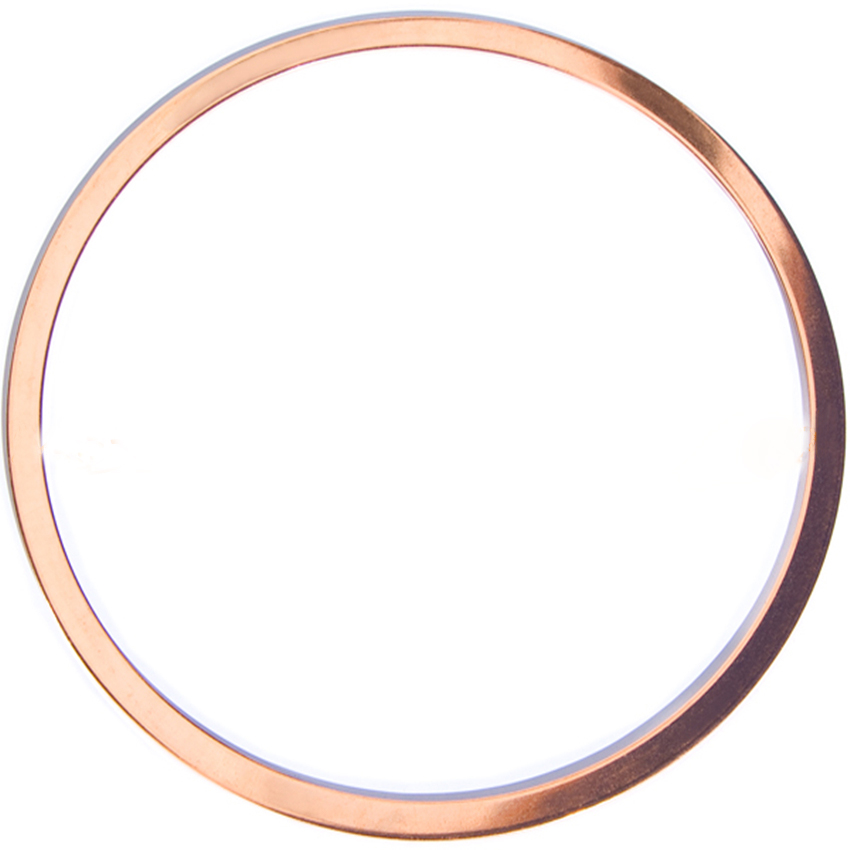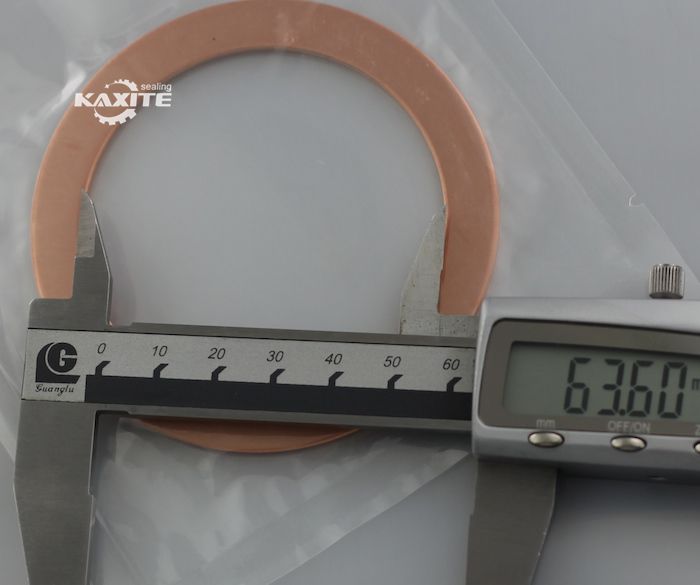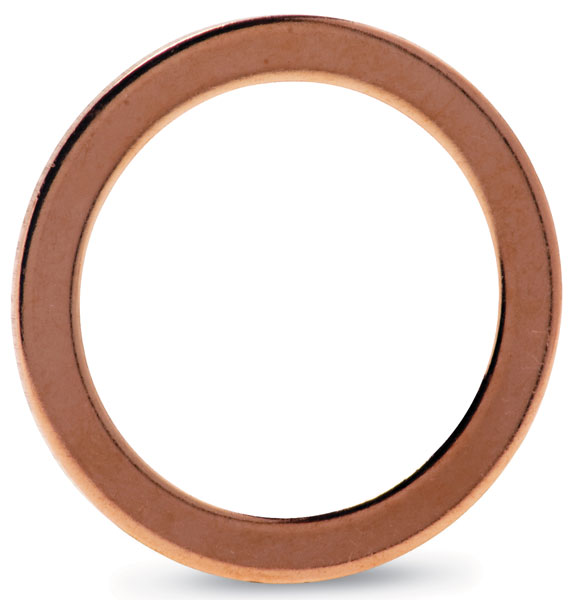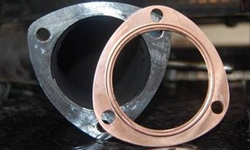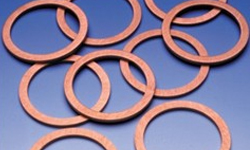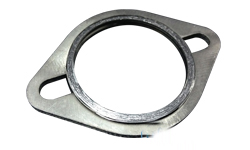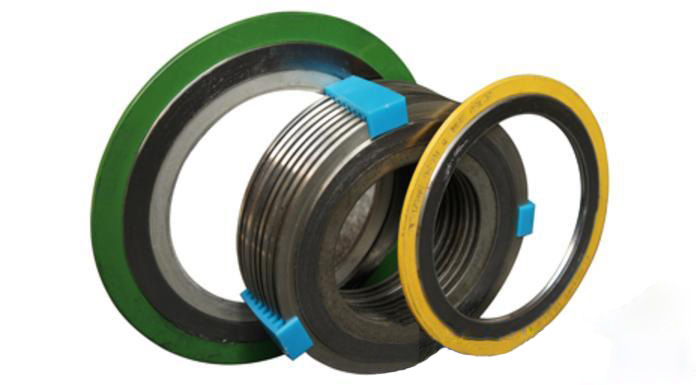
In the demanding world of industrial sealing, few materials offer the unique combination of properties found in copper. Copper gaskets are precision-engineered sealing components designed to create a leak-proof barrier between two mating surfaces under compression. Unlike polymer or rubber gaskets, copper gaskets are metallic, relying on the malleability of the copper material to flow into micro-imperfections on flange faces, thereby creating an exceptionally tight seal.
Their primary use is in applications involving high temperatures, high pressures, and volatile media where non-metallic seals would fail. You will find them indispensable in sectors such as aerospace (jet engines, fuel systems), automotive (turbochargers, exhaust manifolds), oil & gas (pipeline flanges, wellheads), power generation (turbines, boilers), and high-vacuum or cryogenic systems. The inherent qualities of copper—including excellent thermal conductivity, corrosion resistance, and non-sparking properties—make it the material of choice for these challenging environments. At Kaxite, we specialize in manufacturing premium copper gaskets that meet the most rigorous international standards and specifications.
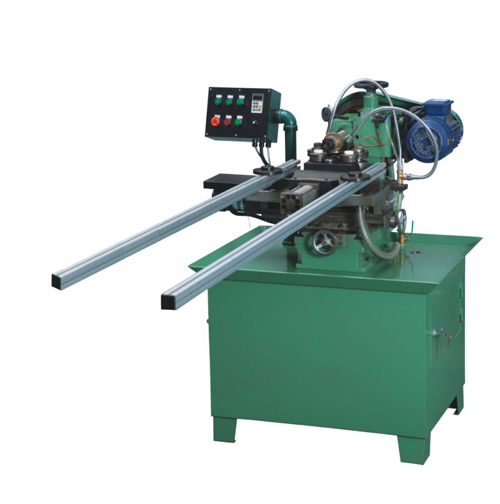
Kaxite’s commitment to excellence is evident in every gasket we produce. We don't just supply seals; we provide reliability solutions. Our copper gaskets are manufactured from high-purity, certified copper alloys, ensuring consistent material properties and performance batch after batch. Advanced CNC machining and precision stamping techniques guarantee dimensional accuracy and flawless surface finishes, which are critical for achieving a perfect seal on the first installation.
We understand that downtime is costly. Therefore, Kaxite gaskets are designed for durability and reusability in many applications, offering superior value over their lifecycle. Our engineering support team works closely with clients to select or custom-design the optimal gasket for specific pressure, temperature, and media conditions, ensuring safety, efficiency, and compliance.
Selecting the correct copper gasket requires careful consideration of its specifications. Below are the key parameters that define Kaxite copper gaskets.
We utilize several high-quality copper alloys, each selected for specific application benefits:
Kaxite gaskets are manufactured to meet or exceed a wide range of global standards, ensuring they are fit for purpose worldwide.
| Standard Type | Standard Code | Description / Scope |
|---|---|---|
| Dimensional | ASME B16.21 | Non-Metallic Flat Gaskets for Pipe Flanges (covers dimensions for metallic flat rings). |
| Material | ASTM B152 | Standard Specification for Copper Sheet, Strip, Plate, and Rolled Bar. |
| Pressure-Temperature | ASME B16.5 / B16.47 | Pipe Flanges and Flanged Fittings. Defines pressure-temperature ratings. |
| Aerospace | AMS 4510 | Covering Copper Alloy, Sheet and Strip. |
| Parameter | Typical Value / Range | Notes |
|---|---|---|
| Temperature Range | -250°C to +400°C (-418°F to +752°F) | Performance depends on specific alloy and environment. C10100 excels in cryogenics. |
| Maximum Pressure | Up to 10,000 psi (689 bar) | Dependent on flange design, bolt load, and gasket thickness. |
| Thermal Conductivity | ~ 400 W/m·K | Excellent for applications requiring heat dissipation. |
| Hardness (Rockwell B) | HRB 30 - 85 | Varies significantly by alloy and temper (soft, half-hard, hard). |
| Standard Thickness | 0.5mm, 0.8mm, 1.0mm, 1.5mm, 2.0mm, 3.0mm | Custom thicknesses are available from Kaxite upon request. |
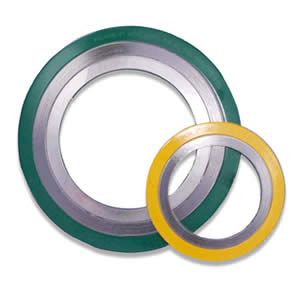
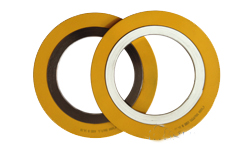
| Standard Forms | Flat Rings, Spiral Wound Filler, Jacketed | Kaxite produces all common and custom profiles. |
Q: When should I use a copper gasket instead of a rubber or graphite gasket?
A: Copper gaskets are the preferred choice in extreme conditions. Use them when your application involves very high temperatures (exceeding 300°C/572°F), high pressures, aggressive chemicals, fuels, or solvents that degrade polymers, or in high-vacuum and cryogenic systems. They are also essential in situations requiring high thermal conductivity or where non-sparking properties are mandatory for safety. For standard water, air, or low-temperature/pressure oil services, non-metallic gaskets are often sufficient and more economical.
Q: Are copper gaskets reusable?
A: This is one of their significant advantages. High-quality, annealed (soft) copper gaskets can often be reused if they have not been over-compressed, damaged, or corroded during service. It is critical to inspect the gasket carefully upon disassembly. Look for deep bolt load impressions, cracks, thinning, or significant deformation. If the gasket appears crushed or has lost its original form, it must be replaced. Kaxite recommends consulting our technical data for specific reusability guidelines based on the alloy and application.
Q: What is the difference between soft (annealed) and hard copper gaskets?
A: The temper of the copper determines its malleability and strength. Annealed (soft) copper is very malleable, allowing it to deform easily and conform tightly to flange imperfections with lower bolt torque, creating an excellent seal. It's ideal for uneven surfaces. Hard temper copper is stronger and more spring-like, offering better resistance to blow-out under high pressure but requiring higher bolt loads to seal. Kaxite engineers can help you select the correct temper based on your flange condition, pressure cycles, and sealing requirements.
Q: How do I properly install a copper gasket to ensure a leak-free seal?
A: Correct installation is paramount. First, ensure both flange faces are clean, dry, and free of old gasket material, scratches, or dents. The surface finish should be appropriate (typically 125-250 µin Ra for flat ring gaskets). Never reuse an old, damaged gasket. Place the new, unlubricated gasket carefully centered on the flange. Use a star-pattern sequence to gradually tighten the bolts to the recommended torque value specified by the flange manufacturer or our Kaxite technical sheet. This ensures even compression. After an initial heat cycle or operational period, a re-torque of the bolts may be necessary as the copper creeps slightly.
Q: Can Kaxite manufacture custom copper gaskets for non-standard applications?
A: Absolutely. While we stock a wide range of standard sizes and profiles, custom design and manufacturing are a core strength at Kaxite. We can produce gaskets to your exact drawings, including special IDs/ODs, thicknesses, unusual cross-sections (like double-cone or octagonal rings), and with specific alloy requirements. We also offer value-added services like plating (e.g., silver or nickel plating for enhanced corrosion resistance or lubricity) and heat treatment to achieve precise material properties. Contact our sales team with your specifications for a prompt quotation.
Q: How does copper perform in corrosive environments compared to stainless steel?
A: Copper offers good general corrosion resistance, particularly in atmospheric, fresh water, and seawater environments. It is resistant to many acids, alkalis, and organic compounds. However, it is susceptible to attack by ammonia compounds, oxidizing acids, and sulfur compounds. Stainless steel (e.g., 304, 316) generally offers superior resistance to a wider range of chemicals, especially oxidizing agents. The choice depends on the specific media. Copper's advantages lie in its superior thermal conductivity, non-magnetic properties, and ease of forming a seal on imperfect surfaces. Kaxite can advise on material selection for your specific corrosive service.