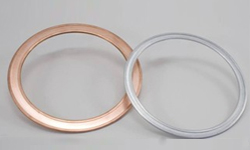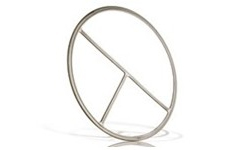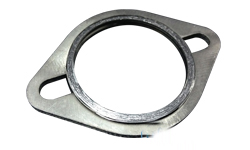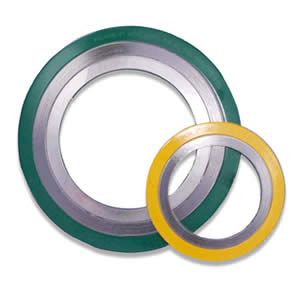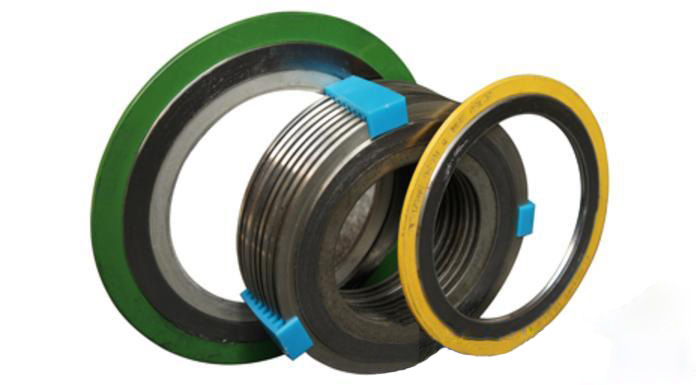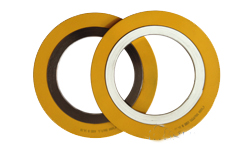
In the demanding world of industrial fluid containment, where pressure, temperature, and aggressive media are constant challenges, the integrity of every seal is paramount. At the heart of many high-performance sealing solutions lies a specific and highly engineered component: the Double Jacket Gaskets. This guide, presented by Kaxite Sealing Solutions, delves deep into the design, application, and specifications of these vital sealing elements, providing the detailed information engineers and procurement specialists need to make informed decisions.
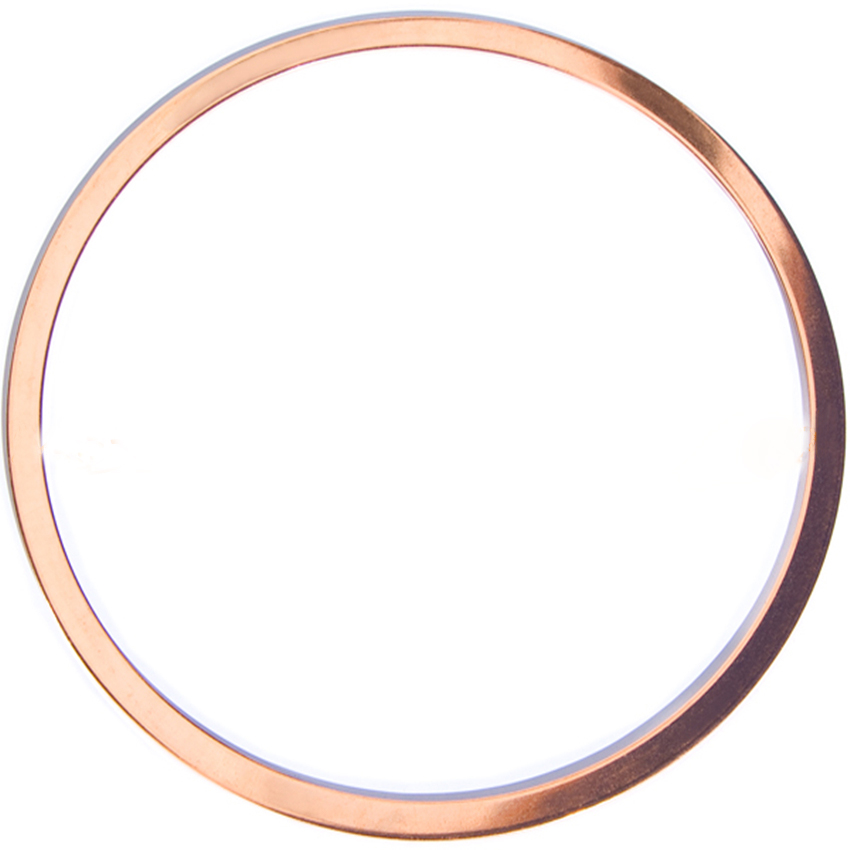
A Double Jacket Gaskets is a specialized type of gasket constructed with a soft, compressible filler material—typically graphite, PTFE, or ceramic fiber—encased within a metallic envelope or "jacket." Unlike a single-jacket design, it features two layers of metal jacket, usually made from stainless steel, carbon steel, or exotic alloys, which encase the filler from both the top and bottom. This dual-metal construction provides superior containment, exceptional blow-out resistance, and reliable performance under extreme cyclic conditions. The primary function is to create a leak-proof seal between two flanges, particularly in applications involving high temperatures, high pressures, and volatile process fluids common in industries like oil & gas, chemical processing, power generation, and refining. The Kaxite design philosophy emphasizes precision forming, material integrity, and rigorous testing to ensure every gasket meets the highest standards of performance and safety.
Selecting the correct Double Jacket Gaskets requires a thorough understanding of its technical parameters. Kaxite manufactures these gaskets to precise specifications, ensuring compatibility with international standards and application-specific requirements.
| Parameter | Typical Range / Standard | Notes |
|---|---|---|
| Size Range (Inner Diameter) | 15 mm (1/2") to 1500 mm (60") and larger | Custom sizes beyond standard are a Kaxite specialty. |
| Pressure Rating | Up to 2500 psi (172 bar) and higher | Dependent on material, size, and service conditions. |
| Temperature Range | -200°C to +1000°C (-328°F to +1832°F) | Graphite filler allows for the upper extreme; PTFE for lower range. |
| Standards Compliance | ASME B16.20, API 601, DIN 2697, ISO 7483 | Kaxite gaskets are manufactured to meet or exceed these standards. |
| Surface Finish | Smooth, Plain, or Serrated (Concentric / Spiral) | Serrated finishes enhance grip and seal on lower-quality flange faces. |
| Standard Shapes | Round, Oval, Rectangular, Square, Obround | Can be fabricated to match virtually any flange geometry. |
Q: What are the main advantages of a double jacket gasket over a single jacket or a spiral wound gasket?
A: The double-layer metal construction provides superior containment of the filler material, significantly increasing resistance to blow-out under high pressure or pressure spikes. It offers better resilience during thermal cycling, as the dual layers help contain the filler's expansion and contraction. Compared to some spiral wound designs, a Kaxite double jacket gasket often provides a more uniform sealing stress and can be more cost-effective for many standard high-pressure applications, while still offering excellent performance.
Q: When should I specify a graphite filler versus a PTFE filler in a double jacket gasket?
A: The choice is primarily driven by temperature and chemical compatibility. Flexible graphite filler is ideal for high-temperature applications (up to 1000°C in inert atmospheres) and is resistant to many chemicals, but it is not suitable for strongly oxidizing environments. PTFE filler is used for its exceptional chemical resistance across a wide range of corrosive media and for lower temperature services (typically -200°C to +260°C). Kaxite engineers can advise on the optimal filler based on your specific process fluid and operating conditions.
Q: How do I properly install and torque a double jacket gasket?
A: Correct installation is critical. Ensure flange faces are clean, undamaged, and aligned. Never reuse a double jacket gasket. Place the gasket carefully, centering it on the flange. Use a cross-pattern bolting sequence (star pattern) to tighten bolts gradually and evenly. Follow recommended torque values provided by Kaxite, which are based on gasket size, pressure class, and bolt material. The goal is to compress the filler sufficiently to create a seal without crushing or deforming the metal jacket, which could lead to failure.
Q: Can Kaxite provide double jacket gaskets for non-standard or special flange geometries?
A: Absolutely. A core strength of Kaxite is our ability to engineer and fabricate custom sealing solutions. We regularly produce double jacket gaskets in oval, rectangular, obround, and other irregular shapes to fit heat exchangers, valve covers, and custom equipment. We work from customer drawings, CAD files, or even physical samples to ensure a perfect fit.
Q: What information do I need to provide to Kaxite to get an accurate quote for a double jacket gasket?
A: To ensure an accurate and speedy quotation, please provide the following: A detailed flange drawing or specification sheet (including ASME/API/DIN standard), the inner diameter, outer diameter, and thickness; the operating conditions (maximum temperature, maximum pressure, and the full chemical description of the media); the required jacket and filler material preferences; and the quantity needed. For non-standard shapes, a sketch or CAD file is essential.
Q: How does the performance of a double jacket gasket compare to a solid metal gasket like a ring-type joint (RTJ)?
A: Both are used for high-pressure services, but they function differently. An RTJ gasket seals through high stress concentration in a metal-to-metal contact groove. A double jacket gasket seals through the compression of the soft filler material, which flows into micro-imperfections on the flange faces. Double Jacket Gaskets generally require lower bolt loads to achieve a seal, are more forgiving of minor flange imperfections, and are easier to install than RTJs. They are often preferred for a wide range of high-pressure applications outside of the specific, ultra-high-pressure wellhead services where RTJs are standard.
Q: Are there specific storage or handling precautions for double jacket gaskets?
A: Yes. Kaxite recommends storing gaskets in a clean, dry environment away from direct sunlight and moisture. They should be kept in their original packaging until ready for use to prevent dust, dirt, or mechanical damage. Avoid stacking heavy objects on them. Handle with care to prevent bending, kinking, or denting the metal jacket, as this can compromise the sealing integrity. Never hang gaskets on pegs or hooks.