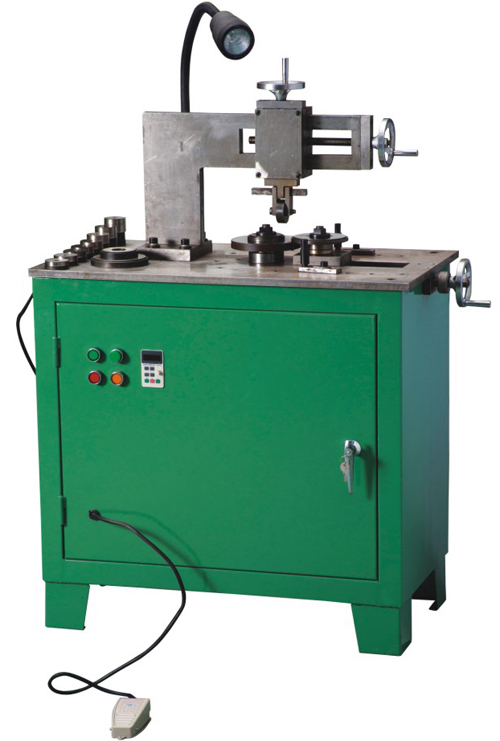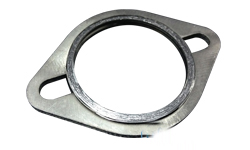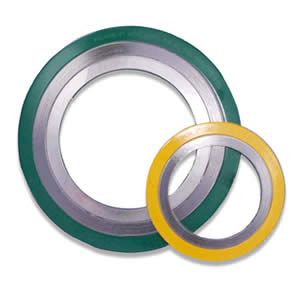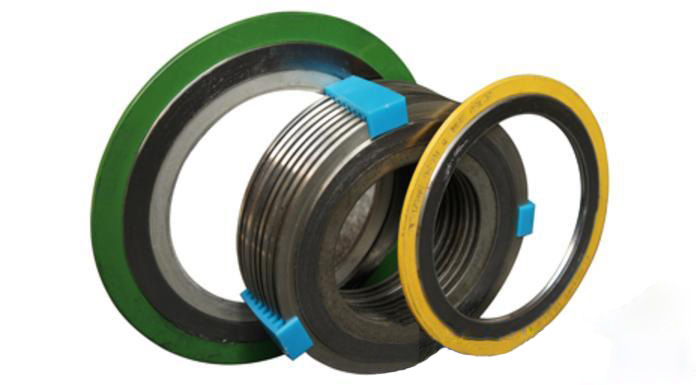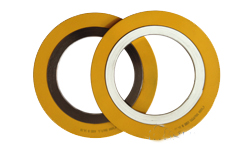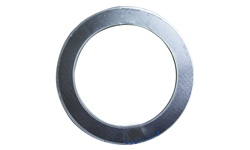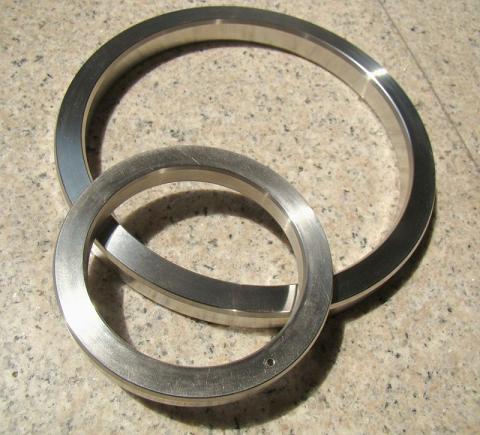
In industries where process integrity is non-negotiable—such as pharmaceuticals, food and beverage, and high-purity chemical processing—the gaskets sealing your vessels and pipelines are critical. Double jacketed gaskets represent a pinnacle of sealing technology, designed to provide an exceptionally secure and leak-proof barrier in demanding applications. However, their precision and complexity necessitate specialized manufacturing equipment. This is where a dedicated Machine for Double Jacketed Gaskets becomes indispensable. At Kaxite, with decades of engineering excellence, we have perfected the machinery required to produce these vital components with unmatched accuracy and repeatability.
Our Machine for Double Jacketed Gaskets is engineered for robustness, precision, and user-centric operation. Below are the detailed parameters that define our flagship model, the Kaxite ProSeries DJG-2000.
| Feature Category | Kaxite ProSeries DJG-2000 Specification | Industry Benefit |
|---|---|---|
| Frame Construction | Full welded, stress-relieved steel frame with vibration-damping mounts. | Ensures long-term stability and alignment, critical for precision crimping. |
| Tooling System | Quick-change, modular crimping and forming dies. Hardened tool steel with PVD coating. | Reduces changeover time to under 10 minutes. Enhances die life and reduces maintenance. |
| Quality Assurance | Integrated laser micrometer and vision inspection system. | Real-time measurement of jacket overlap, filler compression, and O.D./I.D. Auto-rejects non-conforming parts. |
| Data Integration | Ethernet/IP, OPC UA, and SECS/GEM protocol compatibility. | Enables seamless integration into Industry 4.0 smart factories and production monitoring systems. |
| Safety Systems | Category 4 PL e safety circuit, light curtains, dual-hand operation, and emergency stop. | Complies with international safety standards (ISO 13849-1) for operator protection. |
While it's possible to attempt production on modified general-purpose equipment, the results are inconsistent. A machine dedicated to double jacketed gaskets from Kaxite offers distinct, quantifiable advantages.
Q: What exactly is a double jacketed gasket, and why does it need a special machine?
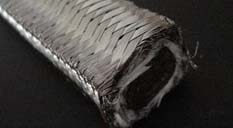
A: A double jacketed gasket is a high-performance sealing component consisting of a soft, compressible filler material (like PTFE or graphite) encased in two thin layers of metal (typically stainless steel) that are folded over and mechanically crimped together. This construction offers superb resilience against high pressure, temperature extremes, and corrosive media. The manufacturing process requires simultaneously forming the metal jacket to exact dimensions while uniformly compressing the filler and creating a perfect, leak-tight crimp. A general-purpose press cannot achieve the necessary control over pressure distribution, forming sequence, and crimp geometry, making a specialized machine essential for consistent, high-quality results.
Q: How does the Kaxite machine ensure a consistent and reliable crimp on the metal jacket?
A: The Kaxite ProSeries DJG-2000 employs a multi-stage, CNC-controlled process. First, the metal jacket blank is precisely formed around a mandrel using controlled hydraulic pressure. The filler is placed, and then the critical crimping stage begins. Our machine uses a proprietary radial crimping head with multiple, independently controlled segments. These apply pressure evenly around the entire circumference of the jacket overlap, gradually rolling and compressing the metal to a pre-programmed profile and depth. The integrated laser micrometer constantly monitors the crimp dimensions in real-time, making micro-adjustments to the hydraulic pressure to hold the tolerance within ±0.05 mm. This level of control is impossible with a simple, single-action press.
Q: What types of metal and filler materials can the Kaxite machinery process?
A: Our machine is highly versatile. For the jacket, it can handle austenitic stainless steels (304, 304L, 316, 316L), duplex steels, nickel alloys (Inconel, Monel), and coated steels. The thickness range is 0.4mm to 1.5mm. For the filler core, it is compatible with a wide range of sheet materials: PTFE (virgin, filled), expanded graphite, ceramic-filled fibers, silicone, EPDM, and NBR. The tooling pressure profiles and crimp parameters in the machine's software are adjustable to accommodate the different compression and spring-back characteristics of these materials.
Q: Is the machine suitable for low-volume, high-mix production, or is it only for high-volume runs?
A: The Kaxite DJG-2000 is designed for both. Its key feature is the quick-change, modular tooling system. An operator can switch between standard size families (e.g., from a 3-inch to a 10-inch gasket) in under 10 minutes by changing the forming mandrel and crimping die set. All parameters for that specific toolset are stored in the GasketWare OS. This makes it economically viable for job shops or manufacturers producing custom, small-batch gaskets. For high-volume production, the fast cycle time and automated material handling options maximize throughput.
Q: What kind of technical support and training does Kaxite provide with the machine?
A: Kaxite provides comprehensive start-up support. This includes on-site installation and commissioning by a factory-certified engineer, and detailed operator and maintenance training for your team. We supply extensive documentation: full electrical and hydraulic schematics, operation manuals, and preventive maintenance schedules. Furthermore, we offer remote diagnostic support via a secure connection and maintain a global inventory of critical spare parts to ensure minimal downtime. Our expertise in gasket manufacturing processes means our support goes beyond the machine hardware to include guidance on material selection and process optimization.
Q: How does this machinery integrate with modern, automated factory systems?
A: The Kaxite ProSeries is built for Industry 4.0. It features standard industrial communication protocols like Ethernet/IP and OPC UA, allowing it to connect directly to Factory PLCs, SCADA systems, and MES (Manufacturing Execution Systems). It can send real-time production data (counts, cycle times), quality metrics (crimp dimensions from the laser), and machine health status (pressure, temperature, error codes). For semiconductor or pharmaceutical applications, SECS/GEM protocol compatibility is available. This enables full traceability, where every gasket produced can be linked to its specific machine parameters and quality inspection data.
Understanding the internal workflow highlights the engineering behind the Kaxite solution.