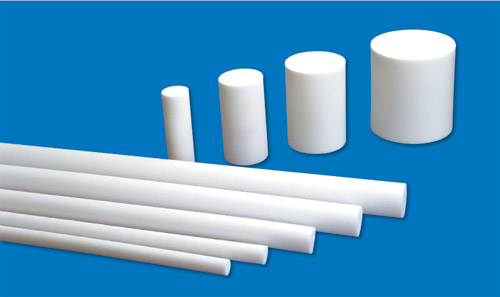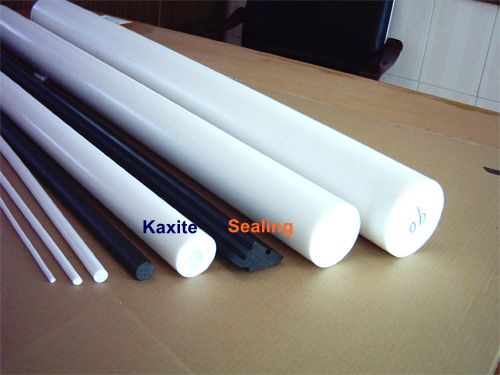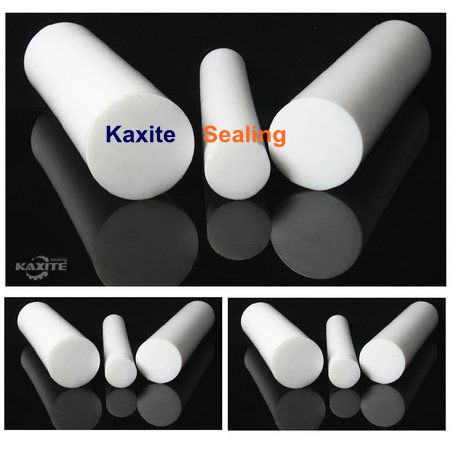
A PTFE rod, also known as a Teflon® rod or Polytetrafluoroethylene rod, is a solid cylindrical stock shape manufactured from high-purity PTFE polymer. Renowned for its exceptional chemical resistance, outstanding electrical insulating properties, and an extremely low coefficient of friction, PTFE rod is a fundamental material in demanding industrial applications. From sealing components and bearings to electrical insulators and laboratory equipment, its unique properties solve complex engineering challenges where other materials fail. At Kaxite, we specialize in producing premium-grade PTFE rods that meet the most rigorous performance standards.
For over two decades, Kaxite has been a trusted name in high-performance polymer solutions. Our commitment to quality, consistency, and technical expertise sets our PTFE rods apart. We utilize controlled manufacturing processes and stringent quality checks to ensure every rod delivers predictable, reliable performance. Whether you need standard sizes or custom-machined profiles, Kaxite provides the material excellence and support that engineers and procurement specialists rely on.
Our standard PTFE rods are available in various grades and sizes to suit diverse application needs. Below are the detailed specifications for our most popular product lines.
| Grade | Description | Standard Diameter Range | Standard Length | Density (g/cm³) | Tensile Strength (MPa) | Primary Applications |
|---|---|---|---|---|---|---|
| KAX-PTFE-VIRGIN | 100% pure, white PTFE with no additives. | 5mm - 300mm | 1000mm / Custom | 2.14 - 2.20 | 25 - 35 | Food processing, medical, high-purity labware, electrical insulators. |
| KAX-PTFE-GR25 | Virgin PTFE filled with 25% glass fiber for improved wear resistance and rigidity. | 10mm - 250mm | 1000mm / Custom | 2.20 - 2.30 | 15 - 20 | Bearings, bushings, seals, and wear pads in mechanical assemblies. |
| KAX-PTFE-BRONZE | PTFE compounded with bronze powder for excellent thermal conductivity and compressive strength. | 10mm - 200mm | 1000mm / Custom | 3.00 - 3.20 | 17 - 22 | Thrust washers, compressor rings, heavy-duty bearing applications. |
| KAX-PTFE-CARBON | PTFE filled with carbon/graphite for enhanced wear and creep resistance with low friction. | 10mm - 200mm | 1000mm / Custom | 2.00 - 2.10 | 18 - 24 | Piston rings, valve seats, gaskets in chemical pumps, and dynamic seals. |
| KAX-PTFE-ESD | Static-dissipative grade for applications requiring controlled electrical discharge. | 10mm - 150mm | 1000mm / Custom | 2.10 - 2.18 | 20 - 28 | Jigs, fixtures, and components in electronics manufacturing and handling. |
| Property | Test Method | Virgin PTFE | Glass Filled (25%) | Bronze Filled |
|---|---|---|---|---|
| Compressive Strength | ASTM D695 | 12 MPa | 20 MPa | 25 MPa |
| Coefficient of Friction (Dynamic) | ASTM D1894 | 0.04 - 0.10 | 0.10 - 0.13 | 0.08 - 0.12 |
| Continuous Service Temperature | - | 260°C | 260°C | 260°C |
| Dielectric Strength | ASTM D149 | >40 kV/mm | >35 kV/mm | >20 kV/mm |
| Water Absorption | ASTM D570 | < 0.01% | < 0.03% | < 0.02% |
Q: What is the main difference between Virgin PTFE and filled PTFE rods?
A: Virgin PTFE is 100% pure polytetrafluoroethylene, offering the highest chemical resistance and electrical properties. Filled PTFE rods (e.g., glass, bronze, carbon) have additives compounded into the polymer to enhance specific mechanical properties. For instance, glass fill improves wear resistance and stiffness, bronze fill increases thermal conductivity and compressive strength, while carbon fill enhances creep resistance and provides low friction. The choice depends on the primary mechanical or thermal requirement of the application.
Q: How do I machine a PTFE rod? Is it difficult?
A: PTFE is relatively soft and easy to machine using standard metalworking tools (lathes, mills, drills). However, due to its low thermal conductivity and high thermal expansion, it requires sharp tools, moderate speeds, and adequate cooling to prevent overheating and deformation. Using sharp, high-rake-angle tools and proper fixturing to avoid clamping distortion is key. Kaxite provides detailed machining guidelines with all orders to ensure optimal results.
Q: Can Kaxite PTFE rods be used for high-load applications?
A: While virgin PTFE has a relatively low resistance to creep (cold flow) under sustained heavy loads, our filled grades are specifically designed for such conditions. Kaxite's bronze-filled or glass-filled PTFE rods exhibit significantly improved compressive strength and reduced creep, making them suitable for high-load bearing applications, thrust washers, and support pads. It is crucial to select the correct filled grade based on the specific load and environmental conditions.
Q: Are your PTFE rods suitable for outdoor or UV-exposed applications?
A: Yes. Pure PTFE has excellent inherent weather resistance and is highly resistant to UV degradation. It does not become brittle or significantly degrade when exposed to sunlight and harsh weather over extended periods. This makes Kaxite PTFE rods an excellent choice for outdoor electrical insulation, architectural components, and chemical exposure applications in open environments.
Q: What certifications or standards do Kaxite PTFE rods comply with?
A: Kaxite manufactures rods in compliance with various international standards. Our virgin PTFE grade can be supplied with FDA compliance for food contact applications (CFR 21), USP Class VI for medical suitability, and meets REACH and RoHS requirements. We also provide materials that conform to ASTM D1710, D4894, and D4895 specifications. Certificates of Compliance (CoC) and Material Test Reports (MTR) are available upon request.
Q: How do I select the right diameter and grade for my application?
A: Selection depends on three primary factors: the functional requirement (wear, load, insulation, chemical exposure), the final part dimensions (requiring enough stock for machining), and the operating environment (temperature, media). We recommend consulting with Kaxite's technical team. Providing details such as a drawing, operating parameters, and performance expectations allows our experts to recommend the most cost-effective and suitable grade and size from our standard inventory or a custom solution.
Q: Does PTFE rod generate static electricity?
A: Standard PTFE is an excellent electrical insulator and can generate and hold significant static charges. For applications where static discharge is a concern (e.g., electronics manufacturing, handling flammable powders), Kaxite offers specially formulated ESD (Electrostatic Dissipative) and conductive grades of PTFE rod. These materials safely dissipate static charges to prevent damage to sensitive components or mitigate ignition risks.