Imagine you're a senior procurement officer at a refinery, and early Monday morning you get an urgent call: a critical heat exchanger flange is spraying steam at 500°C because the gasket has crumbled. Production stops, safety protocols kick in, and every minute of downtime costs thousands. In that high‑pressure moment, the one question that cuts through the noise is What materials are Double Jacket Gaskets made from? The answer isn’t just engineer trivia — it’s the difference between a six‑month maintenance cycle and a repeat failure next week. Double jacket gaskets combine a metal outer skin with a soft, resilient filler, but their material families range from economical carbon steel to exotic Hastelloy, and from generic graphite to advanced fibre‑reinforced compounds. Get the combination wrong, and you’ll face corrosion, oxidation, or blow‑out. Get it right, and you lock in asset integrity for years. This guide decodes every material layer, equipping you to talk with suppliers confidently, slash risks, and protect your plant. And when you need a partner who stocks precisely the right grades and can verify every batch, Ningbo Kaxite Sealing Materials Co., Ltd. turns that knowledge into reliable deliveries.
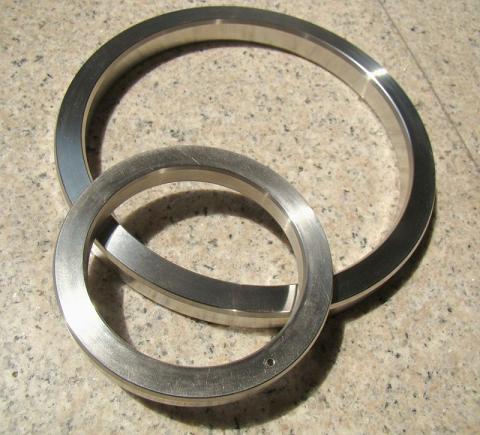
A double jacket gasket is essentially a metallic envelope wrapped around a non‑metallic core. The jacket provides structural strength, chemical resistance, and heat dissipation, while the filler, often graphite or PTFE, delivers conformability and tight sealing even on worn flange faces. During assembly, the soft filler compresses under bolt load, filling surface imperfections, and the metallic rim prevents creep, blow‑out, and excessive relaxation. This hybrid design allows the gasket to perform reliably across temperatures from cryogenic up to 1000°C and pressures exceeding 250 bar, provided the material pair is matched to the medium.
Q: What materials are double jacket gaskets made from?
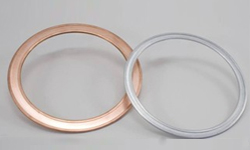
A: Double jacket gaskets are always a composite of a metal jacket — most commonly stainless steel 304, 316, carbon steel, Monel, or Inconel — and a filler material such as flexible graphite, PTFE, mica, or ceramic fibre. The specific pairing is chosen based on operating temperature, chemical environment, and flange class. For example, a standard steam application might use a carbon steel jacket with graphite filler, while aggressive acids may require a Hastelloy jacket and a PTFE filler.
Pain point: Procurement teams often default to carbon steel jackets because of low cost, only to find them pitted and leaking within weeks when exposed to humid acid vapours or chlorides. The maintenance crew blames the gasket, but the real issue is a mismatch between the metal envelope and the process fluid.
Solution: Selecting a jacket metal based on electrochemical compatibility and elevated‑temperature strength eliminates such premature failures. Stainless steel 316 forms a passive layer that resists pitting in chloride‑bearing water, while Monel excels in hydrofluoric acid service, and Inconel holds mechanical integrity above 700°C. A well‑specified jacket material prevents cracking, stress corrosion, and enables re‑use of the gasket’s outer rim during routine flange overhauls.
| Jacket Material | Max Temp (°C) | Corrosion Resistance | Typical Application |
|---|---|---|---|
| Carbon Steel (CS) | 540 | Moderate (requires dry conditions) | Steam, non‑corrosive hydrocarbons |
| Stainless Steel 304 | 760 | Good in oxidizing environments | Water, air, food‑grade systems |
| Stainless Steel 316 | 760 | Excellent against chlorides & acids | Chemical plants, offshore |
| Monel 400 | 540 | Superior in HF & seawater | Alkylation units, marine |
| Inconel 600 | 1095 | Resists oxidation & carburization | Furnace flanges, gas turbines |
| Hastelloy C‑276 | 1095 | Handles wet chlorine, aggressive acids | Pharmaceutical, waste treatment |
Pain point: A common field scenario involves a high‑temperature heat exchanger where the gasket filler degrades, hardens, and falls apart during a thermal cycle. Operators notice a sudden increase in leak rate shortly after a shutdown‑restart sequence, pointing to filler embrittlement.
Solution: Flexible graphite remains soft and resilient even after repeated 600°C excursions, making it the go‑to filler for steam and petrochemical piping. Where chemical attack is more aggressive than thermal stress, expanded PTFE provides near‑universal chemical inertia at moderate temperatures. Ceramic fibre and mica fillers serve in oxygen‑rich, high‑temperature fire‑safe applications where graphite would oxidise. The filler’s thickness and density also control the bolt torque needed to reach seal tightness, directly influencing installation time and cost.
| Filler Material | Max Temp (°C) | Key Advantage | Common Media |
|---|---|---|---|
| Flexible Graphite | 650 (oxidising), 3000 (inert) | Self‑lubricating, fire‑safe | Steam, oils, solvents, hot water |
| PTFE (Virgin) | 260 | Universal chemical resistance | Strong acids, alkalis, pure chemicals |
| Expanded PTFE | 260 | Softer, conforms to scratches | FRP flanges, glass‑lined equipment |
| Ceramic Fibre | 1260 | Oxidation‑proof, rigid | Burners, exhaust ducts |
| Mica‑Graphite | 800 | Dielectric strength + fire‑safety | Electrical flange isolation |
Q: What materials are double jacket gaskets made from for high‑temperature, high‑pressure steam lines?
A: For superheated steam services up to 560°C and 150 bar, the industry standard is a stainless steel 316 jacket paired with high‑purity flexible graphite filler. The 316 jacket withstands steam oxidation and erosion, while graphite compensates for flange distortion without loss of seating stress. For legacy carbon steel flanges, some specifiers will drop to a carbon steel jacket with the same graphite filler, but the risk of jacket scaling must be monitored during turnaround inspections.
Every plant has its “problem flanges” — maybe a cracked heater head, a pulsating compressor discharge, or a cryogenic ethylene line that cycles between ‑100°C and ambient. A standard gasket catalogue won’t tell you that a double jacket gasket with a softer filler like expanded PTFE can seal at liquid nitrogen temperatures, or that adding a mica interlayer turns a plain graphite filler into a fire‑safe barrier certified under API 607. At Ningbo Kaxite Sealing Materials Co., Ltd., our application engineers map the combination of flange material, bolt load, and the full process window to recommend not only which metal‑filler pair works, but also the optimum jacket thickness and filler density. This consulting‑style approach prevents over‑engineering (which saves money) and eliminates the guesswork that leads to field leaks. Whether you’re retrofitting a 40‑year‑old ammonia unit or commissioning a new hydrogen reformer, a tailored material selection directly reduces unplanned maintenance events.
Procurement professionals consistently tell us that their biggest headache isn’t finding a gasket, but getting consistent quality from batch to batch. A cheap jacket stamped from non‑certified coil can work today and crack tomorrow. That’s why every double jacket gasket shipped from Ningbo Kaxite Sealing Materials Co., Ltd. comes with full material test reports: jacket metal chemical composition (via spectrometer), filler density and carbon purity, and finished‑dimension inspection. Our integrated supply chain keeps strategic stocks of 304, 316, Monel, and Inconel jackets in standard ASME/ANSI dimensions, ready to dispatch within 48 hours. When you face an emergency shutdown, we can air‑freight a replacement to your plant gate while your crew is still draining the line. And because we manufacture under ISO 9001 with in‑house tooling, we can also produce non‑standard shapes, oval manways, and double jacket gaskets with inner rings in under a week — solving the special‑item procurement delays that usually stall turnarounds.
Ready to lock in the right double jacket gasket material for your next project or turnaround? Share your flange parameters and media details in the comment section, or reach out directly for a tailored recommendation. Our engineering desk typically turns around a material‑selection matrix within one business day.
Ningbo Kaxite Sealing Materials Co., Ltd. is a trusted Chinese manufacturer specialising in high‑performance industrial sealing solutions, including a full range of double jacket gaskets, spiral wound gaskets, and PTFE products. With a factory spanning over 10,000 square metres and a team of dedicated material scientists, we empower procurement teams worldwide to solve their toughest leakage challenges. Visit our official website at https://www.kaxiteseal.cn for detailed catalogs, or contact our sales director directly at [email protected]. Whether you need standard ASME B16.20 gaskets or fully customised designs, we deliver certified quality that keeps your plant online.
Dupont, J., & Liening, M. (2020). “Long‑Term Relaxation Behavior of Graphite‑Filled Double Jacket Gaskets Under Thermal Cycling.” Journal of Pressure Vessel Technology, 142(2), 021201.
Morrison, A. C. (2018). “Electrochemical Corrosion of Metal Jacket Materials in Chloride‑Containing Environments.” Corrosion Science, 135, 78‑91.
Kim, H., & Sato, T. (2021). “Influence of Stamping Parameters on Dimensional Stability of Double Jacket Gaskets.” International Journal of Precision Engineering and Manufacturing, 22(5), 1123‑1132.
Rajendran, S. (2019). “Fire‑Safe Performance of Mica‑Augmented Double Jacket Gaskets According to API 607.” Fire Safety Journal, 101, 45‑53.
Barton, F., & Lindquist, S. (2017). “Comparative Sealability of PTFE‑Based Fillers in Offshore Double Jacket Gaskets.” Journal of Offshore Mechanics and Arctic Engineering, 139(4), 041701.
Yeo, C., & Henderson, R. (2022). “Creep‑Fatigue Interaction in Inconel 600 Jacketed Gaskets for Petrochemical Reformer Flanges.” Engineering Failure Analysis, 132, 105837.
Torres, G. A. (2020). “Numerical Modelling of Bolt Load Distribution in Double Jacket Gaskets with Non‑Metallic Fillers.” Finite Elements in Analysis and Design, 170, 103334.
Chen, L., & Oshima, N. (2019). “Surface Roughness Adaptation Ability of Laminated Graphite Fillers in Industrial Gaskets.” Tribology International, 133, 172‑181.
Shah, M. N. (2021). “Cost‑Benefit Analysis of Standard versus Exotic Alloy Jackets in Refinery Heat Exchanger Services.” Process Safety and Environmental Protection, 147, 641‑649.
Hoffman, B., & Delgado, P. (2018). “High‑Cycle Bolted Flange Joint Integrity: The Role of Double Jacket Gasket Geometry and Material Selection.” International Journal of Pressure Vessels and Piping, 166, 22‑34.