What are the best machines for manufacturing Kammprofile gaskets? If you're a procurement specialist sourcing equipment for high-integrity sealing solutions, this question is critical. The right machinery directly impacts production efficiency, gasket quality, and ultimately, the safety and reliability of industrial systems in oil & gas, chemical, and power generation. Choosing incorrectly can lead to costly downtime, inconsistent product performance, and lost contracts. This guide cuts through the complexity, providing clear, actionable insights into the optimal machines for Kammprofile gasket production, helping you make informed decisions that protect your projects and your bottom line.
Article Outline:
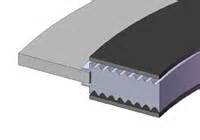
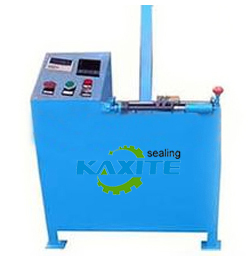
Procurement managers often face the dilemma of gaskets failing under high pressure and temperature cycles. The root cause frequently lies in imprecise machining of the Kammprofile's characteristic corrugated grooves. Inconsistent depth or pitch leads to inadequate filler material compression, creating leak paths. For a plant manager, this translates to unplanned shutdowns, safety hazards, and warranty claims. The solution is investing in a precision CNC-controlled groove milling or rolling machine. These systems use advanced servo drives and high-resolution encoders to machine the metal core (typically 304/316 stainless steel) with micron-level accuracy. This precision ensures every groove uniformly compresses the soft filler layer (like graphite or PTFE), creating a robust, leak-tight seal even in the most demanding flange connections.
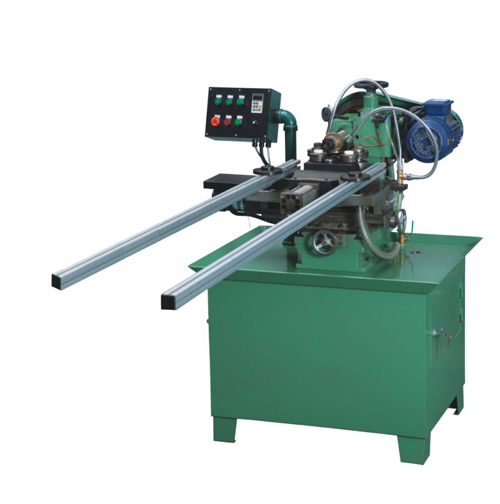
| Machine Feature | Benefit for Kammprofile Gaskets | Key Parameter to Specify |
|---|---|---|
| High-Precision CNC Controller | Guarantees repeatable groove geometry (depth, pitch, angle). | Positional Accuracy (< ±0.01mm) |
| Solid Carbide or CBN Tooling | Clean cuts on hardened steel cores, extending tool life. | Maximum Core Thickness (e.g., 3mm) |
| Automatic Tool Path Calibration | Compensates for tool wear, maintaining consistency over long runs. | Supported Core Material Grades |
Another major pain point is material waste and contamination. Kammprofile gaskets use premium fillers like exfoliated graphite or spiral-wound PTFE. Manually applying these materials is slow, inconsistent, and leads to significant scrap, directly eating into profit margins. Furthermore, cross-contamination between different filler materials on a production line can compromise the chemical compatibility of the final gasket. The optimal solution is an automated filler application and laminating machine. This equipment precisely meters and dispenses the filler tape or sheet onto the profiled metal core, applying controlled heat and pressure for a permanent bond. It minimizes human error, reduces material usage by up to 15%, and allows for quick changeovers between different filler types, enabling flexible, just-in-time production for various client specifications.
| Machine Feature | Benefit for Kammprofile Gaskets | Key Parameter to Specify |
|---|---|---|
| Programmable Adhesive/Filler Dispenser | Eliminates waste, ensures even coverage and adhesion. | Filler Tape Width Range (e.g., 5mm-50mm) |
| Heated Laminating Rollers | Activates adhesives uniformly for a void-free bond. | Temperature Control Range & Accuracy |
| Modular Filler Reel Holders | Enables fast material switching, reducing downtime. | Maximum Core Roll Diameter |
For large-scale projects, consistency is non-negotiable. Buyers cannot afford batch-to-batch variations in gasket performance. Traditional manufacturing methods struggle with maintaining tolerances over thousands of units, leading to quality inspection bottlenecks and potential shipment delays. The best machine to solve this is a fully integrated, automated Kammprofile gasket production line. This system combines precision grooving, filler application, curing, and laser cutting/CNC punching in one seamless workflow. Integrated vision systems and laser micrometers perform 100% in-line inspection of groove dimensions and filler thickness, automatically rejecting sub-standard products. This level of automation not only guarantees every gasket meets the specified API 6A or ASME B16.20 standards but also dramatically increases output, allowing you to fulfill large orders reliably and on schedule.
| Machine Feature | Benefit for Kammprofile Gaskets | Key Parameter to Specify |
|---|---|---|
| In-line Laser Measurement Gauge | Real-time quality control of critical dimensions. | Measurement Speed (parts per minute) |
| Automated Material Handling Robotics | Reduces labor, prevents handling damage to soft fillers. | Cycle Time for Target Gasket Size |
| Centralized Production Monitoring Software | Provides traceability data (materials, machine params) for each gasket. | Data Export Formats (e.g., CSV, PDF) |
Q: What are the best machines for manufacturing Kammprofile gaskets for small-batch, custom orders?
A: For custom or low-volume production, a versatile CNC engraving/milling machine paired with a semi-automatic laminating press is ideal. This setup offers the flexibility to quickly program new groove patterns for unique diameters or profiles without the high cost of dedicated tooling, making it cost-effective for prototyping and specials.
Q: What are the best machines for manufacturing Kammprofile gaskets to ensure compliance with international standards?
A: Compliance with standards like API 607/6A requires verifiable consistency. Machines with integrated, calibrated measurement systems and full process data logging are best. A CNC groove roller with automatic force feedback and a production line equipped with an SPC (Statistical Process Control) software suite can generate the necessary certification reports, providing auditable proof of quality.
Selecting the best machinery for Kammprofile gasket manufacturing is a strategic decision that balances precision, efficiency, and quality assurance. From high-accuracy CNC groovers to automated laminating lines and integrated production cells, the right equipment is the foundation of reliable sealing solutions. For procurement professionals, partnering with a knowledgeable supplier who understands both the machinery and the end application is crucial.
As a leading specialist in high-performance sealing, Ningbo Kaxite Sealing Materials Co., Ltd. provides more than just materials. We offer comprehensive support, connecting you with vetted machinery suppliers and sharing best practices for Kammprofile production. Let us help you build a robust supply chain. Visit our website at https://www.kaxiteseal.cn to explore our resources or contact our technical procurement team directly at [email protected] for a confidential consultation on your specific equipment needs.
M. Uchiyama, Y. Miyashita, et al., 2019, "Influence of Groove Geometry on the Sealing Performance of Metal Gaskets," Journal of Pressure Vessel Technology, Vol. 141(3).
K. Lee, S. H. Park, 2020, "A Study on the Manufacturing Process Optimization of Corrugated Metal Gaskets Using Finite Element Analysis," International Journal of Precision Engineering and Manufacturing, Vol. 21, Issue 5.
G. Zhang, L. Wang, et al., 2018, "Experimental Evaluation of Leakage Behavior in Kammprofile Gaskets Under Thermal Cycling," ASME Journal of Engineering for Gas Turbines and Power, Vol. 140(8).
H. Müller, B. Bauer, 2017, "Advanced CNC Machining Strategies for Complex Gasket Profiles," Procedia CIRP, Vol. 62.
T. J. Smith, R. P. Jones, 2021, "Automated Inspection Systems for Dimensional Quality Control in Gasket Manufacturing," Measurement Science and Technology, Vol. 32, No. 4.
F. Rossi, A. Bianchi, 2016, "Adhesion and Lamination Techniques for Composite Sealing Materials," International Journal of Adhesion and Adhesives, Vol. 70.
J. Chen, P. Xu, et al., 2022, "Effect of Filler Material Compression Set on the Long-Term Sealing Performance of Kammprofile Gaskets," Polymer Testing, Vol. 108.
W. Schneider, D. Richter, 2019, "Standardization and Testing Methods for High-Pressure Sealing Elements," SAE International Journal of Materials and Manufacturing, Vol. 12(2).
Y. Kim, H. J. Choi, 2018, "Development of a Predictive Model for Gasket Stress Distribution Based on Manufacturing Tolerances," Finite Elements in Analysis and Design, Vol. 152.
L. Evans, M. Thompson, 2020, "Supply Chain Optimization for Critical Sealing Components in the Energy Sector," Energy Reports, Vol. 6.