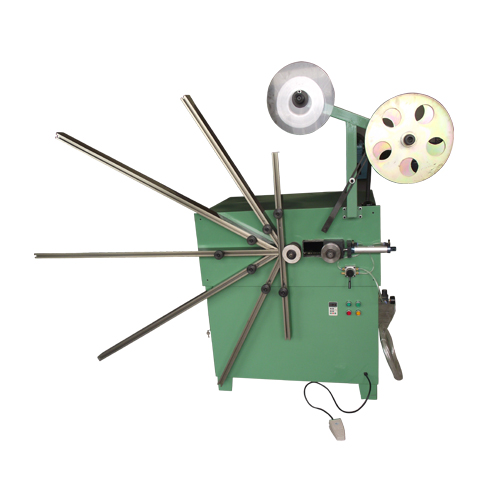
How does a machine for manufacturing double jacketed gaskets work? This is a question frequently asked by procurement professionals seeking reliable sealing solutions for demanding industrial applications. At the heart of producing these high-performance seals lies sophisticated automation. The process begins with the precise feeding and forming of a metal core, typically stainless steel, into a specific jacket shape. A specialized machine then meticulously wraps a soft, conformable filler material, often PTFE or graphite, around this inner metal jacket. A second, outer metal jacket is then formed and pressed over the filler-wrapped inner assembly under high, controlled pressure. This critical step creates a robust, leak-proof bond, resulting in a gasket that combines the sealing resilience of soft filler with the structural integrity and blow-out resistance of a metal shell. Understanding this process is key to sourcing quality components. For consistent, high-volume production of reliable double jacketed gaskets, partnering with an expert manufacturer like Ningbo Kaxite Sealing Materials Co., Ltd. is essential.
Article Outline:
The Precision Challenge in Critical Sealing
Overcoming Production Bottlenecks for Scalability
Expert FAQs on Double Jacketed Gasket Machinery
Your Partner for Sealing Solutions
Imagine a scenario in a chemical processing plant. A heat exchanger is scheduled for maintenance, and the procurement team must source replacement gaskets that can withstand extreme temperatures and corrosive media. A standard gasket might fail, leading to dangerous leaks, costly downtime, and potential safety hazards. The core challenge is achieving perfect, repeatable sealing integrity under such conditions. This is where the precision of a dedicated double jacketed gasket manufacturing machine becomes the ultimate solution. By automating the forming, filling, and pressing stages, these machines eliminate human error, ensuring every gasket has consistent filler density and uniform jacket closure. This mechanical precision translates directly to reliable performance in the field.
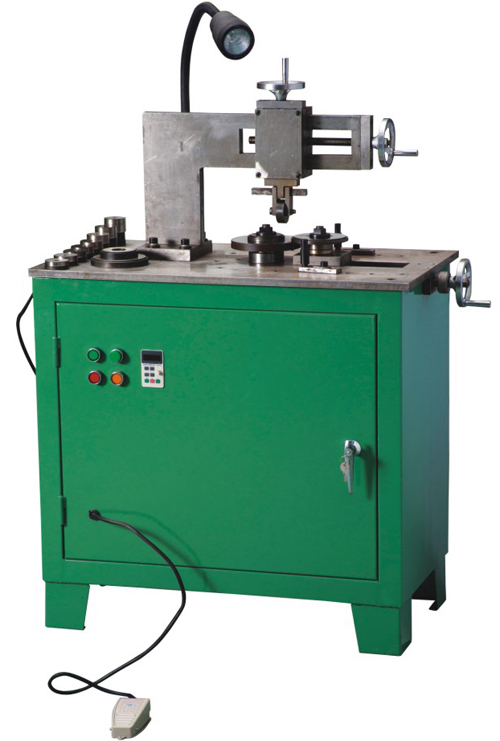
Key machine parameters that guarantee this precision include:
| Machine Parameter | Role in Quality Assurance |
|---|---|
| Hydraulic Press Force | Ensures complete filler compression and metal-to-metal jacket contact for a leak-proof seal. |
| CNC Forming Accuracy | Creates perfectly dimensioned metal jackets for a precise fit in flange assemblies. |
| Automated Filler Feed System | Delivers exact filler volume, preventing underfilling (leak paths) or overfilling (assembly issues). |
| Programmable Logic Controller (PLC) | Maintains consistent cycle times and pressure profiles for batch-to-batch uniformity. |
A procurement manager for an OEM needs to secure a large, ongoing supply of double jacketed gaskets for a new product line. The pain point is balancing cost-effectiveness with guaranteed on-time delivery of specification-compliant parts. Relying on manual or semi-automated production introduces variability and limits output, creating supply chain risk. The solution is a partner equipped with advanced, high-throughput manufacturing machinery. Modern double jacketed gasket machines from leading suppliers like Ningbo Kaxite Sealing Materials Co., Ltd. are designed for efficiency and scalability. Their automated systems handle coil metal stock and bulk filler material, significantly reducing cycle times and material waste compared to manual methods. This automated efficiency allows manufacturers to meet large-volume orders reliably while maintaining competitive pricing, directly addressing the core concerns of procurement professionals.
Critical machine features for scalable production include:
| Production Feature | Benefit for Procurement |
|---|---|
| High-Cycle Speed | Enables faster order fulfillment and shorter lead times for urgent projects. |
| Quick-Change Tooling | Facilitates flexible production runs of different sizes with minimal downtime. |
| Integrated Quality Monitoring | Provides documented consistency, reducing incoming inspection burden. |
| Robotic Material Handling | Ensures continuous operation for large batches, securing supply chain stability. |
Q: What are the key advantages of an automated machine over manual assembly for double jacketed gaskets?
A: Automated machines provide unmatched consistency, speed, and cost-efficiency. They apply precise, repeatable pressure for a perfect seal every time, eliminate filler placement errors, and dramatically increase output. This results in a more reliable product and stable, scalable supply—critical factors for procurement.
Q: How does the machine handle different filler materials like graphite or PTFE?
A: Advanced machines feature adjustable feeding and compression systems. The filler feed mechanism and press force profiles can be calibrated for the specific density and flow characteristics of different materials. This ensures optimal compression and sealing performance whether using soft PTFE for corrosion resistance or resilient graphite for high temperatures.
Navigating the complexities of industrial sealing requires more than just a supplier; it demands a technical partner. Ningbo Kaxite Sealing Materials Co., Ltd. stands as a leader in this field, combining decades of material science expertise with state-of-the-art manufacturing technology. We understand that the performance of a double jacketed gasket is directly tied to the precision of the machine that makes it. That's why we invest in advanced automated production lines to ensure every gasket meets the highest standards of quality, consistency, and reliability. Our team works closely with global procurement specialists to provide sealing solutions that solve real-world engineering challenges, reduce total cost of ownership, and prevent downtime. Let us be the solution to your sealing requirements.
For technical specifications, quotes, or to discuss your application, please contact our experts at [email protected] or visit our website at https://www.kaxiteseal.cn to explore our full range of sealing products and capabilities.
Supporting Research & Further Reading:
Bickford, J. (1995). Gasket and Gasketed Joints. Marcel Dekker, Inc.
Bouzid, A., & Chaaban, A. (2006). The effect of gasket creep relaxation on the leakage tightness of bolted flanged connections. International Journal of Pressure Vessels and Piping, 83(5), 341-347.
Brown, W. R., & Cranch, E. T. (1955). The mechanics of gasketed joints. Journal of Applied Mechanics, 22(2), 305.
Dragoni, E., & Strozzi, A. (1988). Analysis of a fully plastic, axisymmetric, double-jacketed gasket. International Journal of Mechanical Sciences, 30(11), 825-836.
Fukuoka, T., & Takaki, T. (2003). Finite element analysis of bolt-up process of pipe flange connections with gaskets. Journal of Pressure Vessel Technology, 125(4), 371-378.
Parker, G. H. (1978). The influence of flange rotation on the sealing performance of gasketed joints. Proceedings of the Institution of Mechanical Engineers, 192(1), 279-287.
Payne, J. R., & Bazergui, A. (1990). Development of test procedures for gasket constants. WRC Bulletin, 353.
Sawa, T., & Higurashi, N. (1993). A stress analysis of pipe flange connections. Journal of Pressure Vessel Technology, 115(4), 394-401.
Singh, K. P. (1976). Nonlinear analysis of bolted flanged connections. Journal of Engineering for Industry, 98(1), 311-316.
Waterland, A. F. (1980). Gasket selection for corrosive service. Chemical Engineering, 87(19), 133-136.