
The Definitive Guide to Premium Carbon Fiber Materials
For over two decades in material science and engineering, one composite has consistently redefined the boundaries of performance across industries: carbon fiber. At Kaxite, we don't just supply this advanced material; we engineer it to meet the most demanding applications with precision and reliability. True high-performance carbon fiber is more than just a lightweight alternative; it is a symphony of high-tensile filaments, specialized resins, and cutting-edge curing processes that together deliver an unparalleled strength-to-weight ratio, dimensional stability, and durability.
Understanding the core properties and specifications of carbon fiber is crucial for engineers, designers, and procurement specialists. Whether you are developing next-generation aerospace components, high-speed automotive parts, elite sporting goods, or robust industrial structures, selecting the correct grade and weave is the foundational step toward success. The following sections provide a detailed, technical breakdown of Kaxite's premium carbon fiber product lines, presented in clear, actionable formats.
Key Material Properties of Kaxite Carbon Fiber
The superior performance of our materials stems from a set of core engineered properties. These define how the material behaves under stress, heat, and environmental exposure.
- Tensile Strength: Ranging from 3,800 to 6,400 MPa. This measures the maximum stress the fiber can withstand while being stretched before breaking. Higher modulus fibers typically offer immense stiffness, while high-strength variants prioritize ultimate load-bearing capacity.
- Tensile Modulus: Ranging from 230 to 580 GPa. Also known as stiffness, this indicates the fiber's resistance to deformation under load. A higher modulus means less elongation under tension, critical for applications requiring minimal flex.
- Density: Approximately 1.75 - 1.85 g/cm³. This exceptionally low density is the source of carbon fiber's famed lightweight advantage, offering weight savings of 40-70% compared to steel or aluminum of equivalent strength.
- Thermal Conductivity: Varies by grade. Some of our specialized pitch-based fibers are excellent thermal conductors, ideal for heat management applications, while standard PAN-based fibers can act as insulators.
- Coefficient of Thermal Expansion (CTE): Near-zero or slightly negative longitudinally. This unique property ensures exceptional dimensional stability across wide temperature ranges, preventing expansion or contraction that could compromise precision parts.
- Fatigue Resistance: Excellent. Kaxite carbon fiber composites exhibit far superior fatigue resistance compared to metals, meaning they maintain integrity through repeated loading cycles without developing cracks.
Kaxite Carbon Fiber Product Matrix: Weaves, Weights, and Applications
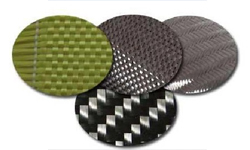
Selecting the right fabric weave is as important as choosing the fiber grade. The weave pattern affects drapeability, surface finish, and mechanical properties in the final laminate. Below is a comparative table of our standard fabric offerings.
| Weave Type | Areal Weight (g/m²) | Typical Thickness (mm) | Key Characteristics | Primary Applications |
|---|---|---|---|---|
| Plain Weave | 100, 200, 300 | 0.10, 0.20, 0.30 | Most stable weave, symmetrical, good interlaminar shear strength. Less conformable to complex curves. | Flat panels, architectural facades, drone arms, tooling plates. |
| Twill Weave (2x2, 4x4) | 150, 280, 400 | 0.15, 0.28, 0.40 | Excellent drapeability, distinctive diagonal pattern, good compromise between stability and conformity. | Automotive body panels, consumer product casings, yacht components, bicycle frames. |
| Unidirectional (UD) | 100, 150, 300 | 0.10, 0.15, 0.30 | All fibers run in one direction, offering maximum strength and modulus along that axis. Requires careful ply orientation design. | Spar caps for wind turbine blades, automotive leaf springs, robotic arms, high-performance racing components. |
| Harness Satin (5H, 8H) | 200, 350, 600 | 0.20, 0.35, 0.60 | Superior drapeability over complex molds, fewer crimps for higher mechanical properties than plain weave, smooth surface finish. | Aerospace fuselage skins, complex curvature marine parts, high-end sporting goods. |
| Biaxial (±45°) / Triaxial | 200-600 | 0.20-0.60 | Non-crimp fabric (NCF) with fibers stitched in specific off-axis orientations. Provides balanced multi-directional strength without crimp loss. | Pressure vessels, boat hulls, automotive chassis components, impact-resistant structures. |
Kaxite Carbon Fiber Grades: From Standard to Aerospace
We categorize our fiber grades based on modulus and tensile strength to match specific performance and budget requirements.
- Standard Modulus (SM) Grade: The workhorse grade, offering an optimal balance of high tensile strength (approx. 4,000 MPa) and good stiffness (approx. 230 GPa). It is cost-effective and suitable for the vast majority of industrial, automotive, and recreational applications.
- Intermediate Modulus (IM) Grade: Provides enhanced stiffness (approx. 290-350 GPa) while retaining very high strength. This grade is ideal for applications where reduced deflection is critical, such as in precision machinery, high-end automotive, and competitive sports equipment.
- High Modulus (HM) Grade: Engineered for maximum stiffness (approx. 350-450 GPa). These fibers are chosen when dimensional rigidity is the paramount design requirement, such as in satellite structures, professional camera tripods, and specialized aerospace components.
- Ultra High Modulus (UHM) Grade: Our premium aerospace-grade fiber with modulus exceeding 500 GPa. It delivers the ultimate in lightweight stiffness for mission-critical applications where every gram and every micron of deflection counts.
Kaxite Carbon Fiber: Frequently Asked Questions (FAQ)
What is the fundamental difference between "wet layup" and "prepreg" carbon fiber?
The core difference lies in the state of the resin during fabrication. In a wet layup, dry carbon fiber fabric is placed in a mold, and liquid resin is manually applied (brushed or rolled) to impregnate the fibers. This process is more accessible but can lead to inconsistencies in resin content and requires careful curing. Kaxite prepreg (pre-impregnated) fabric comes with a precise amount of partially cured resin already evenly distributed by our factory. It requires storage at low temperatures and curing in an autoclave or vacuum bag oven, but it guarantees optimal fiber-to-resin ratio, superior mechanical properties, and excellent repeatability for high-performance parts.
How does carbon fiber compare to materials like fiberglass and Kevlar®?
Each composite reinforcement fiber has distinct advantages. Carbon fiber offers the highest stiffness and strength-to-weight ratio, along with excellent fatigue resistance. Fiberglass is more flexible, has lower stiffness and strength, but is significantly more cost-effective and offers better impact absorption in some cases. Kevlar® (aramid fiber) is renowned for its exceptional toughness, impact resistance, and damage tolerance, but it has lower compressive strength and can be more challenging to cut and finish. The choice depends on the primary performance requirement: stiffness (carbon), cost-effectiveness with good properties (fiberglass), or impact/abrasion resistance (Kevlar®). Hybrid fabrics combining these fibers are also a powerful solution.
Can carbon fiber be recycled, and what is Kaxite's stance on sustainability?
Traditional thermoset carbon fiber composites are challenging to recycle because the cross-linked polymer matrix does not melt. However, the industry is making significant strides. Mechanical recycling (shredding) and pyrolysis (using high heat to decompose the resin) are viable processes to recover carbon fibers for use in non-structural applications. At Kaxite, we are actively involved in R&D for more efficient recycling technologies and also offer select product lines using recycled carbon fiber (rCF) sourced from post-industrial waste. Furthermore, we promote thermoplastic matrix composites, which are inherently more recyclable by reheating.
What are the primary considerations for designing a part with carbon fiber?
Successful carbon fiber design requires a holistic approach. First, define the primary loads: identify the direction and magnitude of tensile, compressive, and shear forces. Second, select the appropriate fiber grade and weave (e.g., unidirectional for directional loads, biaxial for torsional loads). Third, design the ply stack-up sequence (laminate schedule) to balance strength across required axes. Fourth, consider manufacturing constraints: can the chosen fabric drape over the mold? Will it be a wet layup, prepreg, or resin infusion process? Fifth, account for environmental factors like operating temperature and exposure to chemicals or UV light. Consulting with Kaxite's technical team early in the design phase is highly recommended.
How should carbon fiber components be maintained and repaired?
Proper maintenance ensures longevity. Keep the surface clean with mild soap and water; avoid abrasive cleaners. For glossy finishes, use non-abrasive automotive wax. Protect from prolonged UV exposure with a UV-resistant clear coat. Inspect regularly for signs of impact damage, such as cracks, delamination (bubbles), or discoloration. Professional repair of structural damage involves careful removal of damaged material, precision sanding to create a tapered scarf joint, and re-laminating with matching fabric and resin under vacuum pressure to restore integrity. For cosmetic scratches, specialized filler and clear coat systems can be used.
What certifications and quality standards does Kaxite adhere to?
Quality is non-negotiable at Kaxite. Our manufacturing facilities are certified to internationally recognized standards, including AS9100 for aerospace, IATF 16949 for automotive, and ISO 9001 for general quality management. Our fibers and fabrics undergo rigorous batch testing, with full traceability from raw precursor to finished roll. We provide comprehensive material data sheets (MDS) and certificates of analysis (CoA) for every shipment, detailing key mechanical properties, resin content (for prepregs), and thermal characteristics. We can also support customer-specific qualification and testing protocols.