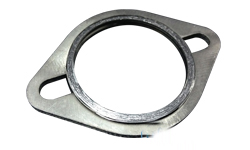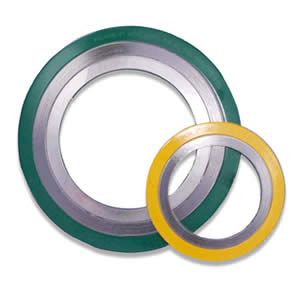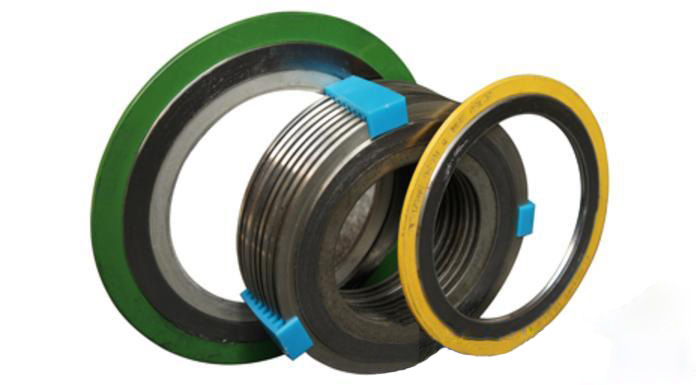
In the intricate world of industrial sealing, where pressure, temperature, and media compatibility are relentless adversaries, a superior solution is not just an option—it's a necessity. Enter the Serrated Gaskets. Engineered for performance and durability, these specialized sealing components are the go-to choice for flange connections subjected to extreme conditions. At Kaxite, we have refined the manufacturing and application of serrated gaskets to an exact science, providing industries worldwide with reliability they can count on.
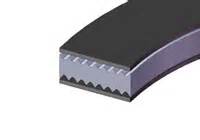
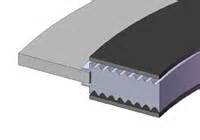
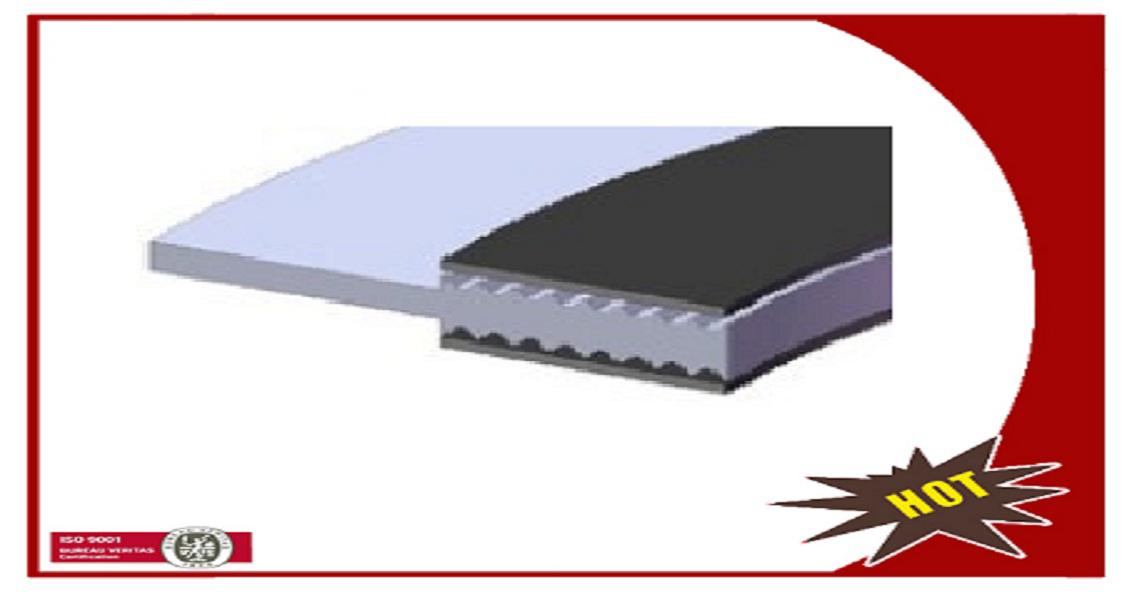
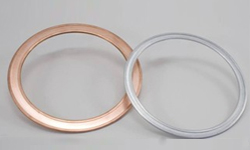
Unlike standard flat gaskets, serrated gaskets feature concentric grooves or serrations machined onto both sealing faces. This unique design creates multiple concentric rings of contact, dramatically increasing the sealing force per unit area. When the flange bolts are torqued, these sharp, precise serrations bite minutely into the flange surface, creating a series of robust metal-to-metal seals that effectively contain even the most challenging fluids and gases.
Kaxite serrated gaskets are manufactured to exacting standards, conforming to major international norms including ASME B16.20, API 6A, and DIN standards. Our production process ensures dimensional precision, material consistency, and flawless serration geometry.
| Material Grade | Common Designation | Temperature Range (°C) | Pressure Range (Bar) | Key Applications & Media |
|---|---|---|---|---|
| SS 304 | AISI 304 | -250 to +800 | Up to 300 | General corrosive services, food, pharmaceuticals, mild chemicals. |
| SS 316 | AISI 316 | -250 to +800 | Up to 300 | Enhanced corrosion resistance, chlorides, oxidizing acids. |
| Alloy 20 | UNS N08020 | -45 to +400 | Up to 250 | Sulfuric acid, phosphoric acid, chemical processing. |
| Monel 400 | UNS N04400 | -150 to +600 | Up to 350 | Sea water, hydrofluoric acid, alkalies, sour gas. |
| Inconel 600 | UNS N06600 | -150 to +1150 | Up to 400 | High-temperature furnaces, petrochemical cracking, nitriding. |
| Duplex 2205 | UNS S31803 | -50 to +300 | Up to 350 | Offshore, oil & gas, chloride-containing environments. |
We offer a comprehensive range of sizes from ½" NB to 48" NB and above. The serration profile—the shape and geometry of the grooves—is critical. Kaxite offers two primary profiles:
The key dimensions of the serrations include:
| Profile Type | Pitch (inches/mm) | Depth (inches/mm) | Included Angle (Degrees) |
|---|---|---|---|
| Standard Concentric | 0.0625" / 1.59mm | 0.012" / 0.30mm | 90° |
| Fine Pitch Concentric | 0.03125" / 0.79mm | 0.008" / 0.20mm | 90° |
| Spiral Serration | 0.0625" / 1.59mm | 0.015" / 0.38mm | 75° |
Q: What are the main applications for serrated gaskets?
A: Serrated gaskets are predominantly used in high-pressure, high-temperature, and critical service applications across industries. Common uses include: pipeline flanges in oil & gas production and refining, heat exchanger connections, reactor vessels in chemical plants, turbine and boiler connections in power generation, and high-pressure manifolds in hydraulic systems. They are ideal for sealing hydrocarbons, steam, aggressive chemicals, and toxic gases where leak-tight integrity is paramount.
Q: Can serrated gaskets be used on any type of flange face?
A: No, they require specific flange finishes for optimal performance. They are primarily designed for use on smooth, flat flange faces such as Raised Face (RF) and Flat Face (FF) flanges. The serrations require a relatively smooth surface (typically 125 to 250 µin Ra finish) to bite into effectively. They are not recommended for use on serrated or grooved flange faces themselves, as this can cause excessive damage and improper sealing. Always consult Kaxite engineering for flange compatibility.
Q: How do I choose the right material for my application?
A: Material selection depends on three primary factors: the media being sealed (chemical composition), the operating temperature, and the pressure. First, ensure the material is chemically resistant to the media. Second, verify its temperature limits cover your operating range. Third, confirm its pressure rating. For example, for hot sulfuric acid service, Alloy 20 might be selected. For high-temperature steam, SS 316 or Inconel could be appropriate. Kaxite provides comprehensive material selection guides and technical support for this critical decision.
Q: What is the recommended bolt torque for installing a serrated gasket?
A: The bolt torque is crucial and differs from that used with soft gaskets. Because serrated gaskets require less compressive force to achieve a seal, over-torquing can damage the flange or the gasket serrations themselves. The torque should be calculated based on the target flange stress (often between 20,000 to 30,000 psi for many applications), bolt size, grade, and number. We recommend following ASME PCC-1 guidelines or using specific torque calculation software. Kaxite can provide suggested bolt loads for our standard gasket products upon request.
Q: Are Kaxite serrated gaskets reusable?
A: Under proper conditions, yes, they can be reused, which is a significant economic advantage. Reusability depends on several factors: the condition of the flange surfaces (no deep gouges or corrosion), the gasket material (some alloys work-harden less than others), and the number of previous cycles. It's essential to inspect the gasket carefully before reuse. Look for flattened or damaged serrations, cracks, or signs of corrosion. As a general rule, if the serrations are still distinct and the gasket is not distorted, it may be suitable for reuse. For critical services, replacement is often the safer protocol.
Q: What is the difference between a serrated gasket and a ring-type joint (RTJ) gasket?
A: Both are metal-to-metal seals, but they function differently. A serrated gasket seals through multiple lines of contact (the serrations) on the flange face. An RTJ gasket is a solid metal ring with an octagonal or oval cross-section that seats into a machined groove in the flange, creating a wedging action. RTJs are typically used for even higher pressures (ASME Class 900 and above) and are considered a permanent, non-reusable connection in many standards. Serrated gaskets offer more flexibility for common RF flanges and are often reusable.
Q: How do I store and handle serrated gaskets?
A: Proper handling is key to maintaining performance. Store gaskets in a dry, clean environment to prevent corrosion. They should be kept in their original packaging until use. Avoid stacking heavy objects on them to prevent deformation. During handling, wear gloves to prevent skin oils from causing corrosion on some materials. Never drop or impact the gasket, as this can create flat spots or nicks on the sealing surface that will compromise the seal.
Q: Does Kaxite offer custom serrated gaskets outside standard sizes and materials?
A> Absolutely. While we stock a vast range of standard inventories, Kaxite specializes in engineered custom solutions. We can manufacture serrated gaskets to non-standard diameters, thicknesses, and with special serration profiles. We also work with exotic alloys like Hastelloy, Titanium, and Tantalum for extreme corrosion applications. Our engineering team works directly with clients to design a gasket that meets unique pressure, temperature, and media challenges.
To ensure the leak-free performance Kaxite serrated gaskets are designed for, correct installation is non-negotiable.