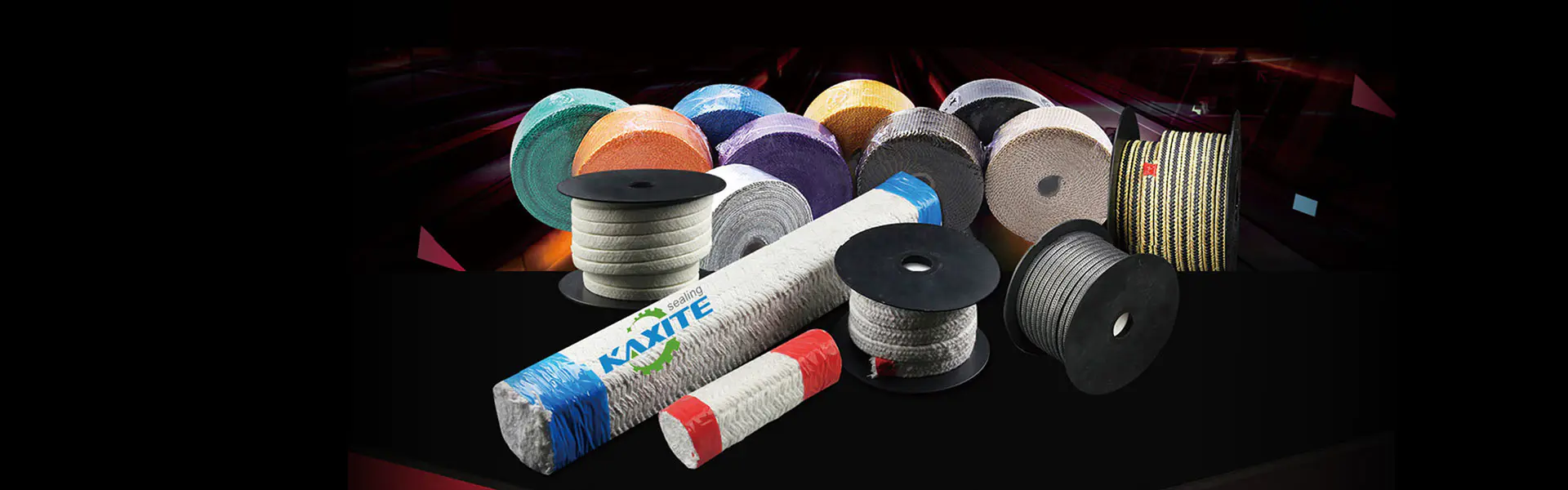
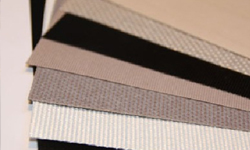
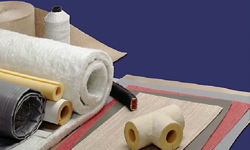
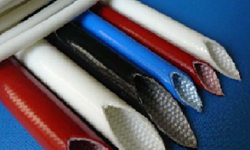
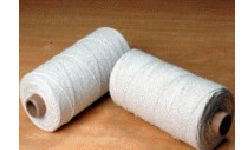
Glass fiber, also known as fiberglass, represents a cornerstone of modern material science and industrial manufacturing. At Kaxite, we have dedicated decades to perfecting the production and application of high-performance glass fiber, establishing ourselves as a trusted leader in supplying this versatile material to a global market. This composite material, made from extremely fine fibers of glass, offers an unparalleled combination of strength, durability, lightweight properties, and resistance to environmental factors. From reinforcing plastics in automotive parts and wind turbine blades to providing insulation in buildings and creating circuit boards in electronics, glass fiber is an indispensable component driving innovation across countless sectors.
**Understanding Glass Fiber: The Kaxite Difference**
The fundamental strength of glass fiber lies in its manufacturing process and composition. At its core, glass fiber is produced by drawing molten glass into ultra-thin filaments. These filaments are then coated with a chemical sizing or coupling agent, a critical step where Kaxite's expertise shines. Our proprietary sizing formulations are engineered to ensure optimal bonding with various resin systems, whether polyester, epoxy, or vinyl ester, maximizing the final composite's mechanical properties.
Kaxite glass fiber is not a single product but a family of materials tailored for specific applications. We control every variable—from the raw material purity to the filament diameter and the final strand configuration—to deliver consistent, reliable, and high-quality fiberglass products. Our commitment to research and development ensures that our products meet the evolving demands of industries seeking lighter, stronger, and more efficient materials.
### **Kaxite Glass Fiber: Key Product Parameters and Specifications**
To specify the right glass fiber for your project, understanding the technical parameters is essential. Below is a detailed breakdown of the critical specifications for Kaxite's standard E-glass fiber products, which are the most widely used for general-purpose reinforcement.
**Primary Product Types & Forms:**
* **Roving:** Continuous, untwisted strands wound into a cylindrical package. Used primarily in pultrusion, filament winding, and spray-up applications.
* **Chopped Strand Mat (CSM):** Randomly distributed chopped strands bonded into a mat with a binder. Ideal for hand lay-up and closed molding processes.
* **Woven Roving (Fabric):** Heavy, drapeable fabrics woven from roving. Provides high strength and is used in boat hulls, tanks, and large structural parts.
* **Multiaxial Fabrics:** Layers of oriented unidirectional or bidirectional stitched together. Offers designed directional strength for advanced composites.
* **Chopped Strands:** Short, milled fibers supplied in bulk for reinforcement in thermoplastic compounds, BMC, and SMC.
**Detailed Technical Specifications Table:**
The following table outlines the standard parameters for our flagship E-Glass products. Custom specifications are available upon request.
| Parameter | Description | Typical Value / Range | Importance |
| :--- | :--- | :--- | :--- |
| **Glass Type** | The composition of the glass. | E-Glass (Electrical) | Standard for most composites; offers good strength, electrical insulation, and affordability. |
| **Filament Diameter** | The diameter of individual glass filaments, measured in microns (μm). | 9 μm, 13 μm, 17 μm, 24 μm | Finer filaments offer higher tensile strength and a smoother surface finish in the composite. |
| **Tex Number** | The weight in grams of 1000 meters of strand (g/1000m). A key measure of strand thickness. | 300 Tex, 600 Tex, 1200 Tex, 2400 Tex | Determines the areal weight and resin uptake. Lower tex = finer roving. |
| **Tensile Strength** | The maximum stress the fiber can withstand while being stretched. | 3,400 - 3,800 MPa | Critical for structural integrity; indicates the reinforcing power of the fiber. |
| **Elastic Modulus** | The measure of the fiber's stiffness or resistance to elastic deformation. | 72 - 78 GPa | Higher modulus results in a stiffer, less flexible final composite part. |
| **Density** | Mass per unit volume. | 2.55 - 2.62 g/cm³ | Contributes to the lightweight nature of fiberglass composites compared to metals. |
| **Moisture Content** | The amount of moisture present in the fiber as supplied. | < 0.1% | Low moisture is vital for good resin adhesion and preventing defects during curing. |
| **Sizing / Coupling Agent** | The chemical coating applied to filaments. | Kaxite proprietary blends for Polyester, Epoxy, Vinyl Ester compatibility. | Perhaps the most crucial parameter; determines interfacial bond with resin, affecting all mechanical properties. |
**Additional Critical Properties:**
* **Thermal Resistance:** Kaxite E-glass fibers exhibit a softening point around 840°C and can operate continuously at temperatures up to approximately 600°C, making them suitable for many high-temperature environments.
* **Chemical Resistance:** Highly resistant to most acids, water, and solvents, though susceptible to prolonged exposure to strong alkaline substances.
* **Electrical Properties:** Excellent electrical insulation capabilities, a primary reason for its original development and continued use in the electrical industry.
### **Kaxite Glass Fiber: Frequently Asked Questions (FAQ)**
**What are the main advantages of using Kaxite glass fiber over traditional materials like steel or aluminum?**
Kaxite glass fiber reinforced composites offer a superior strength-to-weight ratio, meaning they can be as strong as or stronger than many metals while being significantly lighter. This leads to fuel efficiency in transportation, easier installation, and reduced structural load. Additionally, they are corrosion-resistant, thermally insulating, electrically non-conductive, and offer greater design flexibility due to moldability into complex shapes.
**What is the difference between E-glass, S-glass, and other glass types?**
E-glass (Electrical) is the standard, most economical type, offering good overall strength and electrical insulation. S-glass (Structural) is a higher-performance variant with approximately 30-40% higher tensile strength and modulus, better temperature resistance, and superior fatigue characteristics, but at a higher cost. Kaxite produces both E and S-glass fibers. Other types include AR-glass (Alkali Resistant) for cement reinforcement and C-glass (Chemical) for superior acid corrosion resistance.
**How do I choose the right form of glass fiber (e.g., roving, mat, fabric) for my manufacturing process?**
The choice depends entirely on your production method and the required performance of the final part. For automated processes like pultrusion (creating constant cross-section profiles) or filament winding (for pipes and tanks), **continuous roving** is standard. For hand lay-up or resin infusion of large, complex parts like boat hulls, **Chopped Strand Mat (CSM)** or **woven fabrics** are used for their drapeability. **Multiaxial fabrics** are chosen for high-performance structural components where strength must be engineered into specific directions.
**Why is the 'sizing' or 'coupling agent' on the glass fiber so important?**
The sizing is a proprietary chemical coating applied during fiber manufacturing. It serves multiple vital functions: it protects filaments from abrasion during handling, binds filaments together into a strand, and, most importantly, it promotes a strong chemical and physical bond (the interface) between the inorganic glass fiber and the organic polymer resin. A poor interface is the weakest point in a composite. Kaxite's tailored sizings ensure maximum stress transfer from the resin to the strong fibers, unlocking the full potential of the composite material.
**Can Kaxite glass fiber be recycled?**
Recycling fiberglass composites presents challenges due to the combination of materials. However, several methods exist and are evolving. Mechanical recycling involves shredding old parts to use as filler in new composites. Thermal processes can recover energy or separate components. Kaxite is actively involved in industry initiatives to develop more sustainable life-cycle solutions for glass fiber products, including exploring thermoplastic composites which are easier to remold.
**What are the key safety precautions when handling glass fiber?**
While the cured composite is inert, handling the raw fibers requires care to prevent irritation. It is recommended to wear appropriate PPE: long sleeves, gloves, and safety glasses. A dust mask or respirator is advised when cutting, sanding, or generating dust from dry fibers or composites to avoid temporary respiratory tract irritation. Good workshop ventilation is also essential. Always refer to the specific Kaxite Material Safety Data Sheet (MSDS) for detailed handling instructions.
**How does Kaxite ensure consistent quality in its glass fiber production?**
Kaxite employs a vertically integrated manufacturing process with stringent control at every stage. We start with high-purity raw materials, use state-of-the-art melting and fiber-drawing technology, and apply our precisely formulated sizings under controlled conditions. Our quality assurance includes continuous online monitoring and rigorous offline testing in our laboratories for parameters like tex, tensile strength, moisture content, and resin compatibility. This end-to-end control guarantees batch-to-batch consistency you can rely on for your production.