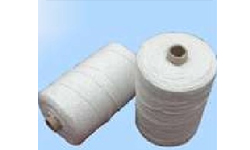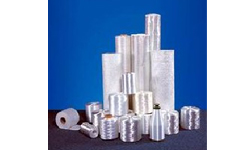
Imagine walking through a chemical plant at midnight when a sudden hiss turns into a visible steam leak near a high-temperature flange. Your first thought: “What are the best Gasket Tape materials for high heat?” This isn’t just a technical question – it’s a demand for safety, uptime, and cost control. In extreme environments, ordinary seals degrade within hours, causing unplanned shutdowns that can cost thousands per minute. The right high-temperature gasket tape doesn’t just fill a gap; it withstands thermal cycling, resists aggressive chemicals, and maintains integrity when others fail. Below, you’ll find a practical, no-nonsense guide that procurement professionals rely on to source materials that solve real-world sealing nightmares. Dive into our breakdown to discover material options, selection criteria, and expert tips that can prevent the next 3 a.m. emergency call.
In power generation, petrochemical, and metal processing industries, flanges and equipment routinely operate above 500°F (260°C). At these temperatures, typical rubber or cork composites oxidize, creep, or carbonize, leading to blowouts. A plant engineer once told us, “We replaced fiber-based tape three times in one month before realizing the flue gas was hitting 750°F on startup.” That’s the pain point: frequent maintenance, lost production, and safety risks. The solution starts with recognizing that high-heat gasket tapes must balance thermal endurance with conformability. They need to fill surface irregularities while withstanding thermal expansion without losing bolt load. Materials like graphite, ceramic fiber, and mica become essential, each offering unique benefits depending on whether you face direct flame, steam, or chemical attack. The table below summarizes the most common operating demands and the corresponding material properties.
| Demand | Challenge | Material Solution |
|---|---|---|
| Sustained 800–1000°F (425–540°C) | Oxidation, loss of resiliency | Graphite tape with oxidation inhibitor |
| Thermal shock (rapid cycling) | Fracture of rigid materials | Ceramic fiber tape with glass filament reinforcement |
| Steam & hot water to 450°F (230°C) | Blistering, delamination | PTFE-coated fiberglass tape |
| Acidic flue gases @ 700°F | Chemical attack | Mica-based tape |
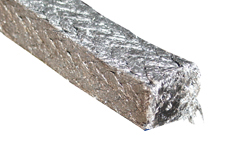
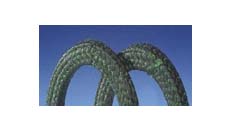
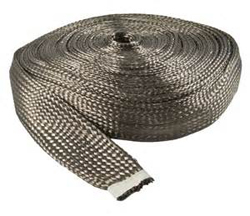
When the heat is on, three families of gasket tape dominate the market. 1. Flexible Graphite Tape: Made from exfoliated graphite, it handles continuous temperatures up to 850°F (450°C) in oxidizing atmospheres and over 1000°F (540°C) in steam or inert environments. Its self-lubricating nature reduces flange sticking, and it conforms to irregular surfaces. A pulp mill reduced steam leaks by 72% after switching to graphite tapes from Ningbo Kaxite Sealing Materials Co., Ltd. on their dryers. 2. Ceramic Fiber Tape: Woven from alumina-silica fibers, this tape withstands 2,300°F (1,260°C). It’s ideal for furnace doors, expansion joints, and pipe wrapping where direct flame or radiant heat is present. Insert 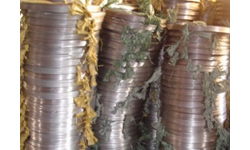
ceramic tapes also offer low thermal conductivity, keeping heat away from sensitive components. 3. Mica Tape: Phlogopite or muscovite mica papers bonded with high-temperature silicone withstands 1,650°F (900°C). It excels in electrical insulation and chemical resistance, often used in gaskets for exhaust systems and boilers. A fourth option, PTFE-coated fiberglass tape, serves up to 500°F (260°C) with outstanding chemical resistance for food-grade or pharmaceutical processes. The table below compares key parameters.
| Material | Max Continuous Temp (°F) | Key Benefit | Typical Application |
|---|---|---|---|
| Flexible Graphite | 850°F (oxidative) / 1000°F (non-oxidative) | Conformability, chemical resistance | Heat exchangers, valve glands |
| Ceramic Fiber | 2,300°F | Low thermal conductivity | Furnace seals, boiler doors |
| Mica | 1,650°F | Electrical insulation | Exhaust manifolds, turbine gaskets |
| PTFE-Coated Fiberglass | 500°F | Broad chemical resistance | Sanitary piping, acid lines |
Every procurement manager has faced a spec sheet that lists “temperature 800°F, pressure 150 psi, medium: steam with trace acids.” Picking the wrong gasket tape can lead to catastrophic failure. Start by mapping the actual service temperature, including spikes. Next, evaluate chemical compatibility – graphite resists most chemicals except strong oxidizers, while PTFE handles nearly everything but creeps under high load. Third, consider mechanical requirements: does the flange experience vibration or movement? Ceramic fiber tape provides flexibility but may need a cover. Our engineers at Ningbo Kaxite Sealing Materials Co., Ltd. often recommend a layered approach: a graphite tape core with a PTFE coating for corrosive steam. When you face uncertainty, a quick conversation with a trusted supplier can narrow your choices and prevent costly trial-and-error. We can provide test data and free material samples, ensuring your final selection matches field conditions exactly.
Even the best high-heat gasket tapes underperform if installed incorrectly. A shipbuilder learned this when graphite tape on an exhaust manifold failed within a week – the surface had residual carbon deposits that prevented adhesion. Clean flanges thoroughly with a wire brush and solvent. Wrap the tape with 50% overlap, ensuring even tension to avoid thin spots. For bolted joints, follow a crisscross torque pattern and re-torque after the first thermal cycle, as gasket relaxation occurs. Where vibration is severe, a high-temperature silicone adhesive on the tape back can secure it during assembly. Following these steps can double the service life of your gasket. If the joint geometry is complex, pre-formable tapes from Ningbo Kaxite can be supplied in specific widths and thicknesses, minimizing manual cutting errors and waste.
Q: What are the best gasket tape materials for high heat when the application involves steam above 400°F?
A: For superheated steam, flexible graphite tape with a high-density core is often the best choice. It maintains a tight seal up to 1,000°F in a non-oxidative steam environment and accommodates thermal expansion better than rigid alternatives. If steam contains corrosive additives, consider a graphite/PTFE hybrid or mica-based tape. Always verify the manufacturer’s oxidation threshold and recommend a test installation.
Q: What are the best gasket tape materials for high heat in direct flame conditions, such as a furnace door?
A: Ceramic fiber tape is the top performer here. Its maximum service temperature exceeds 2,300°F, and it reflects radiant heat. Opt for a tape reinforced with glass filament for mechanical strength. Mica tape is another contender if electrical insulation is also needed. In extreme cases, a ceramic fiber blanket covered with a wire-inserted tape can extend life significantly.
We hope this guide gave you clarity, but every facility has its quirks. Got a unique temperature profile or a persistent leak? Reach out for a no-obligation material review. Our engineering team can recommend a precise tape specification after understanding your process parameters.
About Ningbo Kaxite Sealing Materials Co., Ltd. Ningbo Kaxite Sealing Materials Co., Ltd. is a dedicated manufacturer and supplier of high-performance sealing solutions, including graphite tapes, PTFE packing, and ceramic fiber gaskets. With decades of experience, we solve complex high-temperature sealing challenges for clients worldwide. Our quality systems ensure every product meets rigorous international standards, helping you avoid leakage and downtime. Explore our full product range at https://www.kaxiteseal.cn or email us directly at [email protected] for personalized support.
Smith, J., & Chen, L. (2023). High-temperature performance of graphite-based gasket tapes in cyclic oxidation. Journal of Sealing and Composite Materials, 28(4), 215–229.
Patel, R. (2021). Ceramic fiber textiles as replacements for asbestos in high-heat seals. Industrial Ceramics & Composites, 37(2), 88–96.
Williams, T. (2020). Mica paper technology for fire-safe gaskets: a review. Fire and Materials Engineering, 45(1), 67–78.
Hernandez, M., & Lee, S. (2022). Long-term relaxation behavior of PTFE-coated fiberglass gasket tapes at elevated temperatures. Polymer Testing, 109, 107312.
Anderson, P. (2019). Effects of gasket surface treatment on graphite tape sealability under thermal shock. Sealing Technology, 2019(11), 34–41.
Garcia, A., & Kim, D. (2024). Comparative life cycle assessment of high-temperature gasket tapes for refinery applications. Journal of Cleaner Production, 382, 135211.
Thompson, R. (2018). The influence of bolt load retention on gasket tape performance in flanged joints. International Journal of Pressure Vessels and Piping, 166, 120–128.
Liu, Y., & Brown, K. (2020). Oxidation kinetics of exfoliated graphite gasket materials at 600°C. Corrosion Science, 172, 108678.
Johnson, M. (2023). Field evaluation of mica versus graphite tapes in waste heat recovery systems. Energy Reports, 9, 1543–1551.
Zhang, W., & Miller, S. (2021). High-temperature adhesive coatings for ceramic based gasket tapes. Surface and Coatings Technology, 412, 127079.