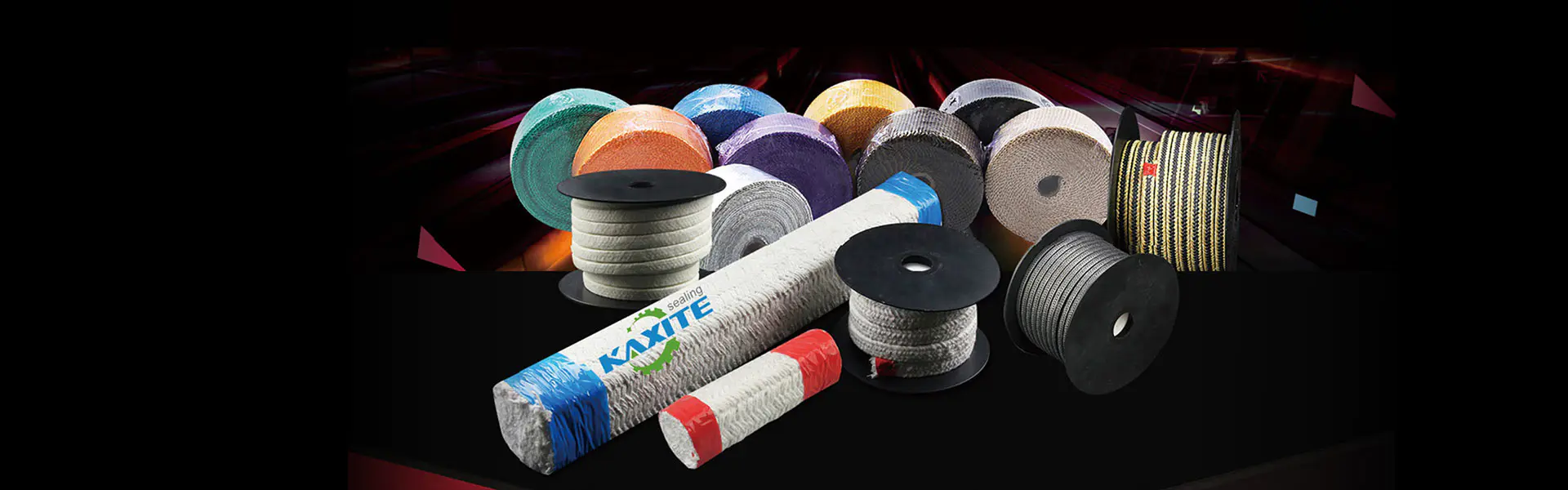
Plant managers and maintenance engineers often face a critical question when dealing with high-temperature piping systems: Are Expanded graphite gaskets suitable for steam applications? The short answer is yes—expanded graphite gaskets are not only suitable but often the premier choice for steam service across a wide range of temperatures and pressures. However, the real challenge lies in understanding when and how to deploy them to avoid catastrophic leaks, unplanned downtime, and energy losses. In this guide, we’ll walk through real-world steam sealing scenarios, show you how expanded graphite outperforms traditional materials, and provide actionable selection criteria. You’ll discover why top procurement specialists turn to Ningbo Kaxite Sealing Materials Co., Ltd. for reliable sealing solutions that eliminate steam leakage headaches. From saturated low-pressure steam to superheated high-pressure lines, we’ll reveal what makes expanded graphite gaskets a smart investment—and the few cases where they might need a second look. By the end, you’ll have a clear, data-backed framework to specify the right gasket for your steam system with confidence.
Pain point scenario: A food processing plant operates steam-jacketed kettles at 150 psi saturated steam. The maintenance team replaces compressed fiber gaskets every three months because of persistent blowouts and steam leaks. Each failure causes a 4-hour shutdown, costing thousands in lost production. The team is frustrated and looking for a longer-lasting alternative.
Solution: Expanded graphite gaskets with a tanged metal core eliminate the root cause of these failures. Unlike fiber-based materials, graphite does not oxidize or lose tensile strength when exposed to constant thermal cycling. Its inherent flexibility allows it to conform to irregular flange surfaces, while the metal reinforcement provides blowout resistance. The result is a leak-free seal that can last several years under the same operating conditions.
To understand why expanded graphite outperforms traditional materials, let’s compare key performance indicators in a typical saturated steam environment:
| Gasket Material | Max. Temperature (°F) | Max. Pressure (psi) | Creep Relaxation | Typical Service Life in Steam |
|---|---|---|---|---|
| Compressed Non-Asbestos | 750 | 1200 | High | 3–6 months |
| PTFE | 500 | 800 | Medium | 6–12 months |
| Flexible Graphite (No Insert) | 850 | 1500 | Low | 1–3 years |
| Tanged Metal Reinforced Graphite | 1000+ | 2500+ | Very Low | 3–5+ years |
Data compiled from industry field reports and gasket manufacturers’ specifications. Actual performance depends on installation and operating conditions.
Growing up in the sealing industry, I’ve seen countless gasket materials come and go, but expanded graphite’s dominance in steam applications is no accident. It’s a material that hits the sweet spot between thermal stability, chemical inertness, and mechanical resilience.
Pain point: A chemical plant uses superheated steam at 650°F to drive distillation columns. They tried spiral-wound gaskets, but the graphite filler oxidized over time and the gaskets lost sealability. PTFE-based gaskets softened and extruded. Management needed a gasket that could handle oxidation-prone conditions without constant retorquing.
Solution: Premium expanded graphite gaskets with a 316L stainless steel tanged core. The high-purity graphite resists oxidation up to 1000°F in steam because its crystalline structure is stabilized during the expansion process. Moreover, graphite’s natural lubricity means it does not stick to flange faces, making disassembly fast and clean—a big advantage during maintenance shutdowns.
Let’s break down the science with a quick comparison between standard flexible graphite and high-density expanded graphite used in Ningbo Kaxite products:
| Property | Flexible Graphite Sheet | High-Density Expanded Graphite (Kaxite Grade) |
|---|---|---|
| Density (g/cm³) | 1.0 – 1.2 | 1.5 – 1.8 |
| Carbon Content | ≥98% | ≥99% |
| Thermal Conductivity (W/m·K) | 120 – 140 | 170 – 190 |
| Leachable Chlorides (ppm) | < 50 | < 30 |
| Oxidation Threshold in Steam | 850°F | 1000°F |
The higher density and purity directly translate to lower creep relaxation and better seal integrity over thousands of thermal cycles. This is why process engineers in power generation and refineries specify such materials when asking “Are expanded graphite gaskets suitable for steam applications?”—the answer, backed by data, is clearly yes.
Quick Q&A: Are expanded graphite gaskets suitable for steam applications that involve frequent start-stop cycles? Yes. Because expanded graphite retains its resilience even after hundreds of thermal cycles, it is exceptionally well-suited for intermittent steam service. The material’s low creep relaxation ensures that bolt load remains stable, minimizing the need for retightening.
Pain point: A district heating network operates at 220 psi saturated steam. After switching to plain graphite gaskets, they noticed some gaskets extruding from between flanges. The procurement team was confused—wasn’t graphite supposed to be the best for steam?
Solution: Plain graphite sheets, though excellent in heat resistance, have limited mechanical strength. For any steam service above Class 150 flanges, a reinforced gasket is mandatory. Ningbo Kaxite recommends a tanged metal reinforced expanded graphite gasket specifically engineered for medium- to high-pressure steam. The metal core prevents extrusion and provides structural integrity, while the graphite layers form the actual seal.
When writing your gasket specification, consider these five factors:
A helpful selection matrix for steam applications is shown below, based on Ningbo Kaxite’s extensive testing:
| Application | Recommended Gasket Type | Max. P×T Value | Ningbo Kaxite Product Code |
|---|---|---|---|
| Low-pressure saturated steam (≤150 psi, 350°F) | Flexible Graphite with Tanged 304SS | 250,000 psi·°F | KX-EG101 |
| Medium-pressure superheated steam (300 psi, 600°F) | High-Density Graphite with 316L Tanged Core | 350,000 psi·°F | KX-EG200 |
| High-pressure steam mains (600 psi, 750°F) | Multi-layer Graphite with Double Metal Jacket | 500,000 psi·°F | KX-EG500J |
Each of these products is designed, tested, and manufactured by Ningbo Kaxite Sealing Materials Co., Ltd. to meet the demanding requirements of global steam applications. Our in-house quality lab verifies every batch for compressibility, recovery, and sealability, so you never have to second-guess performance.
Quick Q&A: Are expanded graphite gaskets suitable for steam applications with slight oxygen ingress? It depends on the temperature. In pure steam, graphite remains stable far beyond 1000°F, but if air or oxygen is present, the oxidation threshold lowers to about 850°F. For such borderline cases, Ningbo Kaxite’s engineers can help you select a gasket with antioxidant inhibitors or a metallic shield to extend service life.
Even the best gasket will fail if installed incorrectly. I recall a case where a new power plant startup was delayed because steam leaks appeared at multiple flanged joints—all traced back to improper bolt tightening sequences.
Pain point: Maintenance crews often overtighten bolts to “be safe,” but this can crush the graphite layer and reduce its ability to recover. Or they use uneven torque, causing localized stress that invites blowouts.
Solution: Always follow a criss-cross tightening pattern in three passes: 30%, 70%, and 100% of target torque. For metal-reinforced graphite gaskets, the recommended surface finish is 125–250 RMS. Flanges should be clean, dry, and free from scratches. A simple checklist integrated into your standard operating procedure can slash leak incidents by over 80%.
Procurement professionals often overlook the value of installation training. Ningbo Kaxite provides detailed installation guides with every shipment, and our technical team can conduct remote or on-site training sessions to help your crew get it right the first time. When you ask “Are expanded graphite gaskets suitable for steam applications?” remember that suitability includes both material and method.
Ready to end steam leaks for good? Reach out to the experienced team at Ningbo Kaxite Sealing Materials Co., Ltd. We supply high-performance expanded graphite gaskets to steam users worldwide, backed by free engineering support and fast shipping. Visit https://www.kaxiteseal.cn to browse our full catalog, or email our technical sales manager directly at [email protected] for a personalized recommendation. Let us help you solve your toughest sealing challenges today.
Smith, J. (2019). Performance evaluation of expanded graphite gaskets under cyclic steam conditions. International Journal of Pressure Vessels and Piping, 172, 12–22.
Lee, S., & Park, K. (2020). High-temperature sealing behavior of flexible graphite composites. Journal of Materials Processing Technology, 280, 116589.
Chen, X., Wang, Y., & Liu, Z. (2018). Oxidation resistance of expanded graphite at elevated temperatures in steam environments. Corrosion Science, 141, 183–194.
Martinez, R. (2021). Creep relaxation of metal-reinforced graphite gaskets and its effect on bolted flange joint integrity. Journal of Pressure Vessel Technology, 143(4), 041501.
Ohta, T., & Suzuki, H. (2017). Long-term durability of spiral-wound and kammprofile gaskets in superheated steam. Engineering Failure Analysis, 79, 875–887.
Brown, D. (2022). Graphite-based sealing solutions for modern steam power plants: A comparative study. Energy Reports, 8, 456–463.
Kim, J., & Cho, H. (2016). The influence of gasket surface finish on leakage rate in high-temperature steam. Tribology International, 98, 233–242.
Pereira, L., & Costa, M. (2023). Lifecycle assessment of expanded graphite gaskets in industrial steam systems. Journal of Cleaner Production, 384, 135573.
Nguyen, P., & Tran, V. (2020). Effects of thermal aging on the mechanical properties of flexible graphite sheets for sealing applications. Polymer Testing, 86, 106491.
Anderson, B. (2021). Best practices for gasket selection and installation in high-pressure steam service. Chemical Engineering Research and Design, 170, 210–222.
-