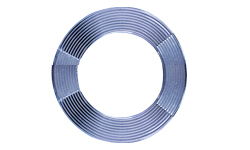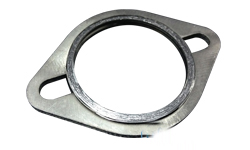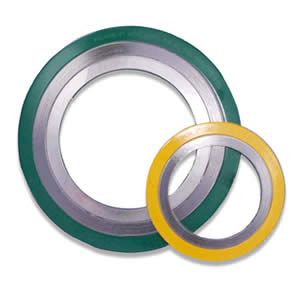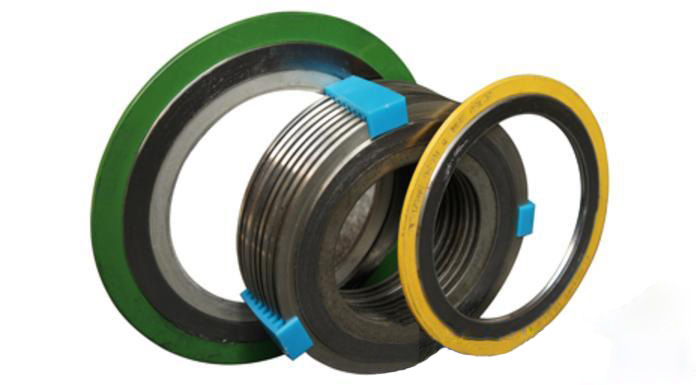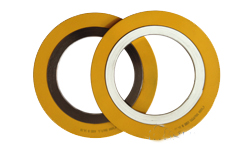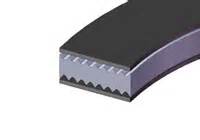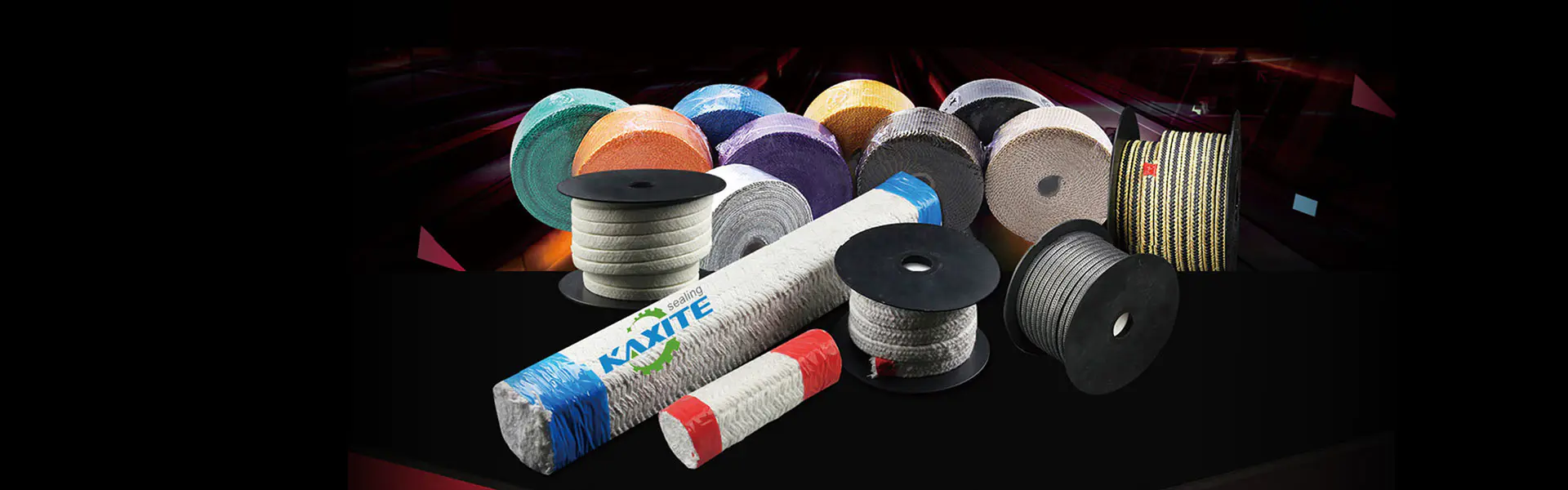
Corrugated gaskets are a specialized type of sealing component designed to handle demanding industrial applications. Their unique construction features a series of concentric, raised ridges or "corrugations" on a flat metal core, which is often coated or covered with a soft, conformable sealing material. This design creates multiple, continuous sealing lines under compression, offering superior performance in challenging environments involving high temperatures, extreme pressures, and aggressive media. At Kaxite, we engineer our corrugated gaskets to provide unmatched reliability and longevity, ensuring your operations run smoothly and safely.
The primary advantage of a corrugated gasket lies in its ability to maintain a tight seal even under low bolt loads and in the presence of thermal cycling or flange rotation. The corrugated metal core provides excellent resilience and recovery properties, while the soft facing material conforms intimately to flange surface imperfections. This makes them an ideal choice for critical applications across industries such as oil & gas, petrochemical, power generation, and heavy machinery.
Choosing Kaxite corrugated gaskets means investing in sealing solutions built for performance and durability. Our products are distinguished by several key features that translate into tangible benefits for your operations.
Our corrugated gaskets are available in a wide range of configurations to meet precise application requirements. The selection of the metal core and the facing material is critical for optimal performance.
| Component | Material Options | Key Properties & Typical Applications |
|---|---|---|
| Metal Core | 304/316 Stainless Steel, Carbon Steel, Alloy 20, Monel, Inconel, Titanium, Copper | Provides mechanical strength, resilience, and temperature resistance. Choice depends on corrosion resistance needs and service temperature. |
| Facing / Filler Material | Expanded PTFE (ePTFE), Flexible Graphite, Ceramic Fiber, Mica, Asbestos-Free Organic Fibers | Provides the primary seal by conforming to flange faces. Selected for chemical compatibility, temperature limits, and compressibility. |
| Optional Features | Perforated Core, Inner/Outer Guide Rings, Special Coatings | Perforations improve compressibility; guide rings aid alignment; coatings (e.g., PTFE, FEP) enhance chemical resistance. |
Kaxite corrugated gaskets are manufactured to meet international standards including ASME B16.20, DIN, and JIS. Custom sizes and profiles are also available.
| Parameter | Standard Range | Details |
|---|---|---|
| Nominal Pipe Size (NPS) | 1/2" to 48" and larger | Standard sizes for raised face (RF) and flat face (FF) flanges. Full face gaskets also available. |
| Pressure Class | 150#, 300#, 600#, 900#, 1500#, 2500# | Designed to match standard flange pressure classes. Performance depends on material combination. |
| Thickness | 0.062" (1.5mm) to 0.125" (3.0mm) | Common thicknesses. Thicker gaskets may be used for higher compression or specific standards. |
| Corrugation Pitch & Depth | Customizable | Optimized for specific pressure and bolt load conditions to maximize sealing efficiency. |
Selecting the correct gasket is crucial for safety and performance. Consider these factors when specifying a Kaxite corrugated gasket:
Our Kaxite technical support team is always ready to assist you in this selection process based on your specific application data.
Q: When should I choose a corrugated gasket over a spiral wound or a flat gasket?
A: Corrugated gaskets are an excellent choice when you need a robust seal with lower required bolt load, especially on flanges that may have slight distortions or where thermal cycling is common. They generally offer better resilience than flat gaskets and are often more cost-effective than spiral wound gaskets for standard pressure classes in non-extreme services. Choose spiral wound for very high pressure/temperature applications and flat gaskets for low-pressure, static, and smooth flange applications.
Q: Can Kaxite corrugated gaskets be used in heat exchangers and boiler manways?
A: Absolutely. Their ability to handle thermal cycling and high temperatures makes them a preferred choice for heat exchanger channels, boiler handholes, and manways. Using a corrugated gasket with a flexible graphite or ceramic fiber filler is common for these high-heat applications.
Q: How do I determine the correct facing material (filler) for my chemical process?
A: The facing material selection is primarily driven by chemical compatibility and temperature. ePTFE offers outstanding chemical resistance up to 500°F (260°C). Flexible graphite handles extreme temperatures (up to 4500°F in inert atmospheres) but is not suitable for strong oxidizing agents. Ceramic fiber is used for very high temperatures and specific chemical environments. Our team provides detailed chemical resistance charts and recommendations.
Q: Are corrugated metal gaskets reusable?
A: It is generally not recommended to reuse any compressed gasket, including corrugated gaskets. Once compressed, the facing material has deformed to match the flange surfaces, and the metal corrugations may have undergone stress relaxation. Reusing a gasket can compromise the seal integrity and lead to leaks. Always install a new Kaxite gasket for optimal safety and performance.
Q: What is the purpose of an outer or inner guide ring on a corrugated gasket?
A: A guide ring (usually a flat metal ring) is often added for alignment purposes. An outer guide ring helps center the gasket within the bolt circle during assembly, preventing it from slipping into the pipe bore. An inner guide ring can be used to protect the gasket from erosion or turbulence from the internal fluid. Kaxite can supply gaskets with or without guide rings as required.
Q: How do I properly install and torque a corrugated gasket?
A: Proper installation is key. Ensure flanges are clean, aligned, and undamaged. Place the gasket centered on the flange. Use a cross-bolt tightening pattern (star pattern) in multiple incremental steps to reach the target torque value. The target torque should be based on the bolt size/grade, lubrication, and the gasket manufacturer's recommendation—always refer to Kaxite’s installation guidelines for our specific products. Avoid over-torquing, which can crush the corrugations and cause failure.
The versatility and reliability of our corrugated gaskets make them suitable for a broad spectrum of industries and equipment types.