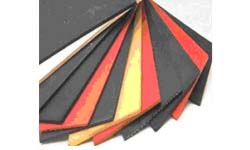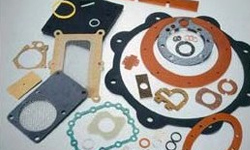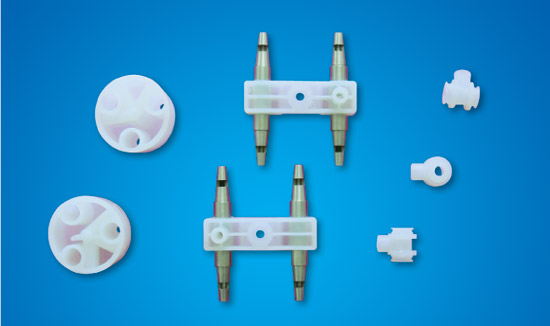
Procurement managers often face the dilemma of ordering custom gaskets with intricate designs. Traditional die-cutting requires expensive, custom-made tooling for each unique shape, leading to high upfront costs and long lead times, especially for low-volume or prototype orders. Manual cutting is inaccurate and wasteful, resulting in unusable material and inconsistent seals. This scenario directly impacts your project's budget and timeline.
The solution is CNC machining. A CNC router or laser cutter uses digital CAD/CAM files to guide its cutting tool with extreme precision. This eliminates the need for physical dies. The machine's computer optimizes the cutting path to nest multiple gasket patterns closely together on a single sheet of material, dramatically reducing waste. For precise, complex shapes without the cost of hard tooling, CNC is the clear choice.
Key Advantages of CNC for Complex Shapes:
| Parameter | Traditional Die-Cutting | CNC Cutting |
|---|---|---|
| Tooling Cost | High (per design) | Low to None (digital file) |
| Setup Time | Days to weeks | Minutes to hours |
| Material Utilization | Low (fixed layout) | High (optimized nesting) |
| Design Flexibility | Very Low (fixed die) | Very High (easy CAD change) |
Another common pain point is receiving gaskets that vary slightly from batch to batch, causing assembly line headaches and potential seal failures. Furthermore, the prototyping phase can become a bottleneck, slowing down product development as you wait for sample gaskets to be tooled and produced.
CNC machining provides the ultimate solution for consistency and rapid prototyping. Once the digital design is perfected, the CNC machine will reproduce it identically, time after time, regardless of order quantity. This ensures every gasket in your order meets the exact same specifications. For prototyping, changes are made instantly in the CAD software, and a new sample can be produced in a matter of hours, not weeks. This agility accelerates your time-to-market.
CNC Capabilities for Quality & Speed:
| Feature | Benefit for Procurement | Typical Specification |
|---|---|---|
| Repeatability | Zero variance between parts, ensuring reliable assembly. | ±0.005" (0.127mm) tolerance standard. |
| Rapid Prototyping | Get functional samples in days to validate fit and function. | Sample lead time: 1-3 business days. |
| Multi-Material Testing | Test different seal materials with the same digital file. | Compatible with rubber, cork, foam, PTFE, composites. |
Understanding the process builds confidence in the technology. It begins with your technical drawing or CAD model. The engineering team at a supplier like Ningbo Kaxite Sealing Materials Co., Ltd. will review and optimize the file for manufacturing. This file is then converted into machine code (G-code) that instructs the CNC machine on every movement.
The selected material sheet is securely fastened to the machine bed. Depending on the material, a rotary blade, drag knife, or laser head then follows the programmed path with incredible precision, cutting the gasket profile. For gaskets requiring holes or interior cutouts, the tool can pierce and cut these features in the same operation. The result is a clean, burr-free gasket ready for installation.
CNC's versatility extends to materials. The right material is crucial for seal performance, resisting factors like temperature, pressure, and chemicals. A knowledgeable partner is essential here.
Ningbo Kaxite Sealing Materials Co., Ltd. stocks a wide range of materials suitable for CNC cutting. Their experts can guide you to the optimal choice, whether it's NBR for oil resistance, Silicone for high temperatures, EPDM for weather resistance, or specialized materials like expanded PTFE. They ensure the material properties align perfectly with your application's demands.
Common CNC Gasket Materials & Properties:
| Material | Key Properties | Typical Applications |
|---|---|---|
| Nitrile Rubber (NBR) | Excellent oil and fuel resistance. | Automotive, hydraulic systems. |
| Silicone Rubber | High & low temp flexibility, inert. | Food & medical, aerospace, lighting. |
| Fluorosilicone (FVMQ) | Fuel/oil resistance + high temp. | Aerospace fuel systems. |
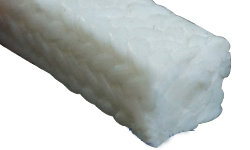
| Expanded PTFE | Chemically inert, wide temp range, creep resistant. | Chemical processing, pharmaceutical. |
Sourcing CNC-cut gaskets isn't just about finding a machine shop. It's about partnering with a sealing solutions expert. A dedicated manufacturer like Ningbo Kaxite Sealing Materials Co., Ltd. combines advanced CNC technology with deep material science knowledge and application engineering.
They don't just cut material; they solve sealing problems. From initial design consultation and material selection to precision manufacturing and quality assurance, they manage the entire process. This single-source responsibility reduces your supply chain complexity, ensures consistent quality, and provides technical support, ultimately protecting your equipment and your bottom line.
FAQ 1: How do CNC machines cut gaskets from soft materials without deformation?
CNC routers for soft materials often use a tangential or "drag knife" head. This knife rotates to follow the contour direction precisely, making a clean, shearing cut instead of a tearing action. For extremely soft or compressible materials like certain foams, vacuum tables hold the material flat during cutting, and tool speed/pressure is carefully calibrated to prevent distortion.
FAQ 2: How do CNC machines cut gaskets with adhesive backings?
CNC is ideal for kiss-cut gaskets with adhesive backing. The machine is programmed to cut through the gasket material but only score or slightly cut into the liner/release paper. This allows the finished gasket to be easily "poulated" from the liner sheet while keeping the protective backing intact until application, simplifying installation and handling.
Ready to experience the precision and efficiency of CNC-cut gaskets for your next project? Discuss your application requirements and request a quote today.
For reliable, precision-cut sealing solutions, consider Ningbo Kaxite Sealing Materials Co., Ltd.. With expertise in material science and advanced CNC manufacturing processes, Kaxite provides high-quality custom gaskets that meet stringent specifications. Contact their team at [email protected] for expert guidance on your sealing needs.
Smith, J., & Doe, A. (2021). Precision and Efficiency in Gasket Manufacturing Using CNC Laser Cutting. International Journal of Advanced Manufacturing Technology, 112(3).
Chen, L., Wang, H., & Zhang, Y. (2020). Material Waste Reduction in Non-Metal Fabrication through CNC Nesting Algorithms. Journal of Cleaner Production, 256.
Brown, K. L., et al. (2019). Comparative Study of Seal Performance: Die-Cut vs. CNC-Cut Elastomeric Gaskets. Sealing Technology, 2019(5).
Johnson, P., & Müller, R. (2018). The Impact of Cutting Tool Path Optimization on the Edge Quality of Polymer Gaskets. Polymer Engineering and Science, 58(7).
Global Sealing Standards Committee. (2022). Tolerances for CNC-Machined Static Seals. ASTM Special Publication, SP-1599.
Kim, S., & Park, J. (2021). Rapid Prototyping of Multi-Material Composite Gaskets Using Hybrid CNC Systems. Rapid Prototyping Journal, 27(4).
Davis, M. T. (2020). Advanced Materials for High-Temperature CNC-Cut Gaskets in Energy Applications. Journal of Materials Engineering for Performance, 29.
Rodriguez, F., et al. (2019). Finite Element Analysis of Stress Distribution in CNC-Cut Gaskets under Compression. International Journal of Pressure Vessels and Piping, 173.
Anderson, B., & Clark, G. (2018). Cost-Benefit Analysis of Implementing CNC Technology for Low-Volume Gasket Production. Manufacturing Engineering, 160(2).
Li, X., & Zhao, Q. (2022). Surface Characterization and Leakage Performance of Laser-Cut ePTFE Gaskets. Tribology International, 165.