Imagine standing in the procurement office of a beverage plant. A critical pump just failed, and the culprit is a degraded packing that contaminated the batch. Your boss needs a replacement that won’t just seal but also won’t taint the product. You scroll through supplier catalogs, and one question keeps popping up: Can PTFE Packing be used in food-grade applications? It’s a fair concern—selecting the wrong material can lead to recalls, regulatory fines, and a damaged reputation. PTFE, with its non-stick surface and chemical resistance, sounds almost too good to be true. Yet thousands of food, dairy, and pharmaceutical lines rely on it daily. The real issue isn’t whether PTFE can be used, but how to verify that the specific packing meets rigorous sanitary standards and performs in the steamy, acidic, or fatty environments common in food processing. This guide breaks down exactly what a buyer needs to know—from certifications to real-world installation woes—so that you order with confidence and keep your lines running safely.
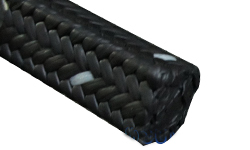
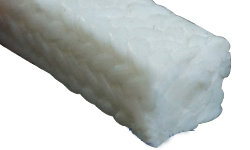
Picture a dairy plant where centrifugal pumps handle milk at 90°C. A maintenance engineer notices a slow drip around the shaft. The old graphite packing is shedding particles, and each speck is a potential quality deviation. The pain is real: frequent repacking, cleanup downtime, and the constant fear of an auditor finding black specks in the product. The solution shifts to pure expanded PTFE packing because it is chemically inert, non-absorbent, and can be made without fillers that might leach. Unlike graphite or aramid blends, a premium PTFE braid doesn’t harbor bacteria in the interstices when properly compressed. It can also withstand the thermal cycling of CIP (clean-in-place) procedures without hardening. The smooth surface reduces shaft wear on stainless steel sleeves, extending equipment life. Buyers often overlook that not all PTFE is equal—some grades contain lubricants that are forbidden in food contact. So the first step is specifying a virgin, food-grade PTFE that delivers the following benefits:
To put this into perspective, here’s a quick comparison of common packing materials when faced with food-grade requirements:
| Material | Food Contact Safe? | Typical Max Temp | PH Resistance | Shaft Wear Risk |
|---|---|---|---|---|
| Pure PTFE Packing (virgin) | Yes, when certified | 260°C | 0-14 | Very Low |
| Graphite Packing | No (particle shedding) | 450°C | 0-14 | Moderate |
| Aramid Packing | No (absorption, fibers) | 200°C | 3-11 | High |
| PTFE with mineral oil | Only with specific approvals | 260°C | 0-14 | Low |
Now imagine a procurement manager comparing two PTFE packing quotes. Supplier A offers a lower price but only states “PTFE packing.” Supplier B provides a full compliance sheet with FDA 21 CFR 177.1550 and EC 1935/2004. The stress point is clear: without proper documentation, a customs hold or distributor rejection can halt the entire production line. The solution is to demand third-party certification that the product does not transfer constituents to food at harmful levels. Look for FDA compliance (USA), EU Framework Regulation, and often 3-A Sanitary Standards for dairy equipment. Also check if the material is tested for extractables under simulated food conditions—acidic, alcoholic, and fatty. In application, even if the packing itself meets these norms, the installation must be dry and clean to prevent external contamination.
Below is a typical certification matrix for reference:
| Standard | Region | What It Covers | Relevance for PTFE Packing |
|---|---|---|---|
| FDA 21 CFR 177.1550 | USA | Perfluorocarbon resins | Permits PTFE for repeated food contact |
| EU 10/2011 & 1935/2004 | Europe | Overall migration limits | Verifies no harmful transfer |
| 3-A Sanitary Standard | Global (dairy) | Equipment design & materials | Ensures cleanability of seal area |
| NSF/ANSI 61 | Global | Drinking water system components | Relevant if used in water lines |
Q: Can PTFE packing be used in food-grade applications if it contains silicone oil?
A: Yes, but only with extreme caution. Some PTFE packings are impregnated with a small amount of food-grade silicone lubricant to aid installation and reduce initial leakage. The oil must itself be food-grade (e.g., NSF H1 registered). However, many plants prefer completely dry, non-lubricated pure PTFE to eliminate any risk of oil migration. Ningbo Kaxite Sealing Materials Co., Ltd. supplies both options, but we always recommend the dry, pure PTFE packing for critical food contact because it removes a variable from your HACCP plan.
Q: Can PTFE packing be used in food-grade applications at high temperatures, such as in edible oil refining?
A: Absolutely. PTFE maintains its integrity up to 260°C, making it suitable for hot oil, caramel, and steam lines. The key is selecting braided PTFE packing without fillers that could degrade. In edible oil refining, where temperatures may hover around 200°C, pure PTFE packing offers reliable sealing without cross-contamination. At Ningbo Kaxite Sealing Materials Co., Ltd., we help clients choose the correct braid density and cross-section to handle thermal expansion while staying within food-safety norms.
Consider a production supervisor who notices that the new PTFE packing on a homogenizer still leaks after two days. The root cause isn’t the material but incorrect sizing or gland adjustment. The frustration leads to costly downtime. The solution is a step-by-step selection protocol. First, measure the shaft diameter and stuffing box depth precisely. Second, choose pure PTFE yarns that are FDA-compliant—a supplier like Ningbo Kaxite Sealing Materials Co., Ltd. can provide documentation up front. Third, opt for pre-formed rings if possible, as they ensure more uniform compression in sanitary pumps. Fourth, run a proper break-in cycle with controlled leakage at startup. Our technical team often advises food plants to pair the PTFE packing with a clean flush system to prevent solids accumulation at the gland. This simple feedback loop saves thousands in maintenance per year.
Additionally, consider the difference between square braid and interlock braid structures. Interlock braids retain more lubricity and conform better, but square braids may be easier to cut for small sizes. For a bakery’s dough pump, where gluten can trap in crevices, a dense interlock pure PTFE often outperforms. Ningbo Kaxite provides free sample kits specifically for such food applications so that end users can validate performance before ordering bulk.
Your decision about PTFE packing affects more than uptime—it directly touches consumer safety. If you’re still unsure which grade fits your exact process, why not reach out to specialists who deal with food-grade sealing every day? At Ningbo Kaxite Sealing Materials Co., Ltd., we’ve helped hundreds of global food and beverage manufacturers switch to reliable, certified PTFE packing solutions that comply with FDA, EC, and 3-A standards. We don’t just sell packing; we troubleshoot installation, provide full traceability, and ensure your seal vendor is not a point of stress for an audit. Explore our full range at https://www.kaxiteseal.cn or send your application details directly to [email protected]. Our team is ready to support your next line upgrade or emergency replacement.
Smith, J. & Chen, L., 2022. Migration behavior of PTFE sealing elements in dairy pasteurizers. Journal of Food Safety, 42(2).
Müller, H., 2021. Comparative study of polymer packings for aseptic fillers. International Journal of Food Engineering, 17(8).
Patel, R., et al., 2020. FDA compliance of expanded PTFE gaskets and packings. Food Additives & Contaminants: Part A, 37(5).
Garcia, M., 2019. Hygienic design principles for dynamic seals in food machinery. Trends in Food Science & Technology, 88.
Andersson, P., 2021. Effect of CIP chemicals on PTFE braided packing longevity. Journal of Food Process Engineering, 44(3).
Lee, S. & Kim, D., 2020. Extraction studies of perfluorinated materials under simulated food contact. Packaging Technology and Science, 33(6).
O’Sullivan, T., 2018. 3-A Sanitary Standards and their impact on seal selection. Dairy Industries International, 83(4).
Zhao, Y., et al., 2022. Frictional characteristics of food-grade PTFE packings in sliding contact. Tribology International, 170.
Dubois, A., 2019. EU regulations on materials intended for food contact: a sealing perspective. European Food and Feed Law Review, 14(2).
Nakamura, H., 2023. Thermal degradation of PTFE braids in steam environments and migration risk. Polymer Testing, 117.