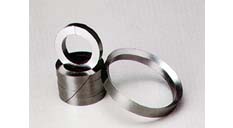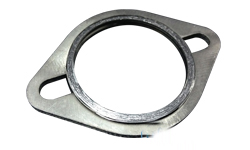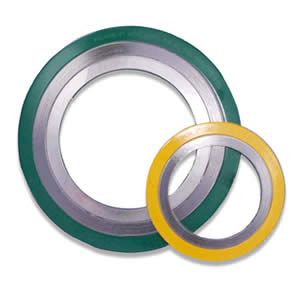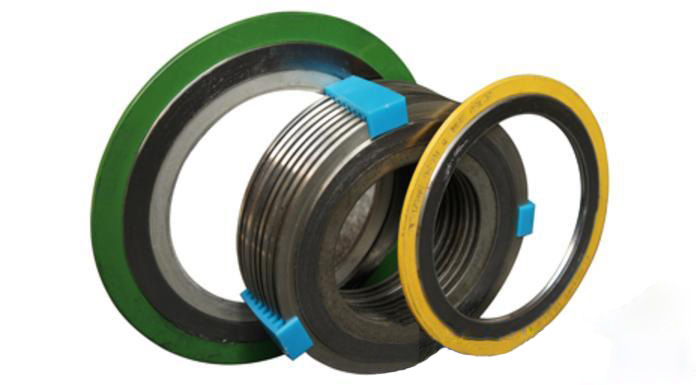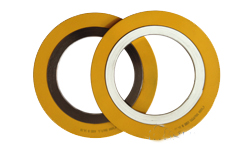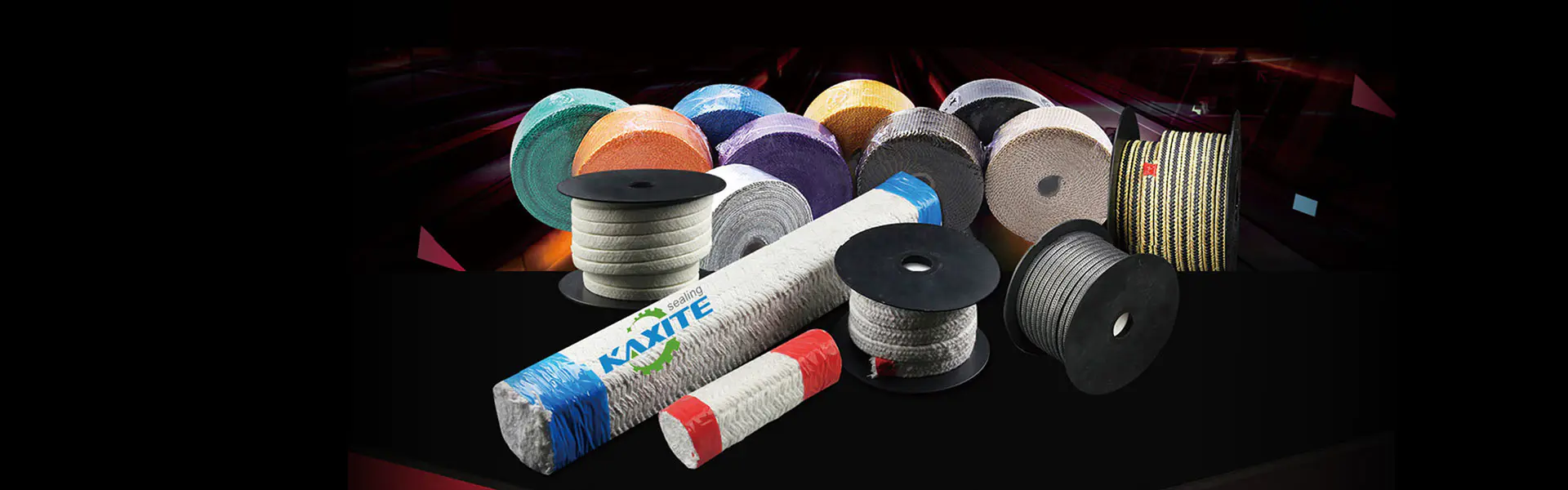
A die-formed graphite ring is a high-performance sealing component manufactured using a precise die-forming process. Unlike traditional machined or molded rings, the die-forming technique involves compressing and shaping high-purity graphite materials under extreme pressure within a precision die. This method creates a ring with exceptional structural integrity, uniform density, and consistent mechanical properties throughout its cross-section. The result is a superior seal that offers reliable performance in demanding applications involving high temperatures, aggressive chemicals, and challenging dynamic or static sealing environments. The process used by Kaxite ensures each ring meets exact specifications, providing a leak-free seal with minimal friction and excellent thermal conductivity.
Kaxite die-formed graphite rings are engineered from various grades of high-quality graphite, each tailored for specific service conditions. Below are the detailed parameters that define our product range.
| Grade Code | Density (g/cm³) | Flexural Strength (MPa) | Compressive Strength (MPa) | Thermal Conductivity (W/m·K) | Max Operating Temp (in Inert Gas) | Primary Application |
|---|---|---|---|---|---|---|
| KX-DFG-10 | 1.75 - 1.85 | 35 | 75 | 90 | 2800°C / 5072°F | General high-temp sealing, furnace applications |
| KX-DFG-20 | 1.80 - 1.90 | 45 | 90 | 110 | 3000°C / 5432°F | High-strength dynamic seals, chemical processing |
| KX-DFG-30 | 1.88 - 1.98 | 60 | 110 | 75 | 2500°C / 4532°F | High-purity semiconductor, food & pharmaceutical |
| KX-DFG-40 (Impregnated) | 1.90 - 2.05 | 55 | 100 | 60 | 1800°C / 3272°F | Oxidizing environments, pump seals, hot water/steam |
| Inner Diameter (mm) | Outer Diameter (mm) | Cross-Section (mm) | Tolerance (Standard) |
|---|---|---|---|
| 10 - 100 | 20 - 120 | 3, 4, 5, 6, 8, 10 | ±0.1 mm |
| 100 - 500 | 120 - 550 | 5, 6, 8, 10, 12 | ±0.15 mm |
| 500 - 1500 | 550 - 1600 | 8, 10, 12, 15, 20 | ±0.2 mm |
What are the primary applications for a die-formed graphite ring?
Die-formed graphite rings from Kaxite are used in severe-service sealing applications across industries. Common uses include: mechanical seals in pumps and compressors, valve stem seals, flange gaskets in high-temperature piping, seals in chemical reactors and heat exchangers, furnace and vacuum system components, and as expansion joints in high-temperature ducting.
How does a die-formed graphite ring differ from a machined or molded graphite ring?
The key difference lies in the manufacturing process. Machined rings are cut from a block, which can expose the natural grain structure and create potential leak paths. Molded rings are formed in a mold, which may lead to density variations. Kaxite's die-formed process compresses graphite material isotropically in a precision die, resulting in a ring with uniform, high density in all directions, no open porosity, and superior mechanical strength and sealing reliability.
Can die-formed graphite rings be used in oxidizing atmospheres?
Pure graphite will oxidize in air at temperatures above approximately 400°C (752°F). For oxidizing environments, Kaxite offers specially impregnated grades (like our KX-DFG-40). These rings are impregnated with oxidation-inhibiting compounds or metals, forming a protective layer that significantly extends their service life in the presence of oxygen, steam, or other oxidizing media.
What temperature limits do Kaxite die-formed graphite rings have?
The temperature limit depends on the atmosphere. In inert or vacuum conditions, our standard grades (KX-DFG-10/20/30) can operate continuously up to 3000°C. In air or oxidizing atmospheres, the safe continuous use temperature for non-impregnated grades is typically 400-450°C. Our impregnated KX-DFG-40 grade can be used in air up to 1800°C intermittently or 350-500°C continuously, depending on the impregnation type.
What are the key installation considerations for these rings?
Proper installation is critical. Ensure the sealing surfaces are clean, smooth, and free of scratches. The ring should be handled carefully to avoid chipping. For split rings, stagger the joints if multiple rings are used in a stack. Follow the recommended gland design and compression limits provided by Kaxite engineering to avoid over-compression (which can cause high stress and fracture) or under-compression (which can lead to leakage).
How do I select the correct graphite grade for my application?
Selection depends on the operating conditions. Key factors to consider are: temperature and atmosphere (oxidizing/inert), media being sealed (chemical compatibility), pressure (static and dynamic), presence of abrasives, required purity levels (e.g., for semiconductor use), and whether the application is static or dynamic. Contact Kaxite technical support with your specific parameters for a tailored grade recommendation.
Are custom sizes and shapes available?
Yes. One of the primary advantages of Kaxite's die-forming process is its suitability for customization. We can produce rings in non-standard diameters, custom cross-sectional profiles (square, rectangular, etc.), and with specific features like grooves, tapers, or steps. This is more cost-effective for medium to high volumes compared to machining custom shapes from block material.
How should die-formed graphite rings be stored and handled?
Store rings in a dry, clean environment to prevent contamination. While graphite is robust, the edges of rings can be brittle. Avoid dropping or impacting them. Use clean gloves when handling to prevent skin oils from contaminating the sealing surface. For long-term storage, keep them in their original packaging.
Can these rings be used as rotor seals in high-speed applications?
Yes, they are excellent for such applications. The self-lubricating property of graphite minimizes friction and wear against the counterface. For high-speed dynamic seals, Kaxite provides grades with enhanced strength and thermal conductivity (like KX-DFG-20) to manage the frictional heat generated. Proper system design, including cooling and lubrication if applicable, is essential for optimal performance and life.