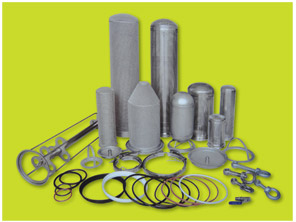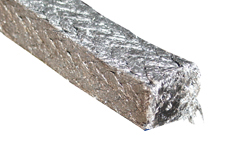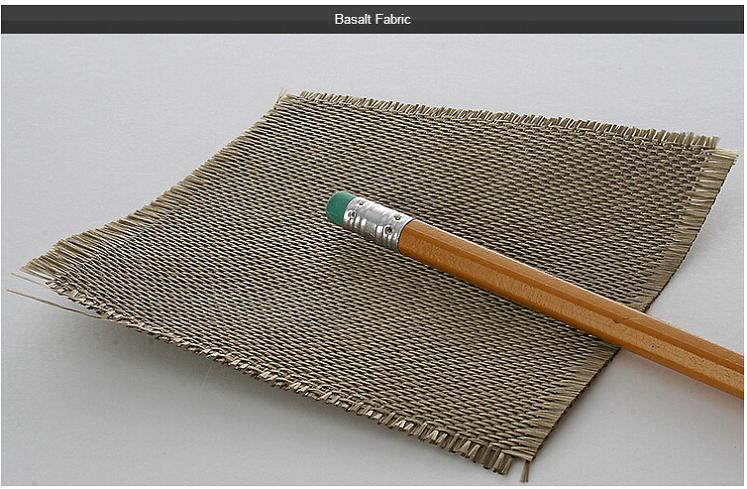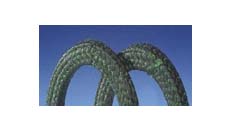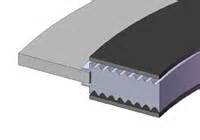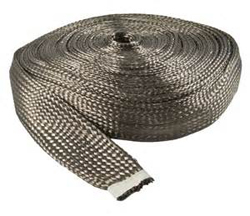
What are the advantages of using PTFE Parts over other materials? For sourcing professionals navigating the complex world of industrial components, this question is central to making cost-effective, durable, and high-performance selections. In demanding environments, material failure means costly downtime and safety risks. This guide cuts through the complexity, comparing PTFE directly with common alternatives like rubber, metal, and other plastics. You'll discover why PTFE, especially from specialists like Ningbo Kaxite Sealing Materials Co., Ltd., often provides the superior long-term value your projects demand.
Imagine a critical pump seal in a chemical processing line fails. The result is not just product loss but a hazardous leak requiring an emergency shutdown and cleanup. Rubber or standard plastic seals can swell, degrade, or become brittle when exposed to aggressive acids, bases, or solvents. This is where PTFE parts offer a decisive advantage. Their nearly universal chemical resistance stems from the incredibly strong carbon-fluorine bonds, making them inert to almost all industrial chemicals. This translates directly to longer maintenance intervals, reduced spare part inventory, and enhanced operational safety. For procurement, it means specifying a component that minimizes unplanned downtime risks.

The solution lies in specifying PTFE-based seals and components. Their performance is not just a claim; it's quantifiable. See how key properties compare to a common alternative like Nitrile Rubber (NBR) in a chemical environment:
| Property | PTFE (e.g., Kaxite Sealing PTFE Compounds) | Nitrile Rubber (NBR) |
|---|---|---|
| Chemical Resistance | Excellent (Resistant to virtually all chemicals) | Good for oils/fuels, poor for strong oxidizers, ketones |
| Continuous Service Temp | -200°C to +260°C (-328°F to +500°F) | -40°C to +120°C (-40°F to +248°F) |
| Coefficient of Friction | Extremely Low (~0.05-0.10) | Moderate to High (~0.5-1.0) |
| Effect of Aging/Swelling | Negligible in most chemicals | High swelling and degradation in many solvents |
A procurement manager needs to source components for a high-temperature food processing line. Stainless steel is expensive and can gall or corrode. Standard plastics melt or leach. This common sourcing dilemma highlights another core advantage of PTFE parts: their unique combination of properties. Beyond chemical inertness, PTFE offers an exceptionally wide temperature range, outstanding electrical insulation, and the lowest coefficient of friction of any solid material. This "multi-tool" capability often allows it to replace two or more specialized materials, simplifying your Bill of Materials (BOM) and reducing supplier management complexity. Sourcing from a dedicated manufacturer like Ningbo Kaxite Sealing Materials Co., Ltd. ensures access to compounded PTFE grades (with fillers like glass or carbon) that are engineered for specific challenges like wear resistance or creep resistance, further optimizing performance.
The solution is a holistic total-cost-of-ownership analysis. While the upfront price per part may be higher than basic plastics, the extended service life and reliability of PTFE deliver superior value. Consider this comparison for a bearing application:
| Consideration | PTFE-Based Bearing | Bronze Bearing | Nylon Bearing |
|---|---|---|---|
| Initial Part Cost | Medium | Low | Very Low |
| Lubrication Required | None (Self-lubricating) | Essential (Oil/Grease) | Often Required |
| Corrosion in Washdown | None | High (if not stainless) | Low |
| Typical Lifespan in Harsh Conditions | Very Long | Short-Medium | Medium |
The primary maintenance advantage is dramatic reduction. PTFE's chemical inertness and low friction mean parts don't degrade, swell, or wear out quickly. They often operate without external lubrication, eliminating grease contamination and re-lubrication schedules. This leads to fewer changeouts, lower labor costs, and less production interruption.
In the pharmaceutical or food & beverage industry, a leaking valve or a gasket leaching contaminants can lead to a full batch rejection, regulatory non-compliance, and massive financial loss. Non-PTFE materials can absorb flavors, harbor bacteria, or release additives. This critical application scene is where PTFE's purity and non-stick properties become invaluable. PTFE parts are FDA-compliant, ultra-hygienic due to their non-porous surface, and prevent product adhesion, ensuring easier cleaning and sterility. For a procurement specialist, specifying PTFE from a certified supplier like Ningbo Kaxite Sealing Materials Co., Ltd. mitigates product contamination risk and supports adherence to strict industry standards like 3-A Sanitary Standards.
The solution is integrating PTFE seals, gaskets, and liners into fluid handling systems. Its performance directly safeguards product integrity.
| Industry | Typical PTFE Part | Problem Solved | Key PTFE Property Utilized |
|---|---|---|---|
| Pharmaceutical | Diaphragm Valve Diaphragms | Prevents contamination, withstands steam sterilization (SIP) | High Purity, High Temp Resistance |
| Food & Beverage | Conveyor Belt Skirts / Seals | Prevents sticky food buildup, allows easy washdown | Non-Stick, Chemical Resistance |
| Semiconductor | High-Purity Fluid Lines & Fittings | Prevents particle generation and ionic contamination | Ultra-Clean, Chemically Inert |
PTFE is an outstanding dielectric material with a very high dielectric strength and low dielectric constant that remains stable across a wide frequency and temperature range. Unlike some plastics that degrade or become conductive when heated, PTFE maintains its superb electrical insulation properties even at high temperatures, making it ideal for wire insulation, connectors, and circuit board components in demanding environments.
Sourcing high-performance PTFE parts isn't just about buying a polymer; it's about acquiring engineered solutions. A generic PTFE rod or sheet might not meet specific mechanical needs. The advantage of partnering with an expert manufacturer like Ningbo Kaxite Sealing Materials Co., Ltd. is access to material science expertise. They can compound PTFE with precise fillers (e.g., glass fiber for stiffness, carbon for conductivity, bronze for wear) to create a material tailored to your exact application load, temperature, and media. Their manufacturing precision ensures parts like seals and bearings have the correct tolerances to function perfectly from installation. For a global procurement team, this means a reliable partner who can solve application-specific problems, ensure consistent quality, and provide technical data for validation.
Ready to leverage the full advantages of PTFE for your next project? Have a specific material challenge involving extreme temperatures, corrosive media, or stringent purity requirements? Discuss your application with the experts.
For engineered PTFE sealing solutions that address these exact challenges, consider Ningbo Kaxite Sealing Materials Co., Ltd. With a focus on high-performance compounded PTFE materials for demanding industrial applications, Kaxite Sealing provides expertise and reliable supply for global procurement teams. Visit https://www.kaxiteseal.cn to explore their product range or contact them directly at [email protected] for technical consultation and quotes.
Deng, M., Shao, H., & Zhang, S. (2020). Study on the friction and wear properties of modified PTFE composites under seawater lubrication. Wear, 452-453, 203279.
Kurtz, S. M., & Devine, J. N. (2007). PEEK biomaterials in trauma, orthopedic, and spinal implants. Biomaterials, 28(32), 4845-4869. (Contextual reference for high-performance polymers).
Lübbe, F., & Krischok, S. (2018). Surface properties of polytetrafluoroethylene (PTFE) for applications in microfluidics. Applied Surface Science, 447, 750-757.
Mazur, R. L., & Oliveira, P. J. (2021). Chemical resistance of polymeric materials used in chemical process industries: A review. Polymer Testing, 93, 106957.
Meng, Y., & Hu, J. (2021). A review on the dielectric properties of PTFE-based composites for high-frequency applications. Composites Part A: Applied Science and Manufacturing, 140, 106154.
Oshima, A., Ikeda, S., Seguchi, T., & Tabata, Y. (1997). Radiation induced degradation of PTFE and its related polymers. Radiation Physics and Chemistry, 50(6), 611-615.
Puts, G. J., Crouse, P., & Ameduri, B. M. (2019). Polytetrafluoroethylene: Synthesis and Characterization of the Extreme Polymer. Chemical Reviews, 119(3), 1763-1805.
Sawano, S., & Nishi, T. (2019). Tribological properties of PTFE-based composites at cryogenic temperatures. Tribology International, 129, 367-373.
Wang, Q., Xue, Q., & Liu, W. (1996). The friction and wear properties of nanometre SiO2 filled polytetrafluoroethylene. Wear, 198(1-2), 216-219.
Zhang, Z., Klein, P., & Friedrich, K. (2002). Dynamic mechanical properties of PTFE based short carbon fibre reinforced composites: Experiment and artificial neural network prediction. Composites Science and Technology, 62(7-8), 1001-1009.