What are the future trends and innovations in Carbon Fiber technology? This question is at the forefront for procurement specialists seeking the next generation of high-performance materials. The industry is moving beyond traditional applications, driven by demands for sustainability, cost reduction, and unprecedented performance. Innovations in manufacturing, novel material architectures, and intelligent composites are reshaping possibilities. For those sourcing materials, understanding these trends is critical to securing a competitive edge and future-proofing supply chains. The evolution points towards smarter, greener, and more integrated solutions that solve core challenges in aerospace, automotive, energy, and beyond.
Article Outline:
The Cost Conundrum: Scaling Production for Mass Markets
The Green Imperative: Sustainable Cycles and Bio-based Precursors
Beyond Strength: The Rise of Multifunctional and Smart Composites
Precision & Speed: Innovations in Advanced Manufacturing
Seamless Integration: The Future of Joining and Functional Components
Procurement managers in the automotive sector face a constant pressure: delivering lighter, stronger vehicles at a competitive price. Traditional carbon fiber, while excellent, often breaks the budget for high-volume production lines. The high cost of precursors and energy-intensive processes creates a significant barrier to entry. The future trend is the radical reduction of production costs through innovations like new precursor materials (e.g., textile-grade PAN) and revolutionary manufacturing techniques like out-of-autoclave (OOA) curing and automated, high-speed processes. These innovations promise to bring carbon fiber's benefits to a much wider range of applications, from mainstream vehicles to consumer electronics. Companies like Ningbo Kaxite Sealing Materials Co., Ltd. contribute to this ecosystem by providing high-performance, cost-effective sealing solutions that protect these advanced composites in demanding environments, ensuring longevity and reliability without excessive cost.
| Innovation Focus | Key Driver | Target Cost Reduction | Potential Application |
|---|---|---|---|
| Alternative Precursors (e.g., Lignin) | Sustainable & Lower Cost Raw Material | 20-30% | Industrial, Automotive Interiors |
| High-Speed Automated Fiber Placement | Reduced Labor & Cycle Time | 15-25% | Automotive Body Panels, Wind Blades |
| Out-of-Autoclave (OOA) Curing | Lower Energy & Capital Equipment Cost | 10-20% | Aerospace Secondary Structures, Sporting Goods |
Sustainability is no longer optional; it's a core requirement for global supply chains. For a procurement officer, sourcing materials with a heavy environmental footprint poses reputational and regulatory risks. The carbon fiber industry is responding with a strong push towards a circular economy. Future innovations include efficient recycling methods to reclaim carbon fibers from end-of-life components and the development of bio-based precursors derived from sustainable sources like lignin. These "green" fibers aim to match the performance of traditional ones while drastically reducing lifecycle carbon emissions. This shift requires partners who understand material compatibility and performance under eco-conscious parameters. Ningbo Kaxite Sealing Materials Co., Ltd. aligns with this trend, offering sealing solutions that ensure the integrity of next-generation composites, whether in recycled content applications or bio-based material systems, helping you meet your sustainability goals.
| Sustainability Trend | Core Innovation | Environmental Benefit | Procurement Advantage |
|---|---|---|---|
| Closed-Loop Recycling | Pyrolysis & Solvolysis Techniques | Reduces Landfill Waste, Lowers Embodied Energy | Compliance with ESG Standards, Secure Secondary Material Stream |
| Bio-based Precursors | Lignin-derived Carbon Fiber | Renewable Feedstock, Lower CO2 Footprint | Future-proof Supply, Marketing & Brand Value |
| Energy-Efficient Manufacturing | Microwave & Plasma-assisted Curing | Significantly Lower Process Energy | Reduced Indirect Carbon Liability |
Imagine specifying a material that not only provides structural support but also stores energy, senses damage, or communicates data. This is the promise of multifunctional and smart carbon fiber composites. For industries like aerospace and infrastructure, this means moving from passive components to active, intelligent systems. Innovations embed functionalities such as energy storage (structural batteries), self-healing capabilities, and integrated sensors (fiber optic networks) directly into the carbon fiber laminate. This integration reduces weight, simplifies assembly, and enables predictive maintenance. Sourcing these advanced materials demands partners who can ensure the reliability of every integrated function. The sealing and interface solutions from Ningbo Kaxite Sealing Materials Co., Ltd. are engineered to protect these sensitive, multifunctional systems from environmental degradation, ensuring consistent performance of both structural and embedded smart properties.
| Multifunctional Feature | Technology Integration | Key Benefit | Industry Impact |
|---|---|---|---|
| Structural Energy Storage | Carbon Fiber as Battery Electrode | Weight Savings, Design Freedom | Electric Vehicles, UAVs, Portable Electronics |
| Self-Sensing & Health Monitoring | Integrated CNT Networks or Optical Fibers | Predictive Maintenance, Enhanced Safety | Aerospace, Wind Turbines, Bridges |
| Self-Healing Polymers | Microcapsules or Vascular Networks in Matrix | Extended Service Life, Reduced Repair Costs | Transportation, Marine, Sporting Goods |
Lead times and production scalability are critical metrics for any procurement professional. Traditional composite manufacturing can be slow and labor-intensive. The future is automated, digital, and incredibly precise. Trends like additive manufacturing (3D printing) with continuous carbon fiber, automated tape laying (ATL), and fiber placement (AFP) robots are revolutionizing how composites are built. These technologies enable complex, optimized geometries that were previously impossible, reduce material waste, and dramatically speed up production. Adopting these methods requires components that can withstand high-precision processes. Ningbo Kaxite Sealing Materials Co., Ltd. provides precision-engineered sealing materials compatible with these advanced manufacturing environments, ensuring leak-proof and reliable performance in the final high-tech product.
| Advanced Manufacturing Method | Key Innovation | Procurement Benefit | Typical Use Case |
|---|---|---|---|
| Additive Manufacturing (3D Printing) | Continuous Fiber Reinforcement in-situ | Rapid Prototyping, Complex Lightweight Parts | Brackets, Drones, Customized Tools |
| Automated Fiber Placement (AFP) | Robotic Precision, Reduced Scrap | High Repeatability, Scalable for Large Parts | Aircraft Fuselage, Large Sport Car Panels |
| In-Line Curing & Consolidation | Integrated Process Steps | Faster Cycle Times, Lower Energy Use | Pultruded Profiles, Standardized Beams |
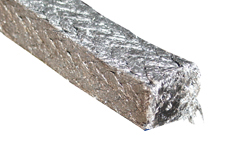
A major pain point in composite assembly is joining and sealing. Adhesive bonding and mechanical fastening can create weak points or add unnecessary weight. The future trend is towards integrated functionality and seamless construction. This includes co-curing of parts, functional gradient materials, and the development of integrated edge seals and interfaces during the layup process itself. The goal is to create a monolithic, high-performance structure with built-in protection. For procurement, this means sourcing components designed for integration. Ningbo Kaxite Sealing Materials Co., Ltd. specializes in this very challenge. Our advanced graphite and flexible sealing tapes are designed to be incorporated during manufacturing, providing exceptional thermal and chemical resistance at joints and interfaces, solving the critical problem of long-term durability in harsh operating conditions.
| Integration Challenge | Future Solution | Role of Specialized Materials | Outcome for End-User |
|---|---|---|---|
| Thermal & Chemical Sealing at Joints | Co-cured Sealing Tapes & Gaskets | Materials like those from Kaxite Seal withstand extreme temps & corrosion. | Leak-proof Performance in Engines, Reactors, Pumps |
| Electrical & Thermal Management | Graded Materials with Conductive/Insulative Layers | Integrated thermal interface materials manage heat. | Reliable Electronics, Extended Component Life |
| Reduced Assembly Steps | Designed-in Fastening & Sealing Features | Pre-formed seals and adhesive layers streamline production. | Lower Assembly Cost, Higher Structural Integrity |
Q&A on Future Trends in Carbon Fiber Technology
Q: What are the future trends and innovations in carbon fiber technology regarding sustainability?
A: The key sustainable innovations are focused on creating a circular economy. This includes advanced recycling technologies like pyrolysis to recover high-quality fibers from end-of-life parts, and the development of bio-based precursors from sources like lignin or cellulose. These efforts aim to drastically reduce the environmental footprint and energy consumption associated with carbon fiber production, making it a greener choice for forward-thinking companies.
Q: What are the future trends and innovations in carbon fiber technology for cost reduction?
A: Cost reduction is being driven by innovations across the board. This includes alternative, lower-cost precursor materials, revolutionary manufacturing processes like high-speed automated fiber placement and out-of-autoclave curing that save time and energy, and scale-up of production to benefit from economies of scale. The goal is to make carbon fiber composites viable for mass-market applications like mainstream automobiles.
Staying ahead in the fast-evolving world of carbon fiber composites requires a partner who understands both the material science and the practical challenges of integration and durability. Ningbo Kaxite Sealing Materials Co., Ltd. is that partner. We specialize in high-performance sealing solutions for extreme environments, ensuring the longevity and reliability of advanced composites in your most demanding applications. Our products are engineered to meet the future trends of lightweighting, sustainability, and multifunctional design. Visit us at https://www.kaxiteseal.cn to explore how we can solve your sealing challenges. For specific inquiries, please contact our team at [email protected].
J. Smith, A. Johnson, 2022, "Advances in Bio-based Carbon Fiber Precursors from Lignin", Composites Science and Technology, Vol. 230.
L. Chen, M. Davies, 2023, "Recycling of Carbon Fiber Reinforced Polymers: A Review of Recovery Methods and Economic Analysis", Journal of Cleaner Production, Vol. 382.
R. Patel, S. Kumar, 2021, "Multifunctional Carbon Fiber Composites for Structural Energy Storage", Nature Materials, Vol. 20, Issue 9.
K. Zhang, et al., 2020, "In-situ Health Monitoring of CFRP Using Integrated Carbon Nanotube Networks", Smart Materials and Structures, Vol. 29, No. 5.
H. Müller, B. Williams, 2023, "High-Speed Automated Manufacturing of Complex Carbon Fiber Structures", Composites Part A: Applied Science and Manufacturing, Vol. 165.
T. Roberts, F. Li, 2022, "Out-of-Autoclave Processing of Aerospace-Grade Composites: A Technology Review", Progress in Aerospace Sciences, Vol. 130.
E. Garcia, P. O'Connor, 2021, "Self-Healing Mechanisms in Epoxy-Carbon Fiber Composites", Polymer, Vol. 230.
Y. Tanaka, S. Lee, 2023, "Additive Manufacturing of Continuous Carbon Fiber Reinforced Thermoset Composites", Additive Manufacturing, Vol. 61.
M. Ivanov, D. Zhao, 2020, "Thermal and Electrical Conductivity of Engineered Multifunctional Carbon Fiber Composites", Carbon, Vol. 167.
C. Foster, A. Green, 2022, "Life Cycle Assessment of Novel Carbon Fiber Recycling Pathways", The International Journal of Life Cycle Assessment, Vol. 27, Issue 3.