In the realm of high-performance sealing, where standard elastomers falter under aggressive chemicals, extreme temperatures, and intense pressure, engineers turn to advanced polymer solutions. PTFE (Polytetrafluoroethylene) and PEEK (Polyetheretherketone) seals represent the pinnacle of this technology. At Kaxite, we specialize in the design, manufacture, and supply of precision-engineered PTFE and PEEK sealing components that deliver unmatched reliability in the world's most challenging applications. Our expertise, honed over decades, ensures that every seal provides a critical barrier of safety, efficiency, and longevity for your systems.
These materials are not merely alternatives; they are essential for operations where failure is not an option. From semiconductor fabrication and pharmaceutical processing to aerospace hydraulics and deep-well exploration, Kaxite seals are integral to maintaining purity, containing media, and ensuring operational continuity.
Understanding the core characteristics of PTFE and PEEK is key to selecting the optimal seal for your application. While both are high-performance thermoplastics, their property profiles cater to different sets of challenges.
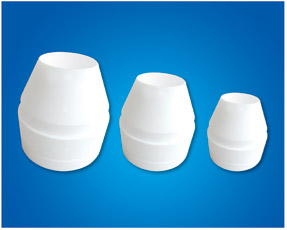
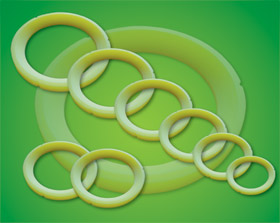
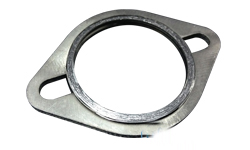
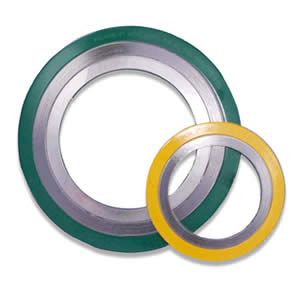
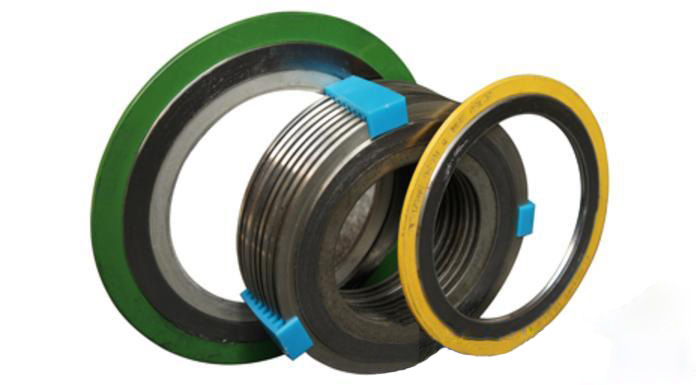
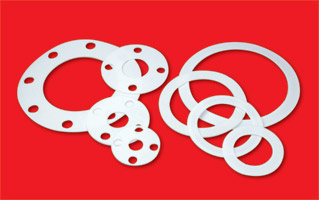
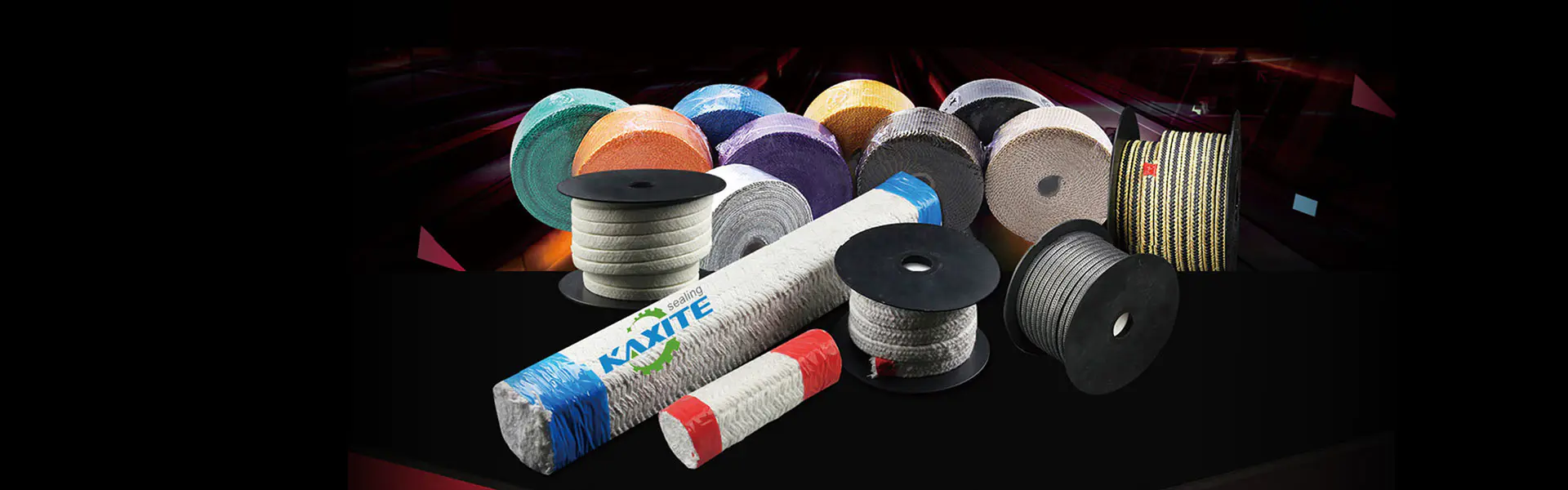
Kaxite offers a comprehensive range of standard and custom-engineered seal profiles in both PTFE and PEEK. Our products are manufactured to exacting tolerances using state-of-the-art CNC machining, molding, and skiving techniques to ensure flawless performance.
| Property | Standard PTFE | Reinforced PTFE (Kaxite RPTFE) | Virgin PEEK | Carbon-Filled PEEK |
|---|---|---|---|---|
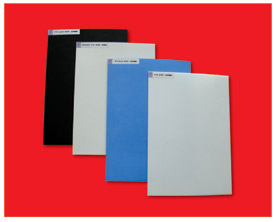
| Color | White | White/Brown/Black (dep on filler) | Beige/Tan | Black |
| Density (g/cm³) | 2.15 - 2.20 | 2.20 - 2.30 | 1.30 - 1.32 | 1.40 - 1.45 |
| Tensile Strength (MPa) | 25 - 35 | 15 - 30 | 90 - 100 | 95 - 105 |
| Continuous Service Temp. | -200°C to +260°C | -200°C to +260°C | Up to 250°C | Up to 250°C |
| Coefficient of Friction | 0.05 - 0.10 | 0.10 - 0.20 | 0.30 - 0.40 | 0.25 - 0.35 |
| Primary Advantages | Best chemical inertness, lowest friction, high purity | Improved wear resistance, reduced creep, better dimensional stability | High strength & rigidity, excellent wear & thermal resistance | Enhanced conductivity, superior wear & creep resistance |
| Typical Kaxite Applications | Chemical pump seals, lining, lab equipment | Compressor rings, valve seats, bearing pads | High-pressure hydraulic seals, aerospace components, wafer carriers | High-load bushings, thrust washers, semiconductor tools |
Note: The above values are typical. Exact specifications for your Kaxite product will be provided in the technical data sheet.
Q: When should I choose a PTFE seal over a PEEK seal, or vice versa?
A: The choice hinges on your application's primary challenge. Choose PTFE or Kaxite RPTFE when your priority is maximum chemical resistance, ultra-low friction, or application in extreme cryogenic temperatures. It is also the default for ultra-high purity and FDA-regulated processes. Choose PEEK when you require superior mechanical strength, rigidity, and resistance to creep under high continuous load at elevated temperatures. PEEK is typically favored for dynamic, high-pressure sealing and in applications involving abrasion or high-energy radiation.
Q: What are "filled" or "reinforced" PTFE compounds, and why does Kaxite offer them?
A: Virgin PTFE, while possessing excellent chemical and thermal properties, has limitations in wear resistance and can deform under pressure (cold flow). Kaxite produces reinforced PTFE (RPTFE) by compounding the base polymer with materials like glass fiber, carbon, graphite, bronze, or molybdenum disulfide. These fillers dramatically improve wear resistance, reduce deformation under load, enhance thermal conductivity, and increase hardness. For instance, carbon-filled PTFE offers excellent wear and creep resistance, while glass-filled provides good compressive strength. Our engineers help select the optimal compound for your specific service conditions.
Q: Can PTFE and PEEK seals be used in dynamic (moving) applications?
A: Yes, both can be highly effective in dynamic applications, but with different design considerations. PTFE's extremely low friction makes it excellent for sliding or rotating motions, but its wear resistance in pure form can be a concern. This is why dynamic PTFE seals are often designed as energized seals (using a spring or elastomer to maintain sealing force) and are made from our reinforced compounds. PEEK inherently has excellent wear and abrasion resistance, making it a top-tier choice for demanding dynamic applications like piston and rod seals in high-pressure hydraulic systems without always needing an energizer.
Q: How do I handle and install PTFE and PEEK seals to prevent damage?
A: While more robust than elastomers, these seals still require careful handling. Use clean, soft gloves to prevent contamination. Ensure all installation tools and housing edges are smooth and free of burrs. For tight fits, we recommend using a proper installation tool and a mild lubricant compatible with the seal material and the system media (e.g., silicone spray for general purposes). Avoid sharp twisting or stretching, especially with PTFE materials which are less elastic. Kaxite provides detailed installation guidelines with every order to ensure optimal performance and seal life.
Q: Does Kaxite provide custom seal design and manufacturing?
A: Absolutely. While we stock a wide range of standard profiles and sizes, a significant portion of our work at Kaxite involves custom engineering. Many critical applications require seals with non-standard cross-sections, specific compound formulations, or complex geometries. Our engineering team works directly with clients to analyze application parameters, perform finite element analysis (FEA) if needed, and prototype custom PTFE or PEEK sealing solutions that outperform off-the-shelf options. We manage the entire process from material selection and tooling design to precision manufacturing and quality validation.
Q: What quality standards and certifications does Kaxite adhere to?
A: Kaxite is committed to the highest quality standards. Our manufacturing processes are controlled under a strict Quality Management System. We utilize certified raw materials from leading global suppliers. Our production and inspection capabilities include coordinate measuring machines (CMM), laser micrometers, and profilometers to verify dimensional accuracy. We can provide material certifications (C of C) and, for relevant industries, produce seals compliant with FDA, USP Class VI, EU 10/2011, and other regulatory standards for food, medical, and pharmaceutical contact.
The unique properties of these polymers make them indispensable across a diverse spectrum of high-tech and heavy industries.