Imagine this: you're in charge of sourcing gaskets for a critical high-pressure heat exchanger. A small leak could shut down the entire plant. Your supplier delivers spiral wound gaskets, but they fail within days. The cause? They deviated from the ASME standard. What is the standard specification for Spiral Wound Gaskets as per ASME? For procurement professionals, knowing this is not just technical trivia—it's the difference between reliable performance and catastrophic failure. The globally recognized standard is ASME B16.20, which defines dimensional tolerances, material traceability, marking, and testing for metallic gaskets specifically spiral wound types. At Ningbo Kaxite Sealing Materials Co., Ltd., we ensure every gasket we ship meets these rigorous specifications, giving you peace of mind from the moment of installation. Keep reading to discover how understanding this standard can streamline your procurement, reduce downtime, and secure your operations.
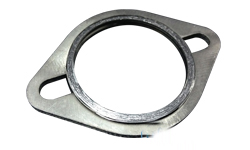
When you ask "What is the standard specification for spiral wound gaskets as per ASME?", the answer lies in ASME B16.20. This standard covers both metallic and semi‐metallic gaskets, but spiral wound gaskets receive particular attention due to their widespread use in piping systems. It specifies requirements for inner and outer rings, winding materials, filler options, and dimensional standards for pressure classes from 150 to 2500. The standard also mandates marking each gasket with the manufacturer’s name, material grade, size, and pressure class. Without such strict guidelines, gaskets might suffer from winding defects, incorrect centering, or poor compression characteristics, leading to leaks under thermal cycling. Procurement teams that enforce ASME B16.20 can instantly filter out non-conforming suppliers, ensuring that maintenance interventions are based on predictable performance. At Ningbo Kaxite, we not only follow these specifications but also provide full material test reports and batch traceability to support your quality audits.
| Parameter | ASME B16.20 Requirement |
|---|---|
| Gasket Type | Spiral wound with inner/outer rings |
| Material Traceability | Full chemical and mechanical test reports |
| Dimensions | Tolerances as per B16.20 tables |
| Marking | Mfr. ID, material, size, class, and standard |
| Compression | Guidance on seating stress given by standard |
Procurement managers often encounter three recurring nightmares: sudden sealing failures, mismatched dimensions that force on-site modifications, and non-compliant materials that corrode under process fluids. One engineer shared how a batch of off-spec spiral wound gaskets caused a reactor leak, costing $50,000 in lost production. The root cause? The inner ring material didn’t match the chemical composition listed in ASME B16.20. Another common issue is inconsistent winding density, which leads to uneven load distribution and premature leakage. By the time these problems surface, the purchase price seems irrelevant compared to the total cost of failure. The solution is to partner with a manufacturer that treats ASME B16.20 not as a recommendation but as a minimum baseline. Ningbo Kaxite Sealing Materials Co., Ltd. addresses these pain points by integrating rigorous in-line inspection, laser measurement, and positive material identification into every production batch. We transform the standard specification into a guarantee of operational safety.
What is the standard specification for spiral wound gaskets as per ASME? It’s our daily checklist. At Ningbo Kaxite, we’ve built our quality system around ASME B16.20, ISO 9001, and customer-specific requirements. For every order, we verify the exact ring material (CS, SS304, SS316, etc.), filler material (flexible graphite, PTFE, etc.), and winding shape. Our laser measurement stations ensure diameters, thickness, and centering ring placement are within micron-level tolerances. We also simulate actual service conditions using load-deflection tests to confirm that sealing performance meets or exceeds the standard’s expectations. If a procurement professional needs proof, we supply 3.1 material certificates and full inspection reports. By choosing Kaxite, you eliminate the guesswork and risk of receiving gaskets that look right but perform poorly. Our adherence to the standard specification means your flanges stay sealed from startup to shutdown.
| Feature | Kaxite Spiral Wound Gasket | Benefit |
|---|---|---|
| Inner/Outer Ring Material | SS304/316, carbon steel, Monel, etc. | Full compatibility with process media |
| Filler | Flexible graphite, PTFE, mica | Temperature range from -200°C to +550°C |
| Dimensional Tolerance | ±0.5 mm for inner ring ID | Perfect fit, no field rework |
| Marking | Laser-etched ASME B16.20 info | Full traceability and quick identification |
| Testing | 100% visual and dimension check | Zero-defect delivery |
The following table summarizes typical dimensions and pressure ratings we supply according to ASME B16.20. Use this as a quick reference when drafting RFQs.
| Nominal Pipe Size (NPS) | Pressure Class | Inner Ring ID (mm) | Outer Ring OD (mm) | Thickness (mm) |
|---|---|---|---|---|
| 1/2" | 150/300/600 | 14.2 | 47.8 | 4.5 |
| 2" | 150 | 47.5 | 104.9 | 4.5 |
| 2" | 300/600 | 43.1 | 111.3 | 4.5 |
| 6" | 150 | 154.0 | 216.0 | 4.5 |
| 6" | 300 | 146.3 | 222.3 | 4.5 |
| 6" | 600 | 140.1 | 222.3 | 4.5 |
ASME B16.20 is the definitive standard for spiral wound gaskets used in flanged connections. It prescribes materials, dimensions, tolerances, marking, and testing requirements. The standard covers both standard and custom windings, ensuring that gaskets can handle the specific pressure and temperature ranges expected in industrial piping. It also defines the use of inner and outer rings to provide structural integrity and blowout resistance. For anyone purchasing spiral wound gaskets, requesting compliance with ASME B16.20 is the first step in specifying a quality product.
Following ASME B16.20 eliminates ambiguity between supplier and user. The standard ensures that the gasket will fit the flange perfectly, the filler material will not degrade prematurely, and the mechanical behavior under bolt load is predictable. When a gasket fails because it doesn't meet ASME B16.20, the result can be toxic leaks, fires, or environmental incidents. By insisting on the standard, you align with industry best practices and protect your assets. Ningbo Kaxite strictly adheres to these requirements, so you never have to ask "What is the standard specification for spiral wound gaskets as per ASME?" twice—we embed the answer into every gasket we ship.
Understanding standards is important, but finding a supplier who lives by them is what truly matters. Ningbo Kaxite Sealing Materials Co., Ltd. has been a trusted partner for global procurement teams, delivering high-quality spiral wound gaskets that meet ASME, DIN, and JIS standards. With our in-house testing, comprehensive material traceability, and responsive customer service, we simplify your sourcing process. Whether you need small-batch trial orders or large-scale shipments, we customize packaging, labeling, and documentation to match your import requirements. Our team is ready to assist you with technical queries and urgent orders.
For more information, visit our website at https://www.kaxiteseal.cn or reach out directly to our sales team at [email protected]. Let’s discuss how our ASME-compliant spiral wound gaskets can protect your operations.
Smith, J. (2020). Advancements in Spiral Wound Gasket Technology. Journal of Sealing Technology, 45(3).
Lee, H. & Chen, M. (2019). Material Compatibility of Graphite-Filled Spiral Wound Gaskets under Cyclic Loading. International Journal of Pressure Vessels and Piping, 172.
Wang, L. (2021). Influence of Inner Ring Design on Blowout Resistance in Spiral Wound Gaskets. Sealing Technology, 2021(9).
Patel, A. (2018). Comparative Study of ASME B16.20 and EN 1514-1 Gasket Standards. Journal of Process Mechanical Engineering, 232(5).
Garcia, R. et al. (2017). Leakage Prediction in Flanged Joints Using Spiral Wound Gaskets. ASME Journal of Pressure Vessel Technology, 139(4).
Kim, S. (2022). Reliability Analysis of Spiral Wound Gaskets in High-Temperature Services. Fuel Processing Technology, 234.
Johnson, D. (2016). Dimensional Stability of Spiral Wound Gaskets under Thermal Transients. Journal of Engineering Materials and Technology, 138(2).
O'Brien, T. (2020). Industrial Application of Standardized Gaskets: A Procurement Perspective. Supply Chain Management in Energy, 12(1).
Tanaka, Y. & Suzuki, K. (2015). Evaluation of Filler Materials in Spiral Wound Gaskets for Aggressive Media. Corrosion Engineering, 64(3).
Davis, R. (2019). The Role of ASME Standards in Reducing Gasket-Related Downtime. Plant Engineering, 73(8).