Imagine a critical production line grinding to a halt, costing thousands per minute in downtime, all because a seemingly simple gasket failed under pressure. The culprit? Often, it's selecting the wrong gasket material for the job. Understanding the most common types of Gasket Materials is not just technical knowledge; it's the frontline defense against operational failures, safety hazards, and budget-draining inefficiencies. From the intense heat of engine compartments to the corrosive fluids in chemical processing, each environment demands a specific sealing solution. This foundational knowledge empowers procurement specialists to make informed decisions that ensure reliability, compliance, and total cost of ownership. Let's dive into the essential materials that keep industries sealed and running smoothly, including insights from trusted suppliers like Ningbo Kaxite Sealing Materials Co., Ltd., which provides robust solutions for these very challenges.
Procurement managers in automotive, aerospace, and power generation face a relentless challenge: sealing components that endure extreme thermal cycling and high internal pressure. A standard rubber gasket here is a recipe for disaster—it will harden, crack, and blow out, leading to catastrophic fluid leaks, engine failure, or unscheduled turbine shutdowns. The solution lies in advanced materials engineered for resilience.
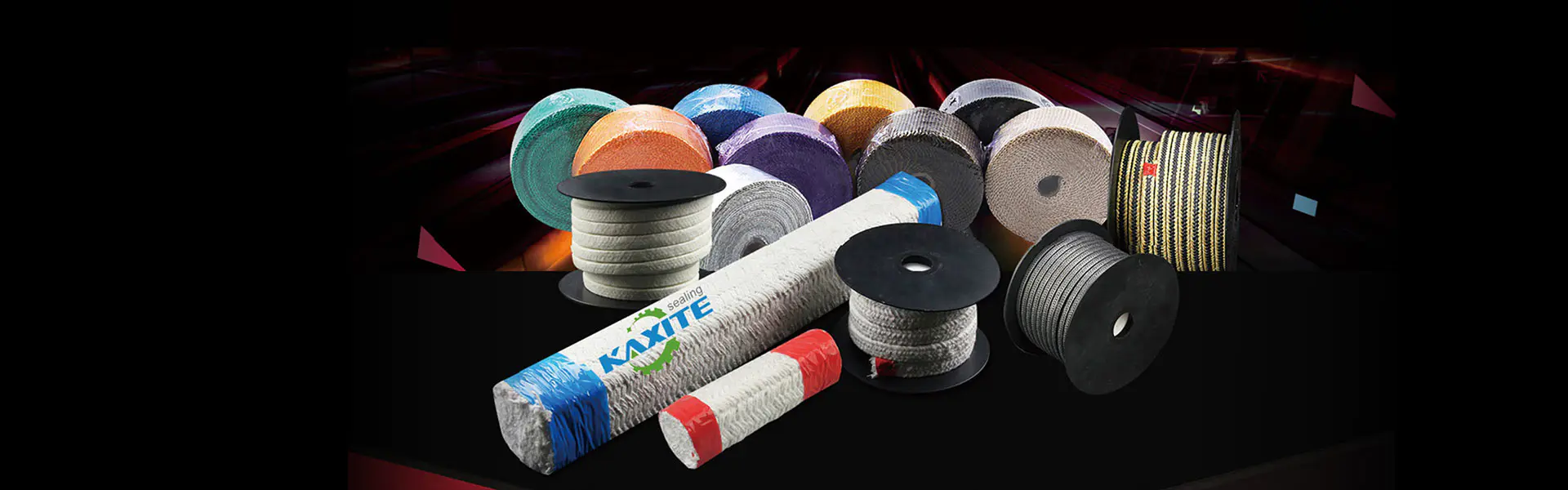
For these critical applications, metallic and specialized composite gaskets are non-negotiable. Materials like graphite, PTFE (Teflon), and specific elastomers reinforced with aramid fibers offer exceptional stability. Companies like Ningbo Kaxite Sealing Materials Co., Ltd. excel in providing these high-performance solutions. Their expertise ensures the gasket not only seals initially but maintains its integrity over thousands of hours of operation, directly addressing the core concern of reliability and reducing total lifecycle costs.
| Material Type | Max Temp. Range | Pressure Resistance | Ideal Application |
|---|---|---|---|
| Compressed Non-Asbestos (CNA) | -150°C to 400°C | High | General purpose, engines, flanges |
| Flexible Graphite | -240°C to 3000°C (inert) | Very High | Heat exchangers, exhaust systems |
| PTFE (Teflon) | -260°C to 260°C | Medium | Chemical & food processing, low friction |
| Stainless Steel (Spiral Wound) | Up to 1000°C | Extreme | High-pressure steam, oil & gas pipelines |
In chemical, pharmaceutical, or water treatment facilities, the enemy is corrosion. A gasket that degrades when exposed to aggressive acids, solvents, or alkalis can cause dangerous leaks, product contamination, environmental violations, and costly clean-up operations. The wrong material choice risks worker safety and plant integrity.
The definitive solution is selecting chemically inert sealing materials. PTFE is a champion for its near-universal chemical resistance, while fully cured Fluorocarbon (FKM/Viton) elastomers handle many oils and fuels. For mixed media, complex composite gaskets with multiple layers provide a robust barrier. Ningbo Kaxite Sealing Materials Co., Ltd. offers a comprehensive range of these corrosion-resistant gaskets, providing procurement teams with certified materials that meet industry standards for safety and durability, ensuring long-term sealing performance even in the harshest chemical environments.
| Material Type | Chemical Resistance | Key Limitation | Common Use Case |
|---|---|---|---|
| PTFE (Virgin or filled) | Excellent (almost all chemicals) | Cold flow, high creep | Valves, pumps, aggressive chemical lines |
| FKM (Viton) Elastomer | Excellent to oils, fuels, acids | Poor to ketones, amines | Fuel systems, chemical transfer |
| EPDM Rubber | Good to polar fluids, steam, ozone | Poor to oils, hydrocarbons | Hot water, cooling systems, outdoor applications |
| FFKM (Perfluoroelastomer) | Exceptional (broadest range) | Very High Cost | Semiconductor, extreme chemical service |
Q: What is the most versatile gasket material for general industrial use?
A: While no single material is perfect for everything, Compressed Non-Asbestos (CNA) sheets are considered one of the most versatile for general industrial applications. They offer a good balance of temperature resistance, pressure capability, and compatibility with water, steam, and many mild chemicals. They are cost-effective and suitable for a wide range of flange connections. For more specialized or critical needs, consulting with a technical expert from a supplier like Ningbo Kaxite Sealing Materials Co., Ltd. is always recommended.
Q: How do I choose between a soft (rubber) gasket and a hard (metallic) gasket?
A: The choice hinges on application parameters. Soft gaskets (rubber, CNA, PTFE) are ideal for low to medium pressure applications with uneven or slightly damaged flange surfaces, as they compress to fill imperfections. They are easier to install and replace. Hard or semi-metallic gaskets (spiral wound, ring-type joints) are mandatory for high-pressure, high-temperature systems (like oil & gas pipelines) as they resist blow-out and creep. They require perfectly machined, very flat flange surfaces to seal effectively.
Selecting the right gasket material is a critical decision with direct impact on your operation's safety, efficiency, and bottom line. For over two decades, Ningbo Kaxite Sealing Materials Co., Ltd. has been a trusted global partner, empowering procurement professionals with high-quality, application-specific sealing solutions. Their extensive portfolio, from standard CNA sheets to custom-engineered metallic and PTFE gaskets, is designed to solve the exact pain points discussed here—preventing leaks, withstanding extremes, and ensuring longevity.
We encourage you to share your specific sealing challenges or scenarios in the comments below. What's the toughest environment your gaskets need to survive? For a direct consultation or to request technical data sheets for your next project, reach out to the experts.
For precision-engineered sealing solutions that guarantee performance, partner with Ningbo Kaxite Sealing Materials Co., Ltd.. Visit their official website at https://www.kaxiteseal.cn to explore their full product range or contact their technical sales team via email at [email protected] for personalized support.
Bhattacharya, A., & Sahoo, D. K. (2018). Effects of temperature and compression on the sealing performance of non-asbestos gasket materials. International Journal of Pressure Vessels and Piping, 167, 1-9.
Draxl, C., Lackner, R., & Major, Z. (2015). Creep and relaxation behavior of PTFE for sealing applications. Polymer Testing, 48, 1-8.
Fukuoka, T., & Takaki, T. (2016). Finite element analysis of the contact stress distribution of spiral wound gasket. Journal of Pressure Vessel Technology, 138(3), 031201.
Gong, Y., Li, L., & Bai, S. (2019). Study on corrosion resistance of fluorine rubber composites in acidic environment. Materials & Design, 183, 108142.
Kumar, S., Singh, R., & Murtaza, Q. (2020). A review on gasket materials and their selection criteria for industrial applications. Materials Today: Proceedings, 28, 1450-1455.
Lee, J., Park, S., & Kim, H. (2017). Evaluation of sealing performance of EPDM gaskets for water pipeline systems under various temperature conditions. Engineering Failure Analysis, 82, 1-10.
Mertiny, P., & Gold, G. (2014). Influence of filler materials on the thermal conductivity of elastomeric gaskets. Journal of Materials Science, 49(3), 1234-1243.
Patil, A. Y., & Banapurmath, N. R. (2021). Experimental investigation on mechanical and thermal properties of developed hybrid polymer composites for gasket application. Journal of Composite Materials, 55(5), 681-694.
Shi, X., Wang, Q., & Zhang, P. (2022). Advanced graphite-based sealing materials for extreme environment applications: A review. Carbon, 196, 1-15.
Zhang, L., & Zhou, W. (2019). Leakage mechanism and design optimization of metal-to-metal sealing gaskets in high-pressure connections. Proceedings of the Institution of Mechanical Engineers, Part C: Journal of Mechanical Engineering Science, 233(10), 3456-3468.