What are common PTFE and PEEK products for the medical industry? If you are a purchasing professional scanning supplier catalogs for seals, tubing, machined parts, or custom components, this question is more than a technical curiosity—it is the first line of defense against product recalls, sterilization failures, and regulatory delays. PTFE and PEEK have become go-to materials in medical device manufacturing because they withstand aggressive cleaning agents, high autoclave temperatures, and repeated chemical exposure without degrading. But finding the right product is not always straightforward. A PTFE O-ring that works in a laboratory pump may fail inside a surgical instrument if the dimensional tolerance is off by a fraction of a millimeter. A PEEK rod specified for an orthopedic trial may be rejected if the raw material lacks full traceability or biocompatibility documentation. Procurement teams often face long lead times, inconsistent material certifications, and suppliers that cannot support small-batch prototyping or custom dimensions. The real challenge is not just knowing what products exist, but knowing which supplier can deliver medical-grade consistency without hidden risks. This guide walks through the most common PTFE and PEEK medical products, the typical problems buyers face, comparison tables for quick reference, and practical sourcing advice from Ningbo Kaxite Sealing Materials Co., Ltd. so you can make confident purchasing decisions.
Table of Contents
A purchasing manager at a diagnostic equipment company recently needed PTFE gaskets for a blood analyzer that would be cleaned daily with enzymatic detergents. The first supplier quoted a low price, but the material arrived without certificates and the gaskets swelled slightly after one week of testing. This caused leakage and delayed production by three weeks. The root cause was simple: the supplier used reprocessed PTFE powder instead of virgin medical-grade resin.
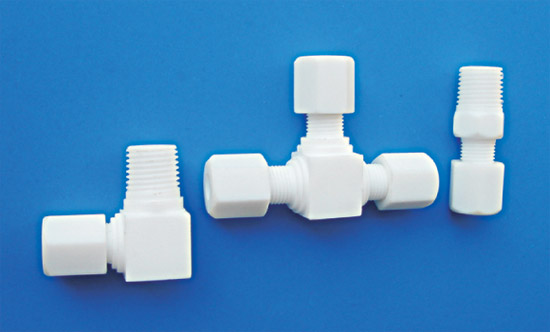
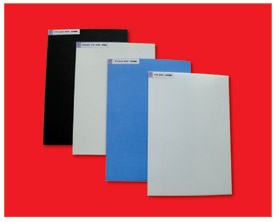
The solution is to specify virgin PTFE and require documentation such as FDA 21 CFR 177.1550, USP Class VI, or ISO 10993 data before order confirmation. Buyers should also ask for dimensional inspection reports and batch traceability records. Common PTFE products used in the medical device industry include O-rings, gaskets, tubing, rod, sheet, ball valve seats, and custom-machined seals.

| PTFE Product | Typical Medical Application | Critical Parameter | Common Procurement Problem |
|---|---|---|---|
| PTFE O-ring | Syringe pumps, fluid connectors | Durometer, compression set, tolerance | Wrong size or reprocessed resin |
| PTFE gasket | Diagnostic analyzer seals | Chemical compatibility, thickness tolerance | Swelling in detergents |
| PTFE tubing | Catheter liners, fluid transfer | Inner diameter smoothness, burst pressure | Kinking or inconsistent ID |
| PTFE rod/sheet | Machined components, insulators | Density, tensile strength | Voids or internal cracks |
Imagine an R&D team designing a reusable laparoscopic instrument handle. They choose PEEK for its strength and repeated autoclave performance. The first sample looks good, but after 200 steam sterilization cycles, the handle warps and turns slightly yellow. The disappointment is not in PEEK itself—it is in the grade selection and processing control. The supplier delivered general-purpose PEEK instead of medical-grade unfilled PEEK with heat annealing.
For medical procurement, PEEK products usually include rods, sheets, tubing, screws, washers, and custom CNC-machined parts for orthopedic trials, dental abutments, and surgical instrument handles. Buyers should verify the exact polymer grade, such as unfilled PEEK, carbon-fiber-reinforced PEEK, or Barium sulfate-filled PEEK for radiopacity. Documentation should include ISO 10993 biocompatibility, lot-level mechanical test data, and sterilization validation support.
| PEEK Product | Typical Medical Use | Critical Parameter | Verification Check |
|---|---|---|---|
| PEEK rod | Spinal implant trials, machined instruments | Tensile strength, flexural modulus | ASTM F2026 test report |
| PEEK sheet | Surgical trays, positioning fixtures | Flatness, thickness tolerance | Dimensional inspection, surface roughness |
| PEEK tubing | Endoscopic device shafts | Wall thickness consistency, burst strength | Lot-specific dimensional report |
| PEEK screw/washer | Reusable instrument fasteners | Torque resistance, thermal stability | Autoclave cycle test data |
One common scenario is a buyer caught between two engineering teams. The instrument design calls for a seal that will face both steam sterilization and aggressive cleaning chemicals. The materials engineer suggests PTFE for chemical resistance. The mechanical engineer wants PEEK for load-bearing strength. Without a clear comparison, the purchasing team risks ordering the wrong material and paying for expensive rework.
The solution is to map the operating conditions before placing the order. PTFE excels in low friction, wide chemical compatibility, and low water absorption, but it has lower mechanical strength and can creep under high load. PEEK offers much higher tensile strength and rigid dimensional stability, while still tolerating steam, gamma, and ethylene oxide sterilization. However, PEEK costs more and requires stricter processing controls.
| Parameter | PTFE | PEEK |
|---|---|---|
| Continuous use temperature | Up to 260 °C | Up to 250 °C (unfilled) |
| Tensile strength | 20–30 MPa | 90–100 MPa |
| Water absorption | <0.01% | 0.1–0.5% |
| Sterilization compatibility | Steam, EtO, gamma, plasma | Steam, EtO, gamma, plasma |
| Best for | Seals, gaskets, low-load sliding parts | Load-bearing components, structural parts |
Many medical device companies have experienced the same painful moment: a regulatory audit is scheduled, and the purchasing team cannot produce full material traceability for a batch of PTFE or PEEK components. The supplier has changed production location, the certificate is outdated, or the lot number does not match the incoming inspection record. This can halt shipments and damage the company's quality score.
The solution starts with supplier qualification. Medical buyers should not treat PTFE and PEEK as commodity materials. They should require raw material certificates, processing records, and final inspection reports for every lot. Working with an experienced manufacturer such as Ningbo Kaxite Sealing Materials Co., Ltd. reduces this risk because the company provides batch traceability and supports custom PTFE and PEEK production for medical applications.
| Supply Chain Risk | Warning Sign | Solution | Document to Request |
|---|---|---|---|
| Reprocessed resin | Unusually low price, no resin source | Specify virgin material | Resin certificate of analysis |
| No dimensional control | High rejection rate at incoming QC | Choose CNC machining with inspection | Dimensional report per lot |
| Regulatory documentation gap | Missing biocompatibility files | Use supplier with ISO 10993 support | Test summary or full report |
| Long lead time risk | Single-source dependency | Build safety stock with reliable supplier | Flexible delivery agreement |
A medical startup needed 500 custom PTFE seals with tight tolerances and full material certification within four weeks. Two larger suppliers quoted lead times of eight to ten weeks. Ningbo Kaxite Sealing Materials Co., Ltd. reviewed the drawings, confirmed the tolerance capabilities, and shipped the order in twenty days. This kind of responsive support is why procurement teams increasingly turn to specialized manufacturers for medical PTFE and PEEK products.
The company supplies PTFE O-rings, gaskets, rods, sheets, tubing, and CNC-machined PEEK components. Buyers can request custom dimensions, small-batch samples, and full quality documentation. For global clients, the team helps clarify material grades and sterilization compatibility before order confirmation, reducing the guesswork in medical component sourcing.
| Service Area | Kaxite Capability | Typical Buyer Benefit |
|---|---|---|
| Custom PTFE parts | CNC machining, molding, die-cutting | Exact fit for device prototypes and production |
| Custom PEEK parts | Rod, sheet, tubing, machined components | High-strength options for surgical instruments |
| Documentation | Material certificates, dimensional reports | Easier regulatory audits |
| Small-batch support | Prototype to medium-volume orders | Faster validation without large inventory risk |
Q: What are common PTFE and PEEK products for the medical industry?
A: Common PTFE products include O-rings, gaskets, sealing washers, fluid transfer tubing, rod, and sheet for machined parts. Common PEEK products include rods, sheets, screws, washers, tubing, and custom-machined components used in orthopedic trials, dental instruments, and reusable surgical tools. Selecting the correct grade and getting full material documentation are just as important as the product shape itself.
Q: How do PTFE and PEEK medical products compare for repeated sterilization and chemical exposure?
A: Both materials handle steam, gamma, and ethylene oxide sterilization well. PTFE provides nearly universal chemical resistance and very low friction, making it ideal for seals and gaskets. PEEK offers significantly higher mechanical strength and better dimensional stability under load, making it better for structural components. The right choice depends on whether the part must resist chemical attack or carry mechanical stress.
| Buyer Question | PTFE Recommendation | PEEK Recommendation |
|---|---|---|
| Part must slide or seal without high load | Yes | No, unless reinforced |
| Part must hold high mechanical load | No | Yes |
| Exposed to strong acids and solvents | Excellent | Good, but less broad |
| Autoclave cycles above 2000 | Good | Good |
Kurtz, S.M. (2012). PEEK Biomaterials in Trauma, Orthopedic, and Spinal Implants. Biomaterials, 33(30), 7365–7383.
Williams, D.F. (2008). On the mechanisms of biocompatibility. Biomaterials, 29(20), 2941–2953.
Wong, K.L., et al. (2017). Mechanical properties and in vitro degradation of medical grade PEEK. Journal of the Mechanical Behavior of Biomedical Materials, 75, 255–262.
Harsha, A.P., Tewari, U.S. (2003). Tribological studies on PTFE composites for medical applications. Wear, 254(7-8), 718–726.
Sauer, W.L., et al. (2016). Characterization of expanded PTFE for cardiovascular implants. Journal of Biomedical Materials Research Part B, 104(5), 949–957.
Brown, S.A., et al. (2005). Medical applications of fluoropolymers: a review. Journal of Biomaterials Applications, 19(4), 231–245.
Li, P., et al. (2019). Surface modification of PEEK for improved osseointegration: a systematic review. Materials Science and Engineering: C, 103, 109824.
Chen, J., et al. (2018). PTFE-coated guidewires: friction and biocompatibility in vascular interventions. Journal of Vascular and Interventional Radiology, 29(8), 1122–1129.
Ehret, P., et al. (2020). Influence of gamma irradiation on the mechanical properties of PEEK medical devices. Polymer Degradation and Stability, 178, 109193.
Zhang, S., et al. (2021). Comparative analysis of PTFE and PEEK seals for minimally invasive surgical instruments. Medical Engineering & Physics, 91, 42–50.
Do you have a specific PTFE or PEEK component drawing for a medical application? Submit your dimensions, quantity, and required certifications today, and get a practical sourcing answer without the usual delays. Ningbo Kaxite Sealing Materials Co., Ltd. specializes in high-performance polymer sealing solutions and custom polymer components. With years of manufacturing experience in PTFE, PEEK, and other advanced engineering plastics, the company supports medical device buyers with custom sizes, small-batch prototyping, and full quality documentation. Visit https://www.kaxiteseal.cn or contact [email protected] for product specifications and a fast quotation.
-