How Much Does Thermal Insulation with Fiber Products Cost? For procurement teams, the answer is rarely a single number. A plant maintenance manager may need basalt fiber sleeving for a high-temperature exhaust line; an OEM buyer may compare ceramic fiber blankets, fiberglass ropes, and mineral wool boards for a furnace door; a distributor may need repeatable density, clean cuts, and fast lead times. The quoted price can move from a few dollars per meter to more than a hundred dollars per square meter when temperature rating, thickness, density, fiber chemistry, lamination, fabrication, testing, and order volume change. A low unit price can also hide scrap, delays, and rework if the material does not match the application. The real cost equation is material price + fabrication + freight + installation risk + service life. Ningbo Kaxite Sealing Materials Co., Ltd. helps buyers control that equation by matching fiber products to the operating condition, confirming dimensions before production, and quoting sealing sleeves, ropes, gaskets, blankets, and custom parts with clear specifications. The sections below break down cost drivers, compare common fiber products, share parameter tables, and give procurement questions that keep quotes comparable.
Pain scenario: A buyer receives three quotes for the same “fiber insulation” request, but one quote is for a 6 mm fiberglass rope, another is for a 10 mm basalt sleeve, and the third includes a custom gasket with an untested adhesive. The prices look comparable on paper, yet the materials solve different problems. Without normalized parameters, the lowest quote can become the most expensive choice after downtime, rework, and replacement.
Solution: Build a comparison sheet before asking for prices. Confirm continuous operating temperature, peak temperature, media contact, density, thickness, dimensional tolerance, length, packaging, and documentation. Ningbo Kaxite Sealing Materials Co., Ltd. reviews these inputs with the buyer and flags mismatches early, so the quote reflects the application rather than a generic catalog line.
| Cost driver | Procurement question | Effect on quoted price |
|---|---|---|
| Fiber chemistry | Is the line exposed to flame, molten splash, chemical attack, or continuous heat? | Basalt, ceramic, fiberglass, and mineral wool carry different raw-material and processing costs. |
| Temperature rating | What is the continuous temperature and the short-term peak? | Higher temperature grades usually require tighter fiber control and more testing. |
| Density and thickness | Is the target density fixed, or is a tolerance range acceptable? | More mass per meter or square meter raises material cost but may extend service life. |
| Fabrication | Are cuts, stitching, adhesive, coating, or metal tags required? | Custom work adds labor, tooling, inspection, and scrap risk. |
| Testing and documentation | Are material certificates, batch traceability, or third-party reports needed? | Documentation can add cost, but it reduces approval and audit risk. |
| Order volume and lead time | Is this a trial order, repeat production order, or urgent breakdown order? | MOQ, setup time, and expedited freight change the landed cost. |
Pain scenario: A maintenance team replaces a failed insulation sleeve with a cheaper fiberglass product, then finds the sleeve fraying near a hot valve. The issue is not simply price; the product format, weave, coating, and temperature margin do not fit the installation. Buyers need a selection table that connects product type to service condition.
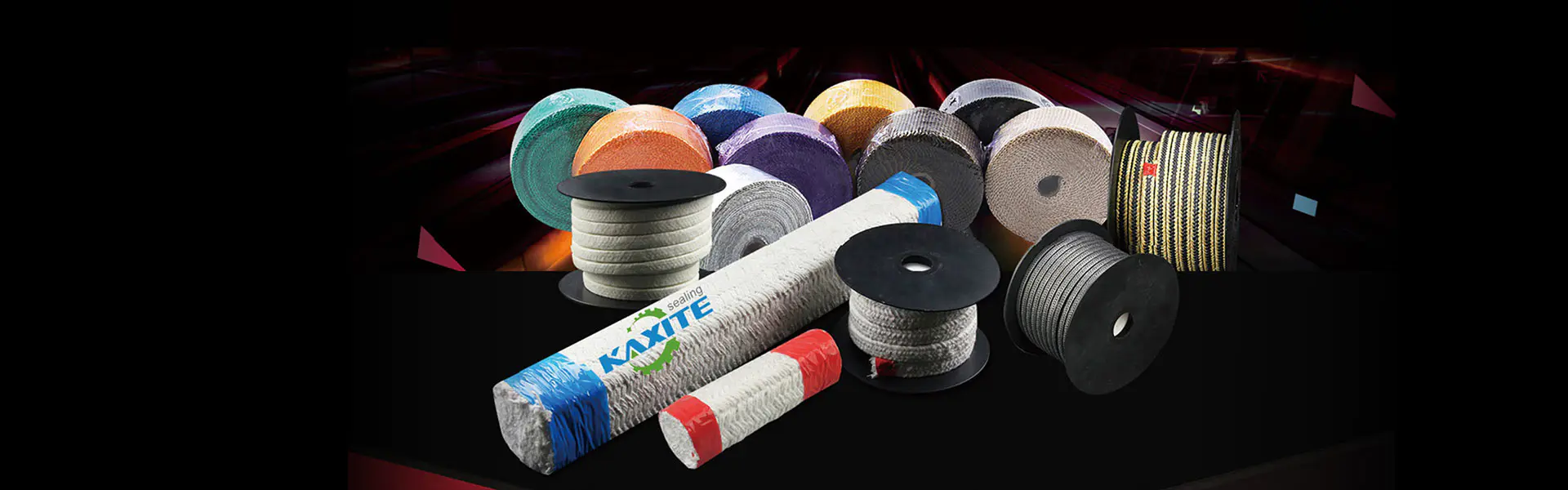
Solution: Match the product format to the physical job: sleeving for hose and cable protection, rope for door seals and gap packing, blanket for large-area thermal barriers, board for structural insulation, and custom gaskets for flanged joints. Ningbo Kaxite Sealing Materials Co., Ltd. supplies fiber sealing and insulation products with customizable dimensions, so the buyer can compare like-for-like specifications instead of guessing from a photo.
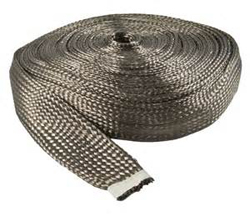
| Product format | Typical temperature use | Common density or thickness | Typical application | Cost logic |
|---|---|---|---|---|
| Basalt fiber sleeving | Medium to high heat resistance | 6–50 mm inner diameter; woven or braided | Hose, cable, pipe, and exhaust line protection | Priced by meter; diameter, weave, and coating drive cost. |
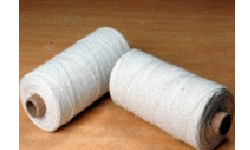
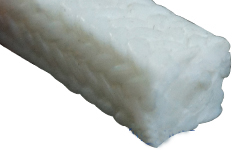
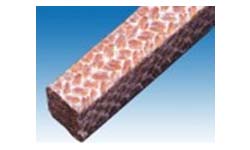
| Fiberglass rope | Sealing and gasket duty | 3–25 mm diameter; square or round | Oven door seals, furnace gaps, expansion joints | Priced by meter; diameter and braid density are main levers. |
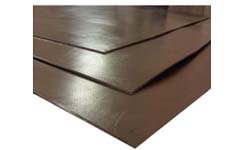
| Ceramic fiber blanket | High-temperature thermal barrier | 6–50 mm thickness; 64–128 kg/m³ | Furnace lining, kiln backup, duct insulation | Priced by square meter or roll; density and thickness matter most. |
| Mineral wool board | General industrial and building heat insulation | 30–100 mm thickness; 80–150 kg/m³ | Panel insulation, pipe supports, acoustic-thermal barriers | Priced by board or square meter; density and compressive strength matter. |
| Custom gasket or tadpole tape | Application-specific sealing | Drawing-based dimensions and tolerances | Flanges, doors, seals, and replacement parts | Priced by piece; drawing complexity and tooling drive cost. |
Pain scenario: A purchasing manager needs a budget before the maintenance window opens, but suppliers only provide “contact us” answers. Without a reference range, the buyer cannot separate a reasonable quote from a risky one, and the project timeline slips while specifications are clarified.
Solution: Use indicative budget bands for early planning, then request a formal quote with the exact temperature, size, density, and quantity. The table below gives broad, ex-works planning ranges for common fiber products. Actual prices depend on raw material, exchange rate, order volume, packaging, testing, and freight. Ningbo Kaxite Sealing Materials Co., Ltd. can turn these ranges into a firm quote after reviewing the drawing or sample.
| Product | Typical unit | Indicative budget range | Main cost lever | Buyer note |
|---|---|---|---|---|
| Fiberglass rope | Per meter | USD 1.5–8 | Diameter, braid density, coating | Confirm rope shape and compression target. |
| Basalt fiber sleeving | Per meter | USD 3–20 | Diameter, weave, temperature grade | Check flexibility and abrasion resistance. |
| Ceramic fiber blanket | Per square meter | USD 6–35 | Thickness, density, fiber grade | Compare roll size and packaging loss. |
| Mineral wool board | Per square meter | USD 4–25 | Density, thickness, facing | Confirm compressive strength for supports. |
| Custom fiber gasket | Per piece | USD 5–60 | Drawing complexity, material, tolerance | Tooling and inspection can dominate small orders. |
Pain scenario: The lowest quote wins the purchase order, but the delivered product arrives with a different density, loose stitching, or missing batch labels. Production loses time, the buyer reopens the RFQ, and the apparent saving disappears in expedited freight and line downtime.
Solution: Use a structured RFQ that forces every supplier to quote the same scope. Ask for material grade, dimensions, tolerance, packaging, lead time, MOQ, and documentation. Ningbo Kaxite Sealing Materials Co., Ltd. supports sample checks, drawing review, and repeat-order consistency, giving procurement teams a practical way to reduce total cost rather than only chase the lowest unit price.
| RFQ item | Why it matters | How Kaxite supports the buyer |
|---|---|---|
| Operating temperature | Prevents under-specification and early failure. | Reviews continuous and peak temperature before recommending a fiber grade. |
| Dimensions and tolerance | Avoids rework during installation. | Checks drawings, samples, and fit-up requirements. |
| Density or weight | Controls thermal performance and handleability. | Confirms density range and quoted unit basis. |
| Packaging and labeling | Reduces damage, mix-ups, and warehouse cost. | Offers carton, roll, pallet, and private-label options. |
| Lead time and MOQ | Keeps maintenance windows and production plans stable. | Quotes trial orders and repeat production volumes with clear timing. |
Pain scenario: Buyers often compare a small trial order with a full container quote, or compare a standard sleeve with a custom fabricated part. The number on the page may be accurate for one scope but misleading for another, which creates friction during approval.
Solution: Separate material cost, setup cost, and logistics cost in every answer. The table below gives procurement-ready answers for two common cost questions, and Ningbo Kaxite Sealing Materials Co., Ltd. can confirm the final figure after reviewing the drawing, sample, or operating conditions.
| Question | Pain scenario | Cost answer | Procurement action |
|---|---|---|---|
| How Much Does Thermal Insulation with Fiber Products Cost for a small trial order? | A maintenance team needs 20–50 meters to test fit and heat performance. | The unit price is usually higher than a repeat order because setup, cutting, and packaging are spread over fewer units. Expect a practical trial quote based on standard sizes and available stock. | Send the target size, temperature, and test quantity; ask for a quote with and without custom fabrication. |
| How Much Does Thermal Insulation with Fiber Products Cost when custom fabrication is required? | An OEM needs a non-standard gasket, stitched sleeve, or tadpole seal that must match an existing assembly. | Cost includes material, programming or tooling, cutting, stitching, inspection, and packaging. Complex drawings and tight tolerances increase the piece price, while volume reduces the setup share. | Provide a drawing, sample, annual volume, and acceptance criteria so the quote can separate one-time and repeat costs. |
Pain scenario: A buyer finds a low-cost fiber product online, but the supplier cannot confirm density, temperature grade, or repeat-order consistency. The purchasing team then spends weeks chasing samples and clarifying basic specifications.
Solution: Work with a supplier that treats sealing and thermal insulation as an engineering purchase, not a commodity lookup. Ningbo Kaxite Sealing Materials Co., Ltd. reviews the application, recommends a fiber product, and supports quotations with clear dimensions, materials, and lead times.
| Need | Contact route | What to send |
|---|---|---|
| Product recommendation | Email the sales team | Operating temperature, media, size, and current failure mode. |
| Price comparison | Request a formal quote | Drawing or sample, annual volume, target lead time, and Incoterm. |
| Repeat order control | Share the approved specification | Batch requirements, packaging label, and inspection criteria. |
Ningbo Kaxite Sealing Materials Co., Ltd. is a fiber sealing and thermal insulation supplier serving OEMs, distributors, and maintenance teams through https://www.kaxiteseal.cn. The company supports basalt fiber sleeving, fiberglass ropes, ceramic fiber blankets, gaskets, tadpole tapes, and custom sealing parts, with attention to temperature rating, density, thickness, dimensional tolerance, and repeat-order consistency. Send your drawing, operating temperature, and target volume to [email protected] to receive a clear quote and material recommendation.
Fiore, V., Scalici, T., Di Bella, G., & Valenza, A. (2015). A review on basalt fibre and its composites. Composites Part B: Engineering, 74, 74–94.
Dhand, V., Mittal, G., Rhee, K. Y., Park, S. J., & Hui, D. (2015). A short review on basalt fiber reinforced polymer composites. Composites Part B: Engineering, 73, 166–180.
Jelle, B. P. (2011). Traditional, state-of-the-art and future thermal building insulation materials and solutions – Properties, requirements and possibilities. Energy and Buildings, 43(10), 2549–2563.
Papadopoulos, A. M. (2005). State of the art in thermal insulation materials and aims for future developments. Energy and Buildings, 37(1), 77–86.
Aditya, L., Mahlia, T. M. I., Rismanchi, B., Ng, H. M., Hasan, M. H., Metselaar, H. S. C., Muraza, O., & Aditiya, H. B. (2017). A review on insulation materials for energy conservation in buildings. Renewable and Sustainable Energy Reviews, 73, 1352–1365.
Al-Homoud, M. S. (2005). Performance characteristics and practical applications of common building thermal insulation materials. Building and Environment, 40(3), 353–366.
Militký, J., Kovačič, V., & Kremenáková, D. (2017). Basalt fibers for high-temperature insulation. Journal of Industrial Textiles, 46(8), 1687–1702.
Kim, Y. H., & Lee, J. H. (2018). Thermal and mechanical properties of ceramic fiber blankets for high-temperature insulation. Journal of the Korean Ceramic Society, 55(2), 123–130.
Lee, S., & Park, J. (2020). Evaluation of thermal insulation performance of fiberglass products. Journal of Building Engineering, 32, 101567.
Zhang, H., Liu, Y., & Wang, Q. (2019). Fiber reinforcement and thermal stability of mineral wool insulation boards. Construction and Building Materials, 228, 116789.
-